Visionaries: Aaron Clarke and Marta Tuneu, the duo behind ADC & Tuneu
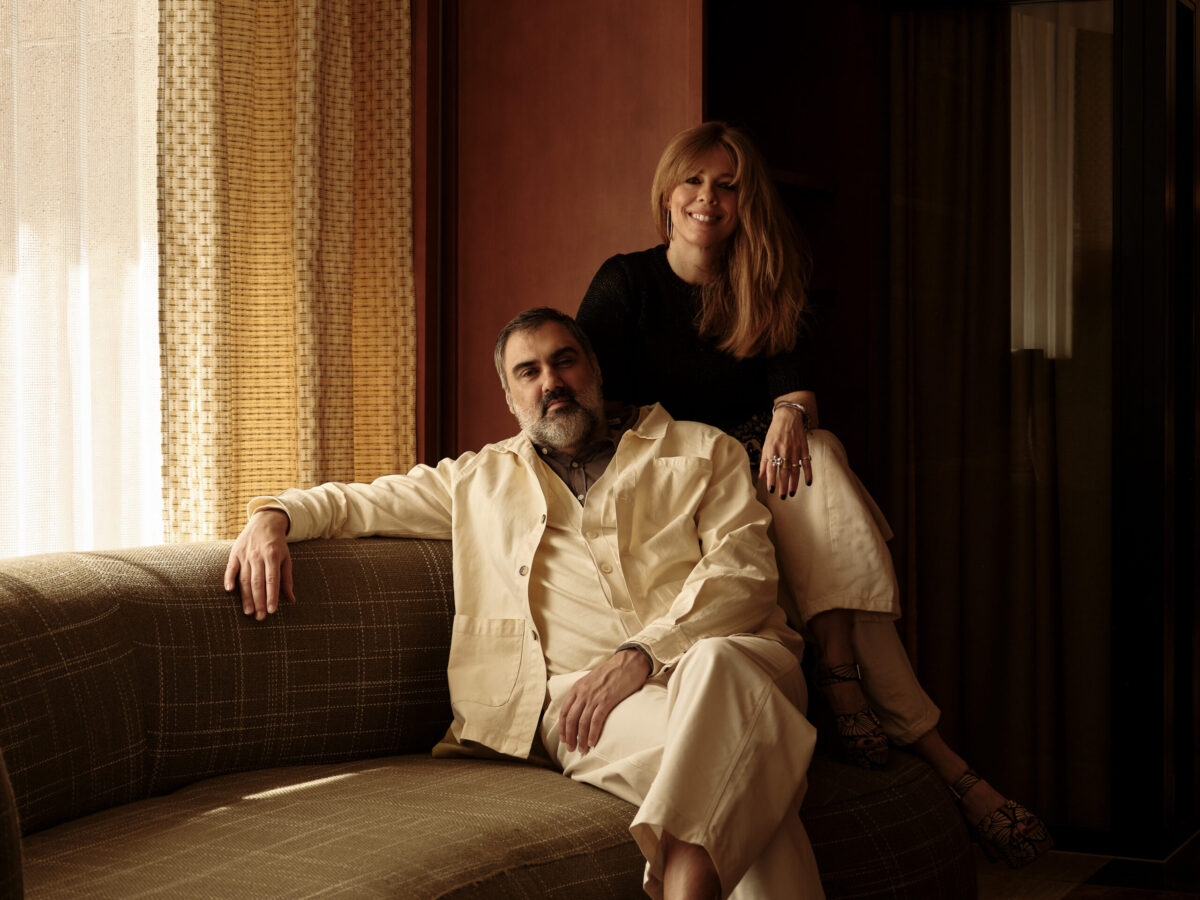
Once at the helm of Soho House's design team, Aaron Clarke founded ADC & Tuneu together with his partner in life and business, Marta Tuneu, who spent a decade working in the fashion industry before returning to interiors. They share how each of their disciplines inform and create tension in their work, shaping hotel interiors that are ever evolving.
WORDS BY JESS MILES
Aaron Clarke and Marta Tuneu met at Martin Brudnizki Design Studio (MBDS) and then spent a decade apart, professionally speaking – Tuneu in fashion, Clarke in large-scale design and development. After building a personal life together, they finally brought their professional worlds into line to form ADC & Tuneu, an interior architecture and design studio now headquartered in Barcelona, with satellite offices in London and Miami. Their projects, from Stradom House in Kraków to The Shelborne in Miami Beach, a $100 million redevelopment with Proper Hospitality, demonstrate how their multidisciplinary perspective informs a timeless approach to design. Most recently they have completed a redesign of the Sheraton Stockholm, and next up is Casa Lucera, a members' club in San Juan founded by Clarke and fellow ex-Soho House directors, due to open in 2027.
Between meeting at MBDS and forming ADC & Tuneu you took quite different career paths. What were you each doing in those years?
Marta Tuneu: I had always wanted to go into fashion, but I ended up studying Architecture. Spain was still quite conservative at the time, and the thinking was: if you have the grades to get into Architecture, you don’t hesitate – you do it. But my curiosity for fashion never went away. Eventually, I decided to apply to Istituto Marangoni in Milan, was accepted, and that’s really where my fashion career began. After graduating, I went on to work with luxury fashion houses including Louis Vuitton Paris and Calvin Klein, New York, under the creative direction of Nicolas Ghesquière and Raf Simons, I specialised in accessories.
At that time, fashion brands were increasingly looking for hybrid profiles – people who could bring a different perspective to design. Architects naturally have a different approach to form, proportion and volume, and I found that this translated very well into accessories. Accessories require a strong understanding of volume, shape and three-dimensionality. They need to be designed almost like small pieces of architecture, and that was an area where my architectural background gave me a different perspective.
Aaron Clarke: Meanwhile, I had become close to Nick Jones and, in particular, his creative team [at Soho House]. They decided to build an in-house design and development team, and I joined initially to oversee the European projects. From there, my role grew and I was eventually asked to oversee the US expansion – not only the interior design, but also the project management and the development of self-financed projects.
What does each of you bring to the studio that the other does not, and where do you match up?
AC: My vast experience gave me quite a unique perspective: I understand not only the creative ambition of a project, but also the realities behind it – construction, budgets, project management and, importantly, how a property ultimately needs to operate. It means I’m often thinking about how we turn an idea into something that can actually be built, lived in and endure. Sometimes that pragmatism challenges my own creative instincts, but ultimately it makes the work stronger.
MT: My background in fashion taught me almost the opposite: to begin without boundaries. Working alongside extraordinary creative visionaries and within established fashion houses taught me to approach a brief with curiosity and instinct, to question what is expected and explore possibilities that might not be immediately obvious. I bring that freedom into our design process – the desire to push an idea further and find something unexpected.That tension is probably where the studio becomes most interesting. One of us is constantly asking, “How can we make this possible?” while the other is asking, “What else could this become?” We meet in our shared obsession with detail, quality and creating something with a strong identity.ADC & Tuneu is the perfect combination of both personalities – Spanish fire and English understatement, all in one.
Barcelona and London have very distinct and different design scenes – how does the culture of each influence your work?
The juxtaposition between these two very different design cultures is fundamental to our studio and, in many ways, defines our approach.London has always had a wonderful confidence in layering – colour, pattern, texture, art and objects coming together to create interiors with richness, depth and a strong sense of personality. There is an embrace of complexity and eclecticism that gives spaces a feeling of having evolved over time. London has the knowhow and beauty for details. Barcelona offers a different sensibility. There is a clarity and purity to its design language: We take Gaudí and Catalan modernism as our highest reference. Spaces are often bright, sculptural and beautifully restrained, with an emphasis on natural light, materiality and form. There is an ease to it that feels intrinsically Mediterranean. Barcelona is forever effortless cool and embraces artesian craftsmanship. We are constantly moving between these two worlds. We love the depth and character of London and the lightness and fun of Barcelona. Bringing those influences together allows us to create spaces that are layered without feeling heavy, and refined without becoming minimal – spaces that have both richness and clarity.
What sort of work do you want to be known for? Are there any hallmarks or tell-tales of a ADC & Tuneu design?
We are very sensitive in our approach, as we often work with historical buildings. We feel a huge responsibility to embrace their history and make sure we preserve the key features and soul of every project we work on. We love classic design, history and culture.At the same time, we need to ensure that each building functions properly and adapts to today’s needs. For us, designing spaces that are timeless and of the highest quality is key. We want our work to have the highest impact on society. We want to improve people’s lives, restore existing elements and create interiors that are made to last. Cheap solutions often become expensive in the long run, as they need to be replaced quickly. By investing in a beautiful, well-made project, you create something more enduring and meaningful. Also, we love to create a design community around the project, we love to work with local artist, artisans, local suppliers that bring the knowhow and DNA of how things are done in the region we work on.
For The Shelbourne by Proper in Miami, what was your approach and where did you start?
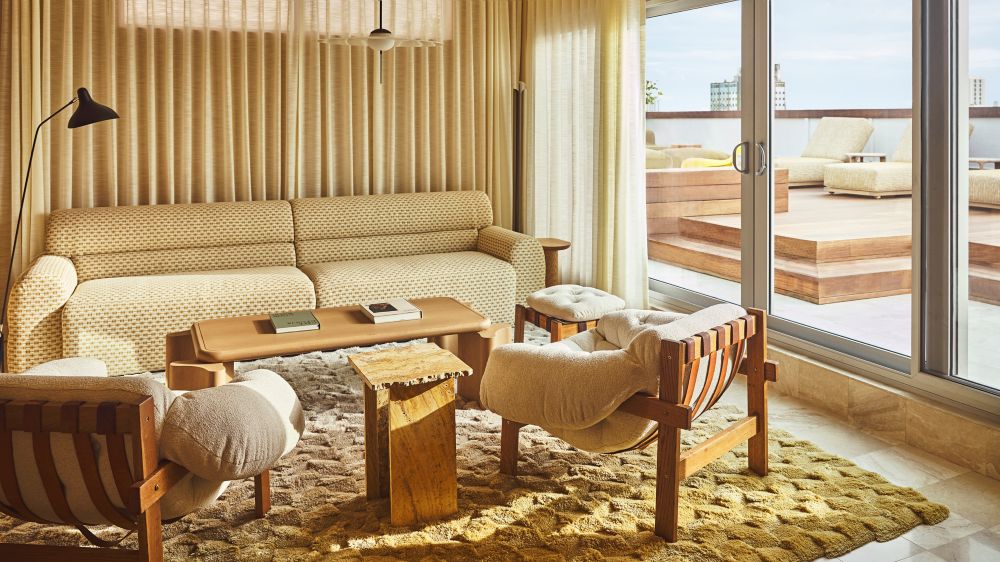
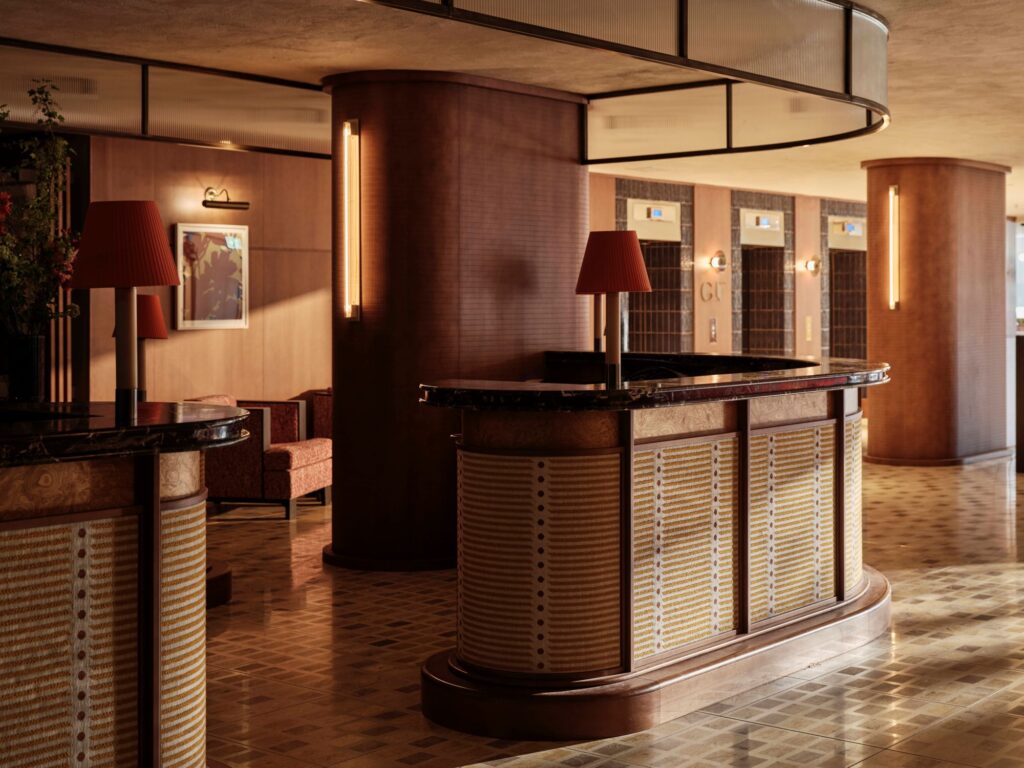
The first thing we do when we are given a project like this is immerse ourselves in its story. We study the history of the building, its background, who originally built it, the different interventions it has undergone over the years, the economic and social context of the time, and everything that can help us understand the place.For The Shelborne, we looked at countless Miami references, particularly the Art Deco movement. We try to be creative with the research process as well. We buy books, look through archives and social media, and find inspiration in fashion, photography, cinema and television – even series like Miami Vice. Miami offers an endless amount of inspiration, and researching it was incredibly exciting.We then combine all this research with the technical requirements and realities of the project, looking for ways to translate the references into fabrics, patterns, materials, lighting, colours and architectural details. We are interested in finding elements that evoke a particular time and place without simply copying it – details that are recognisable as belonging to a specific design era, but that can be reinterpreted in a contemporary way.We wanted everyone who entered The Shelborne to feel special – to create a sense of arrival and transport people back to the golden era of Miami, while giving that atmosphere a fresh and contemporary energy. The Shelborne is an incredible building, with a very strong personality and soul, and we wanted to preserve that character while bringing it back to life.
Given Aaron was at Soho House through a period of enormous growth, how has the members club market changed since?
AC: The members’ club landscape has transformed completely. When I first started working in this world, clubs were concentrated in key cities such as London and New York, and the traditional model was largely built around exclusivity and status. Bringing Soho House – with its very different, creative and community-led philosophy – to cities such as Barcelona and Berlin was challenging because, at the time, the idea of a contemporary members’ club was still relatively unknown in those markets.Fast-forward to today and the landscape is almost unrecognisable. Clubs are opening in cities all over the world, including places where the concept barely existed a decade ago. Interestingly, while the market has expanded, much of it has gravitated back towards the traditional language of exclusivity and status. What we find more compelling is the idea of a club built around a genuine community – whether connected by culture, profession, interests or a shared way of seeing the world.
As the sector becomes more commercial, there is a temptation to broaden the audience in order to maximise membership, but in doing so, clubs can risk losing the very sense of belonging that made them relevant in the first place. We have been fortunate because designing a members’ club is an incredibly specific discipline. It is not a hotel, a restaurant or simply a beautiful interior – it is an ecosystem that needs to create connection, evolve throughout the day and make people want to return again and again. Having designed 15–20 clubs across different cities and cultures, we have developed an understanding that goes far beyond aesthetics: how these places operate, how members move through them, where communities naturally form, and ultimately what makes a club feel alive.That experience has become an important part of what we bring to our clients. We are not simply designing the spaces; we are helping shape the culture that will exist within them.
In terms of hotel design, what are you designing for now that you were not thinking about five years ago?
MT: Hotel design has become much more confident in terms of its use of colour in the last five years and we’ve definitely leaned into that. It was fun to play with bold colour in our latest project, Sheraton Stockholm, where red and 1970s influences feature heavily.
As educators at Elisava in Barcelona, what shifts are you seeing coming through with the next generation of design?
We love teaching at Elisava. We learn as much from our students as they learn from us. Young generations see the world in a very different and often very interesting way, and being exposed to their ideas, perspectives and ways of thinking keeps us constantly questioning and learning ourselves.The biggest shift we are seeing is that the new generation is much more open to hybridising disciplines. They don't necessarily see interior design, architecture, fashion, product design, technology or art as separate worlds. That is very exciting for us as educators at Elisava, where the programmes themselves encourage interdisciplinary thinking and respond to increasingly complex ways of living and working.
Finally, what does the future hold for ADC & Tuneu? This could be on the realistic side, or completely aspirational and limitless…
MT: We are incredibly passionate about what we do, and we hope to continue learning, leading and contributing to the creation of beautiful buildings around the world.We would also love to explore opportunities beyond interior design, particularly in fashion and furniture. We see these disciplines as a natural extension of our creative approach and would be excited to collaborate with brands and develop projects where we can bring our experience with materials, colour, craftsmanship, form and storytelling into a different context.
Related Articles
Joyce Wang Studio looks to Hong Kong’s heritage for Mandarin Oriental The Landmark
Mandarin Oriental The Landmark, Hong Kong enters a new era through Joyce Wang Studio's thoughtful re...
Read more
Leaders: Bianca Passera on Lario Hotels’ new 5-star luxury brand, Vista
As she contemplates ceding control of the family business to another generation, Bianca Passera, Pre...
Read more
Six Senses London, reimagined by AvroKo and EPR Architects
Six Senses has made its long-awaited UK debut inside the former Whiteley's emporium on Queensway, wh...
Read more
We'd love to hear from you! Click the button to open the SPACE Magazine Survey and have your say.

Make sure you don't miss a single issue of SPACE by subscribing to receive the magazine. Click the button above to signup.