Boronkay Studio channels Art Deco elegance at Hôtel Palais de la Méditerranée
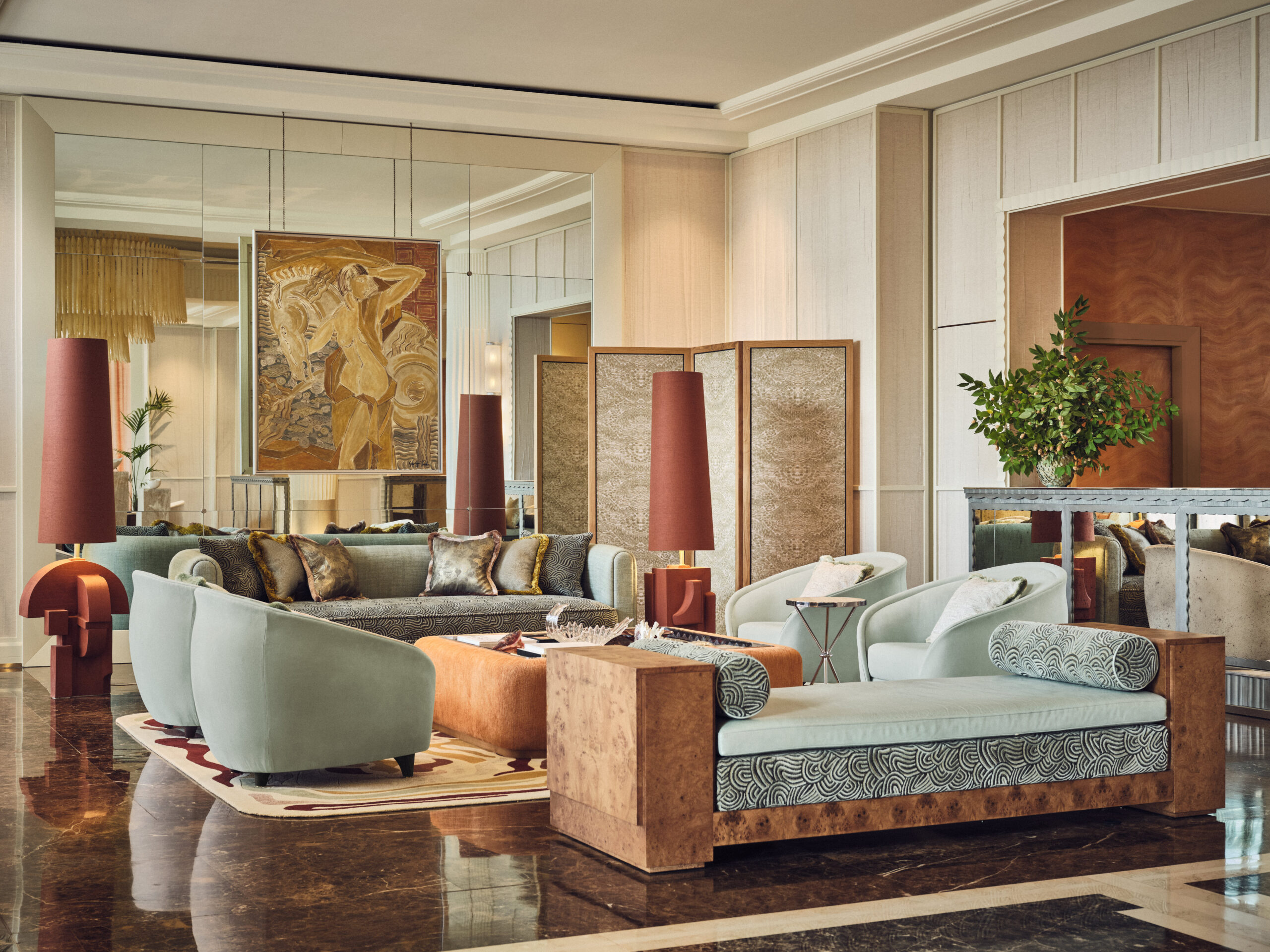
Boronkay Studio has reimagined Hôtel Palais de la Méditerranée in Nice, creating a contemporary interpretation of one of the Côte d'Azur's most celebrated Art Deco landmarks through light, craftsmanship and a renewed sense of place.
WORDS BY SPACE EDITORIAL
Few stretches of coastline have shaped the visual language of luxury hospitality quite like the Côte d'Azur. For more than a century, the French Riviera has inspired architects, artists and designers with its extraordinary quality of light, glamorous social history and enduring connection to the Mediterranean landscape. Yet as many of its landmark hotels approach their second century, the challenge is no longer one of preservation alone. Instead, designers are increasingly being asked how these icons can evolve for a new generation of travellers while remaining faithful to the character that made them legendary.
Nowhere is that challenge more apparent than at Hôtel Palais de la Méditerranée in Nice. Occupying a commanding position on the Promenade des Anglais since 1929, the Art Deco landmark has welcomed generations of artists, musicians, aristocrats and international visitors. Following an extensive redesign by Boronkay Studio, the hotel begins its next chapter as part of The Unbound Collection by Hyatt, demonstrating how contemporary hospitality can coexist with architectural heritage without diminishing either.
Rather than recreating the decorative language of the Jazz Age, Boronkay Studio’s Founder and Creative Director Linda Boronkay chose to reinterpret the optimism that defined the Art Deco movement. Extensive archival research informed the design process, allowing the studio to understand not simply what the building once looked like, but why it held such significance within Riviera society. The result is an interior that references the hotel's rich past while speaking confidently in a contemporary design language.
"There are certain buildings that carry an extraordinary emotional weight," she says. "It was a true honour to work on such a special project – listening carefully to its history and then continuing the story in a way that feels relevant today. The most successful interiors are never static; they evolve while remaining true to their essence. We’re delighted to share this project with the world and to be a part of the hotel’s evolving story.”
Central to the scheme is the idea of light. Inspired by the distinctive Mediterranean luminosity that captivated artists including Picasso, Matisse, Bonnard and Chagall, the interiors use reflective surfaces, coloured glass, subtle tonal shifts and sculptural forms to capture the ever-changing atmosphere of the coastline. Soft blues, warm terracottas, muted golds and pastel hues echo both the sea and the surrounding landscape, creating spaces that feel simultaneously elegant and deeply connected to Nice itself.
Throughout the hotel, Boronkay Studio balances moments of theatricality with an unexpected sense of intimacy. The monumental geometry of the original façade informs contemporary furniture, lighting and bespoke detailing, while curved forms soften public spaces and guestrooms alike. French artist Olivia Cognet created abstract sculptural pieces inspired by Art Deco ornamentation, while visual artist Marion Flament was commissioned to produce bespoke stained-glass installations that filter natural daylight, creating shifting patterns across the interiors as the sun moves throughout the day.
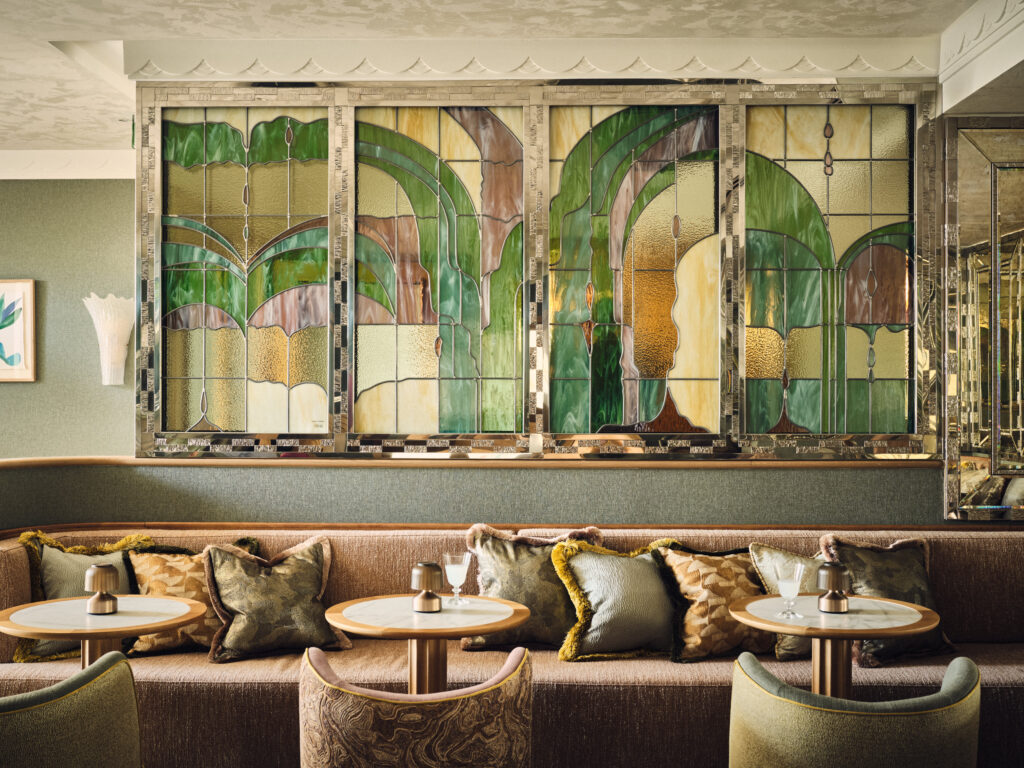
The collaborative approach continues throughout the hotel. At Zouzou Riviera, Parisian artist Garance Dupont designed an 18-metre mosaic bar that references the nearby Baie des Anges through subtle nautical motifs. Elsewhere, curator Antoine Py worked alongside Boronkay Studio to assemble an impressive collection of contemporary artists, including Gergei Erdei, Louis Cane, Pablo Grand Mourcel, Charlotte Colt, Jean-Baptiste Bernadet and Benoît Barbagli Vautier, ensuring that art becomes an integral part of the guest experience rather than a decorative afterthought. The guestrooms adopt a quieter expression of the overall concept. Here, sweeping curves inspired by the Mediterranean coastline are paired with tactile fabrics, natural stone, timber and stainless steel, while bespoke rugs in warm earth tones subtly anchor each space. The layouts remain deliberately open, directing the eye towards the horizon and allowing sea views to become an active part of the interior composition. The result is a collection of rooms that feel restorative without sacrificing the glamour synonymous with the Riviera.
Beyond the interiors, the hotel continues to celebrate the social spirit that has defined the Palais for nearly a century. Zouzou Restaurant, led by Executive Chef Sébastien Roux, champions seasonal Mediterranean cuisine, while the rooftop terrace, indoor and outdoor swimming pools, wellness facilities and event spaces reinforce the property's position as one of Nice's leading hospitality destinations. With 145 guestrooms, 28 suites and more than 18,000 square feet of meeting and event space, the hotel balances contemporary luxury with the grandeur expected of one of the Riviera's defining addresses. Rather than preserving the hotel as a nostalgic monument, Boronkay Studio has allowed it to continue evolving, creating interiors that honour the building's remarkable legacy while embracing the expectations of contemporary travellers. In doing so, Hôtel Palais de la Méditerranée demonstrates that the most successful heritage projects are not those frozen in time, but those that understand history as something living, capable of inspiring new stories while remaining unmistakably rooted in place.
Related Articles
Portugal, built to last: the country’s next wave of hotels
Beach holidays on the Algarve, weekend breaks in Lisbon and Porto – Portugal’s appeal has never ...
Read more
Visionaries: Aaron Clarke and Marta Tuneu, the duo behind ADC & Tuneu
Once at the helm of Soho House's design team, Aaron Clarke founded ADC & Tuneu together with his...
Read more
Joyce Wang Studio looks to Hong Kong’s heritage for Mandarin Oriental The Landmark
Mandarin Oriental The Landmark, Hong Kong enters a new era through Joyce Wang Studio's thoughtful re...
Read more
We'd love to hear from you! Click the button to open the SPACE Magazine Survey and have your say.

Make sure you don't miss a single issue of SPACE by subscribing to receive the magazine. Click the button above to signup.