Inside Hôtel du Couvent, brought back to life by Valéry Grégo after four decades of silence
Hôtel du Couvent, a 17th-century convent at the heart of Nice's old town has been reborn as one of France's most extraordinary hotels. SPACE checks in.
WORDS BY CLAUDIA BAILLIE
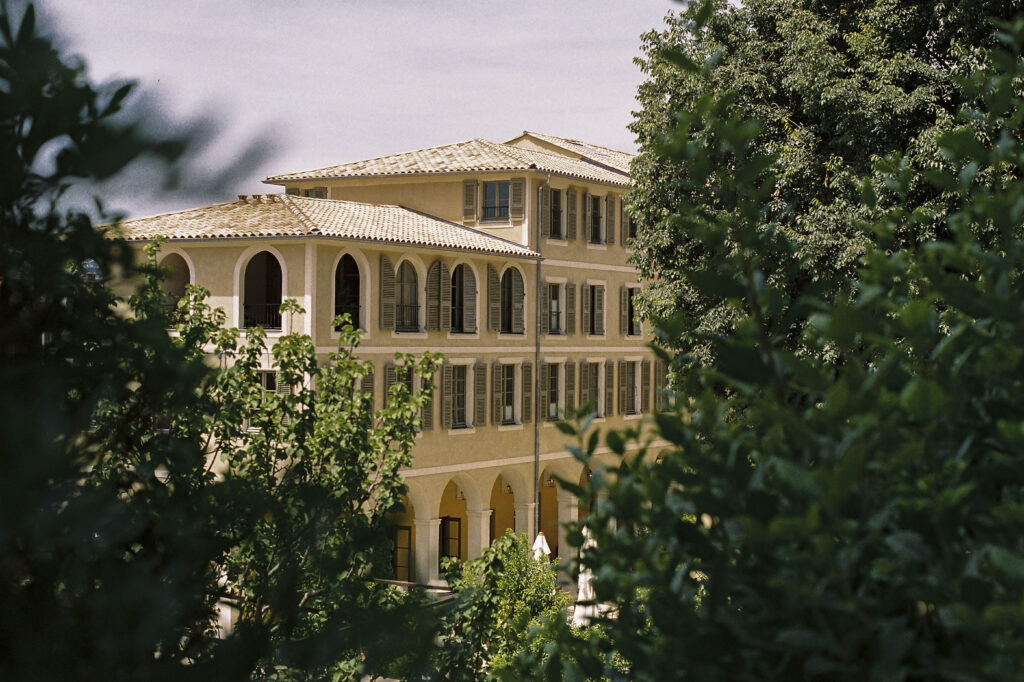
Tucked into the labyrinth of streets in Nice's Old Town, Hôtel du Couvent gives little away from the outside. Step in from the bustle of Rue Centrale however, and the ancient wooden doors open onto 2.5 acres of gardens planted with roses, olive, lemon and orange trees – a haven of unexpected calm inside what was, for nearly four centuries, a working convent. On a stretch of coastline better known for superyachts and grand palace hotels, this extraordinary property is something genuinely different. The structure itself dates to 1604, when the sisters of the Order of Saint Claire built the convent using stone, tiles and timber repurposed from a neighbouring château. Later occupied by the Order of the Visitation of Holy Mary who arrived in 1803 and remained until the early 1980s, the complex fell silent after they departed. Forty years later, in a project that took a decade, the buildings have been meticulously restored with the utmost respect for the spirit and integrity of the original.
The driving force behind that restoration was Valéry Grégo, the founder of the London-based Perseus Group, who was approached by the mayor of Nice, in search of someone to transform the convent into a destination hotel that would draw visitors to the city, rather than treating it as a jumping off point for the rest of the Côte d'Azur. To bring it back to life, Grégo assembled an exceptional team, including the Bombay-based practice Studio Mumbai and Nice's own Studio Méditerranée to tackle the architecture, and to add a contemporary wing that would sit seamlessly beside the historic building. For the interiors, Grégo turned to Festen Architecture, a Paris-based studio founded in 2011 by Charlotte de Tonnac and Hugo Sauzay, who had also worked with Grégo on Paris's Le Pigalle - their first hotel project - and on Les Roches Rouges on the Var coast, as well as several private commissions. “When we did Le Pigalle, we were small and not very well known,” de Tonnac recalls. “Hugo and I had been working together for about four years, mainly on private projects, and Valéry took a chance on us - I think he had a feeling, which is really what it's all about. I also think he was happy to work with people who hadn't designed hotels before and therefore had a fresh view.”
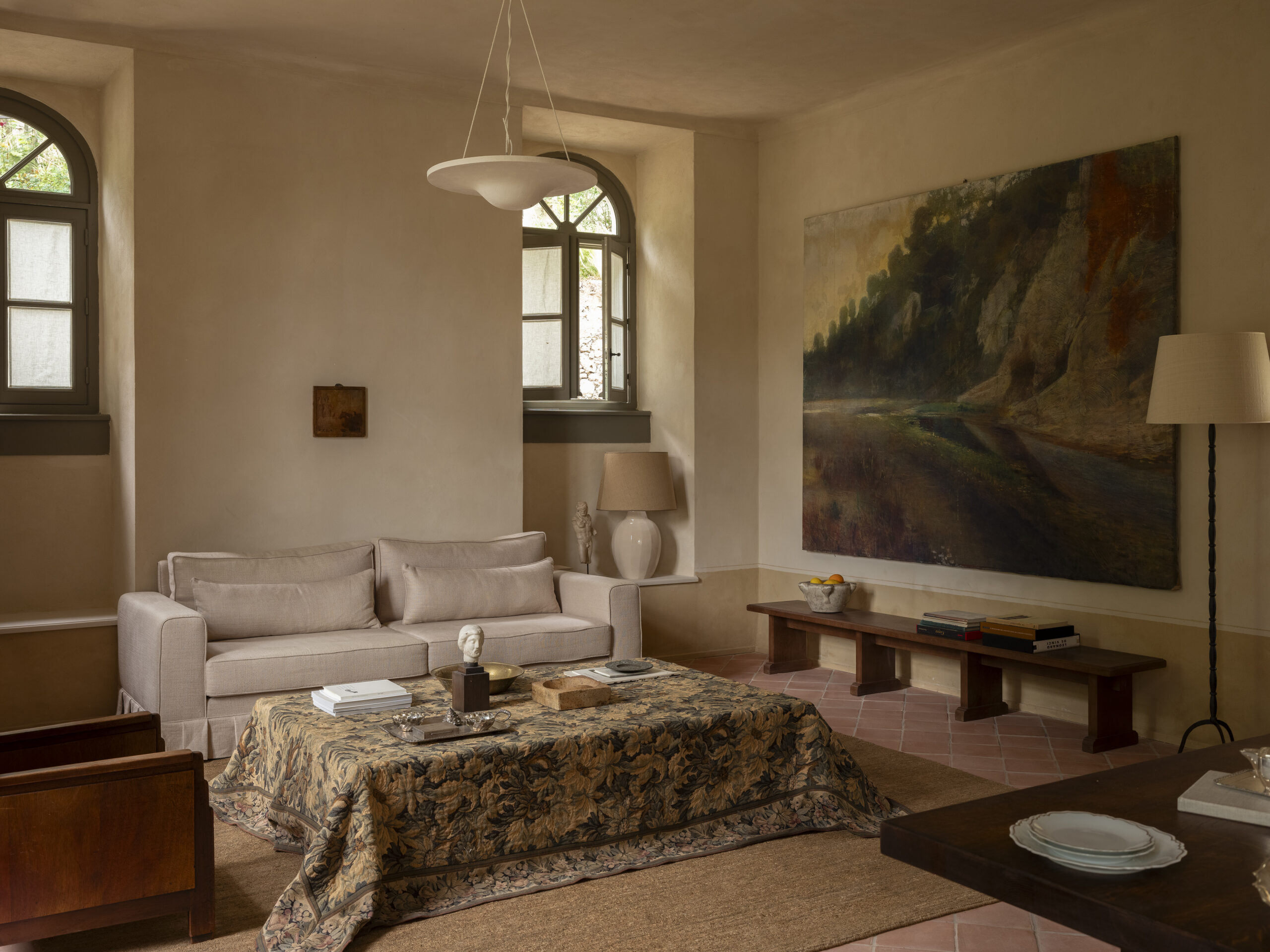
The pair joined the project five years in, inheriting a substantial body of historical research that Studio Mumbai and Studio Méditerranée had assembled. They then had just one month to develop their concept, which happened to be at the beginning of the Covid-19 lockdown. “All our other jobs were frozen, so that gave us the opportunity to completely focus on this,” says de Tonnac. Working from their Paris apartment, the duo found that their ideas came together with unexpected ease. “Valéry wanted something with soul, that felt natural in the space. And of course, we needed it to be different to the other five-star hotels in the area.” As such, arrival at Hôtel du Couvent feels less like checking into a hotel and more like being welcomed into someone's home. On warm afternoons, guests are received beneath the orange trees, with fresh madeleines from the inhouse bakery that remains in the same spot where the nuns once made their bread. At a large communal table, staff are on hand to assist with the kind of unhurried attention that high-end hospitality often promises but rarely delivers. “The whole concept was all about being a little bit more relaxed,” adds de Tonnac.
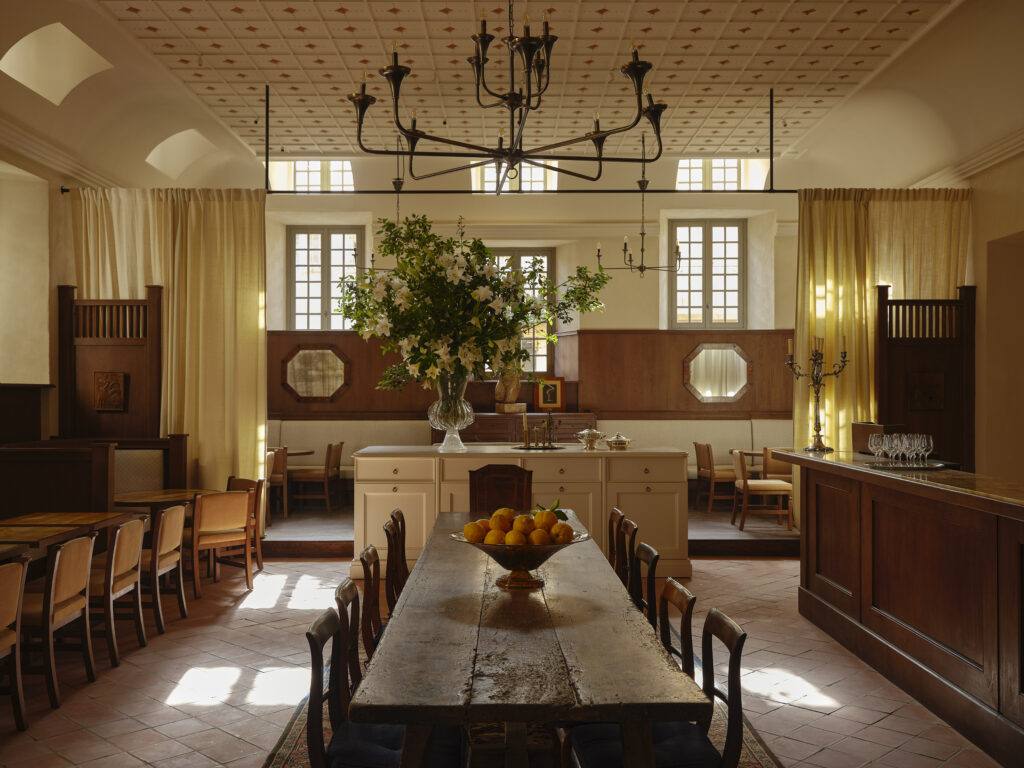
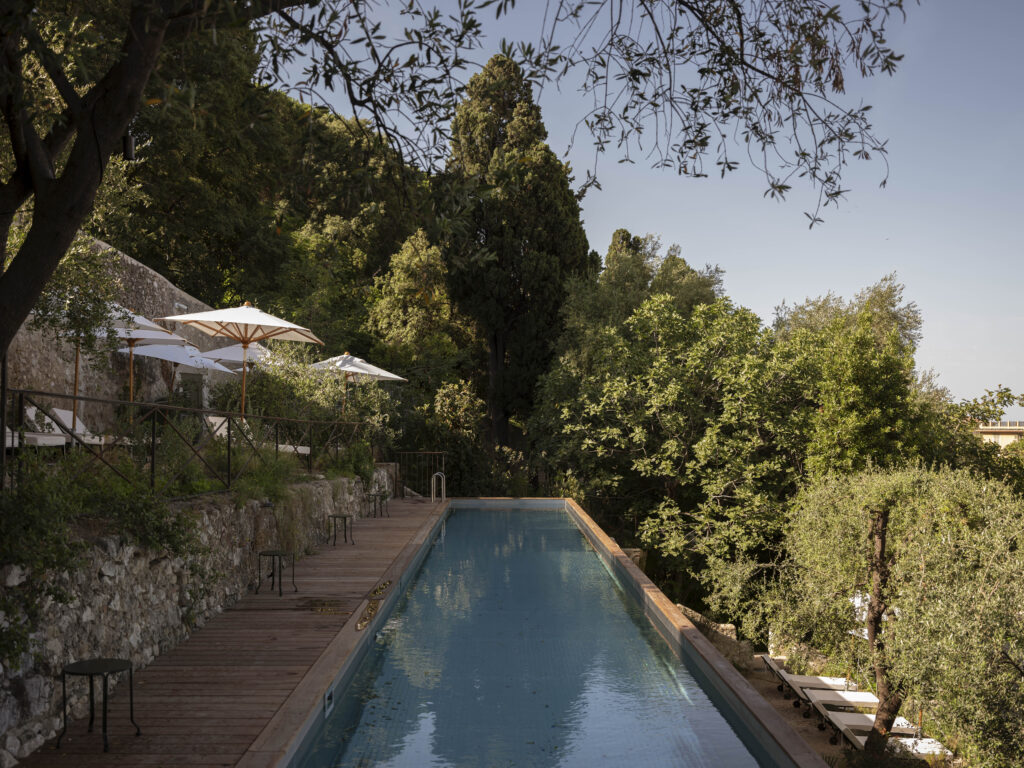
Moving further inward, the U-shaped courtyard was conceived as a pretty counterpoint to the grandeur of the architecture, with Provençal-style fabrics and metal furniture typical of the South of France. “We wanted to create something romantic between the very bold buildings,” she notes. Saturday mornings see the courtyard host a local farmers' market, while on the terraced hillside above sits La Guinguette - an informal outdoor café decorated with festoon lights, as well as flower, vegetable and herb gardens and a 20-metre lap pool surrounded by olive trees that offers panoramic views of the city below. Back at ground level, the main dining area occupies one of the convent's grandest spaces - a high-ceilinged, light-filled room with limewash walls, that the studio dressed with soft drapery to temper the acoustics. A magnificent, long table sourced from a 17th-century Italian monastery takes pride of place, while a substantial counter creates a touch of theatre as staff cut bread and lemons in view of the guests. The restored terracotta floor, meanwhile, was painstakingly matched to the original through extensive sampling. By contrast, the hotel bar is dark and atmospheric, with wood-panelled walls, brown velvet sofas, leather banquettes and antique carpets underfoot.
Among the most intriguing spaces is the Apothecary - a reinvention of the herbalist's shop that existed during the convent's working life, that, like the bakery and the laundry, remains in its original location. No archival images survived, so Festen researched similar spaces before commissioning a local craftsman to build the complex joinery. Now, resident herbalist Gregory Unrein occupies the nook, offering teas, tinctures and custom remedies made with plants from the hotel's own garden and its nearby farm at Touet-sur-Var.Accommodation-wise, the 88 rooms range in size, from the smaller nun's cells to suites fashioned from spaces such as the Séchoir, a long room where laundry was once hung to dry. A guiding principle throughout was a commitment to reversibility, with electrical cables concealed in bespoke wooden box frames fitted around the doors rather than routed into the walls. “We tried not to make holes, so that if ever the building isn't a hotel anymore, you could remove everything and you wouldn't know it had been there,” explains de Tonnac.
Larger suites ideal for stays with family and groups boast kitchens equipped with Lacanche cookers as well as dining and living areas. “They were designed more like apartments, to be like a home away from home, for people who want to work, or to cook their own food, or have it cooked for them,” she continues. Each room, whatever its size, is layered with bespoke oak furniture, custom sofas and plaster light fittings designed by Festen, as well as antiques, sculptures and textiles sourced in Italy and France. “We took a truck, visiting outdoor trade fairs - known as déballages - where dealers arrive from across Europe and open the backs of their vans. It was like treasure hunting,” she enthuses. The grey marble in the bathrooms evokes a monastic, understated elegance and was chosen to echo the modest stone the nuns would have used themselves, while the doors, window frames and shutters are painted in the same deep green found on woodwork on traditional buildings throughout Nice. An extensive collection of antique and contemporary artwork was amassed by curator Virginie Boulenger of Parisian design agency, Saint-Lazare.
Also taking inspiration from the city, which for centuries was Italian before becoming French, the wellness space draws on ancient Roman bathing traditions and features a succession of pools of different temperatures, including a warm tepidarium, a hot caldarium, and a cold plunge, also known as a frigidarium. At one end of the linear indoor swimming pool, a round, glassless window leaves the space open to the elements. “We used minimal materials - grey-beige stone, cast iron light fittings, a little wood,” says de Tonnac. “The aim was for it to almost be like a spiritual experience.” Lastly, a street-facing bistro open to the public was assembled almost intuitively. “We put it together at the very end. It's a little bit improvised in a good way. Very casual, very French,” de Tonnac explains. Having opened in June 2024, the hotel's arrival has already changed the conversation about Nice as a destination in its own right. For de Tonnac, who spent the final two months of the project living in the city alongside the rest of the team - moving furniture, adjusting and refining until the last possible moment - the experience was a memorable one. “The teamwork was amazing, and even Valéry was super involved. There is so much heart in this project - and a few tears. With big hotels, it's rare to have that, so this was a unique experience.”
Related Articles
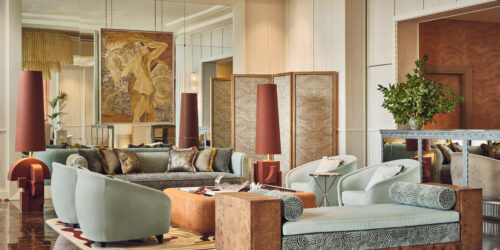
Boronkay Studio channels Art Deco elegance at Hôtel Palais de la Méditerranée
Boronkay Studio has reimagined Hôtel Palais de la Méditerranée in Nice, creating a contemporary i...
Read more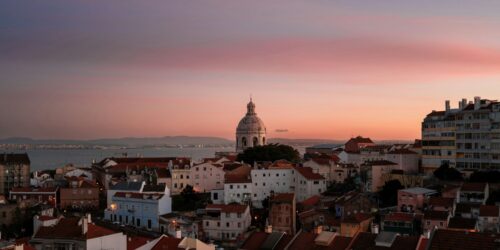
Portugal, built to last: the country’s next wave of hotels
Beach holidays on the Algarve, weekend breaks in Lisbon and Porto – Portugal’s appeal has never ...
Read more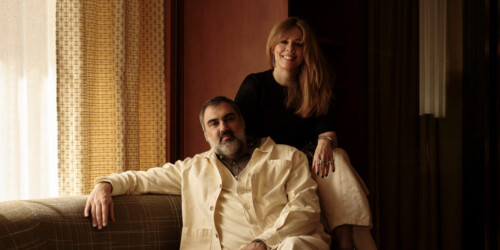
Visionaries: Aaron Clarke and Marta Tuneu, the duo behind ADC & Tuneu
Once at the helm of Soho House's design team, Aaron Clarke founded ADC & Tuneu together with his...
Read more
We'd love to hear from you! Click the button to open the SPACE Magazine Survey and have your say.

Make sure you don't miss a single issue of SPACE by subscribing to receive the magazine. Click the button above to signup.