
Hotel Toranomon Hills, Tokyo, Japan
Dutch creativity meets Japanese artistry in high-rise melting pot. 
Sleek and elegant, the Hotel Toranomon Hills exudes an instant sense of calm. The hotel is the first Tokyo outpost of the Unbound Collection by Hyatt – a curated compilation of one-of-a-kind hotels offering premium facilities and experiential surroundings. Occupying the ground and 11-14th floors of the Toranomon Hills Station Tower, it is part of a major redevelopment of the area that’s transitioning from a primarily business district to a place that merges work and life with culture and hospitality.
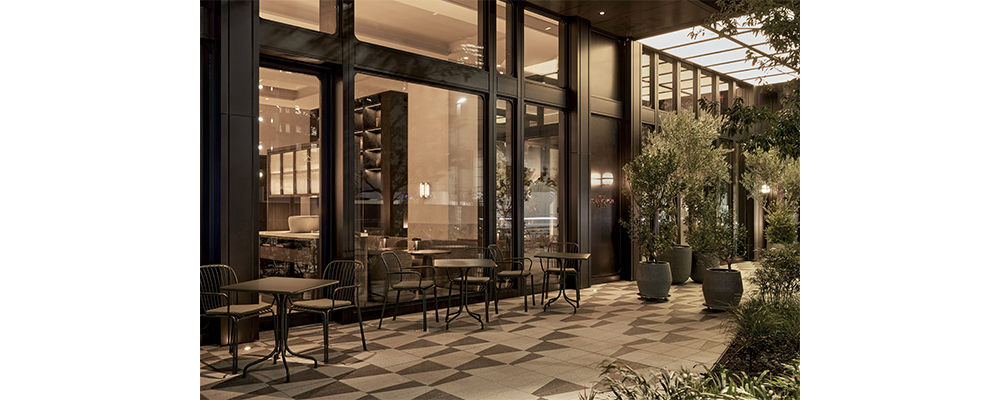
At street level of the new hotel is Le Pristine Tokyo, a new restaurant headed by acclaimed chef Sergio Herman. Design studio Space Copenhagen created the interiors for both the hotel and restaurant.
The hotel’s design combines simplicity and sustainability though the use of natural materials that are built to last. The 205 guestrooms aim to meet the needs of cosmopolitan professionals and travellers by offering comfortable and purposefully designed spaces for seamless transitions between rest, work and socialising. Social spaces are intuitive and adaptable.
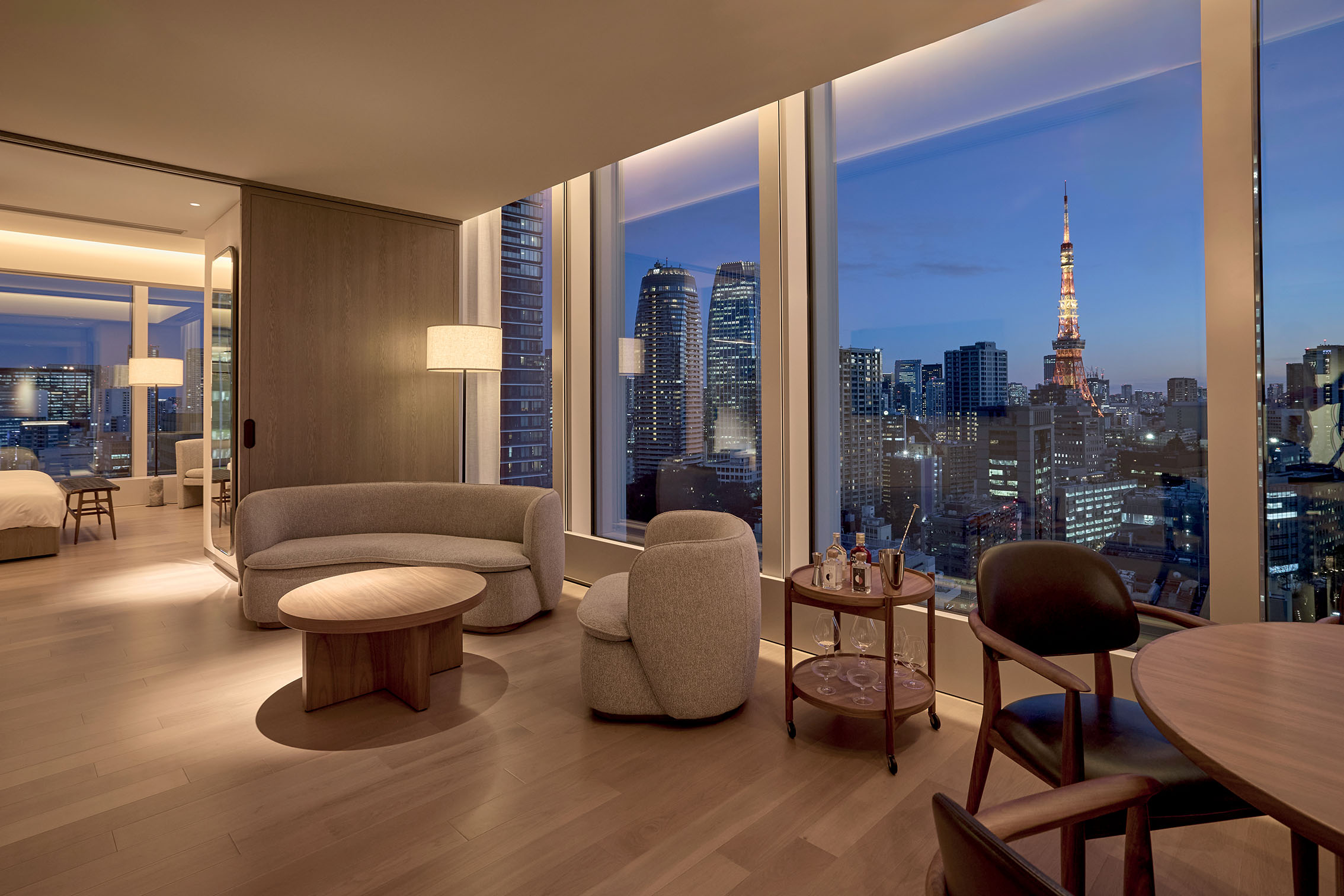
The hotel features a series of bespoke designs, furniture and light fixtures. Photographs by Joachim Wichmann
The heartbeat of the hotel is its lobby, which includes the reception and concierge, plus a lively open-plan café, bar and deli. The café is a relaxed space with rounded counter edges, warm leather banquettes and playful lighting in the form of Dutch art collective Rotganzen’s melted disco ball artwork, which scatters light reflections around the space throughout the day. Just off the lobby, duplex-style suites provide additional space for small-scale private events.
The hotel features a series of bespoke designs, furniture and light fixtures, alongside collaborations with Space Copenhagen’s roster of selected manufacturers. These include the Low Stool for Mater and the Loafer lounge and dining chair for &Tradition. The studio’s Gravity floor and table lamps and wall sconces designed for Gubi sit alongside Gubi’s Timberline lamps that were designed in the 1970s by Mads Caprani and provide soft illumination throughout the hotel. The lounge features the Spine Lounge Suite by Frederica, and earth-toned area rugs by Massimo soften this space and the suites. Space Copenhagen’s new outdoor terrace collection from &Tradition made its debut at the hotel.
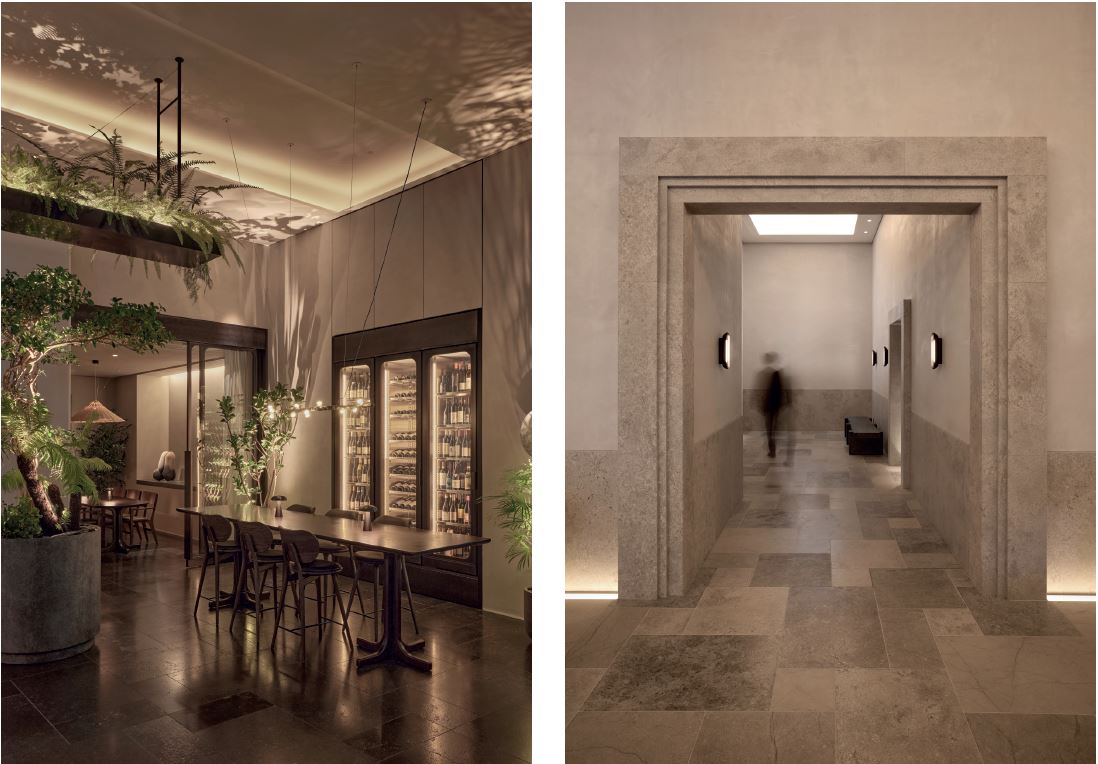
The restaurant continues the ethos of the original Le Pristine Antwerp, which opened in Belgium in 2020 and was awarded a Michelin star in its first year of operation. Le Pristine Tokyo offers a sophisticated celebration of life and creativity, which is expressed through food, fashion, design, art, and music.
There is a noticeable synergy, with a natural flow and progression between the design of the hotel and the restaurant. The characteristics of the Le Pristine Antwerp venue also connect to the fabric of the hotel and restaurant architecture, resulting in Le Pristine Tokyo existing as a variation of the Antwerp design while evolving its identity in the Tokyo setting.
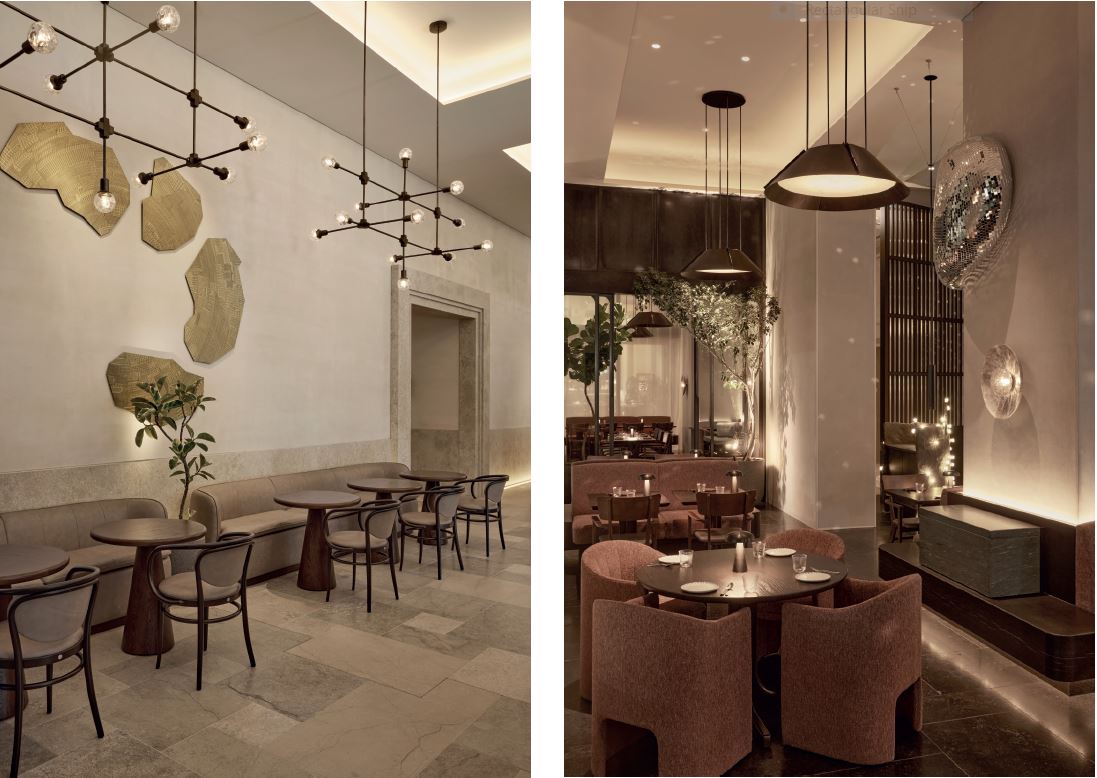
Playful lighting in the form of Dutch art collective Rotganzen’s melted disco ball artwork, scatters light reflections around the space throughout the day
Space Copenhagen was keen to weave characteristics of the hotel’s ambience into the design of Le Pristine Tokyo. Maintaining the signature features of the Antwerp restaurant and its collaborations with celebrated artists from Sergio Herman’s home region in the Netherlands, the new restaurant has also collaborated with Japanese artists, including Kohei Ukai, Kenji Gomi and Takeya Takeda. A Maarten Baas host station and chandelier create a stylish entrance, and a morphed mirror disco ball by Rotganzen unifies the space with the hotel’s adjacent lobby. A range of bespoke tables and sofas add to the character. The principal dining chair is a custom design by Frederica, with additional dining chairs in grey stained oak and high stools from Mater.
The restaurant and the café serve contemporary European cuisine with a cosmopolitan flair, using thoughtfully sourced produce from Zeeland in the Netherlands and seasonal Japanese ingredients.
“The design approach combines Space Copenhagen’s Scandinavian background with a traditional Japanese design aesthetic and represents a compelling contrast to Tokyo’s high-speed, future-ready exterior. The long-term ambition for the hotel is to cater to both body and mind, establishing a sense of balance and recalibration for the guest,” said Peter Bundgaard Rützou and Signe Bindslev Henriksen, founding partners of Space Copenhagen.
“We have enjoyed the challenge of designing Le Pristine Tokyo in a new area in the dynamic city of Tokyo. We evolved our work to best suit its needs and are very pleased with the result. Designing the restaurant and the new Hotel Toranomon Hills in this much-anticipated neighbourhood has been very exciting for us, and we can’t wait to see what the future holds for Le Pristine Tokyo.”
Related Articles

The Milestone Hotel & Residences London, England
Refurbished and extended Stables Bar shines new light on fabulous cocktails in a plush setting. W...
Read more
Son Xotano, Mallorca, Spain
In the rural centre of Mallorca, Annua Hotels’ latest opening swaps spectacle for stillness, where...
Read more
JW Marriott Crete Resort & Spa, Greece
Construction and conservation combine to create restorative hospitality sustainably. Set on the r...
Read more
Anthology by Style Library Contract
Testimonials
“SPACE has excellently researched, well-rounded, and informative editorial, presented in a stylish glossy layout, which is ideally suited to the calibre of our clients. The team, both editorial and advertising, are knowledgeable, helpful, and fun. Working with them is always a pleasure.”
Karen Brooks, Esprit Media Ltd
“Working closely with Space magazine, means that Barlow Tyrie products are seen by the right target audience and relative to premiere outdoor garden spaces.”
Steven Still, Barlow Tyrie
"Armourcoat has partnered with Space Magazine since launch in 2015, and is now regarded as an essential part of our international marketing strategy. Recognising the scale of subscribers and quality of content, we truly value the opportunity the platform (both in print and digital) presents."
Daniel Nevitt, Armourcoat
"We have partnered with SPACE Magazine since it’s launch and SPACE have now become one of our most influential media partners. Their readership of senior hoteliers and interior designers are exactly the audience we invite to attend the Independent Hotel Show and SPACE delivers on helping us position our brand in front of them. Not only does SPACE have the readership we want but they also work with us to tailor content they think is right which when time poor is much needed. I couldn’t recommend SPACE enough."
Sam Chance, Fresh Montgomery