

Kona Village, A Rosewood Resort

Restored hideaway celebrates the land’s storied past while looking to the future.
 Nestled on the sacred lands of Kaʻūpūlehu on Hawaiʻi island, the largest of the Hawaiian archipelago, a new resort has risen from the remnants of a beloved hideaway after more than a decade of stillness. Emanating a feeling of organic, approachable luxury, Kona Village, A Rosewood Resort draws inspiration from the unique nuances of the destination as well as the original property that captured the hearts of travellers from all over the world. The result is an inviting sanctuary that immerses guests in the island experience while also demonstrating a forward-thinking and sustainable design approach.
Hawaiʻi-raised architect Greg Warner of Walker Warner Architects and San Francisco-based interior design firm NICOLEHOLLIS led the seven-year development process, collaborating with local artists, craftsmen, environmentalists, engineers, and cultural and community leaders.
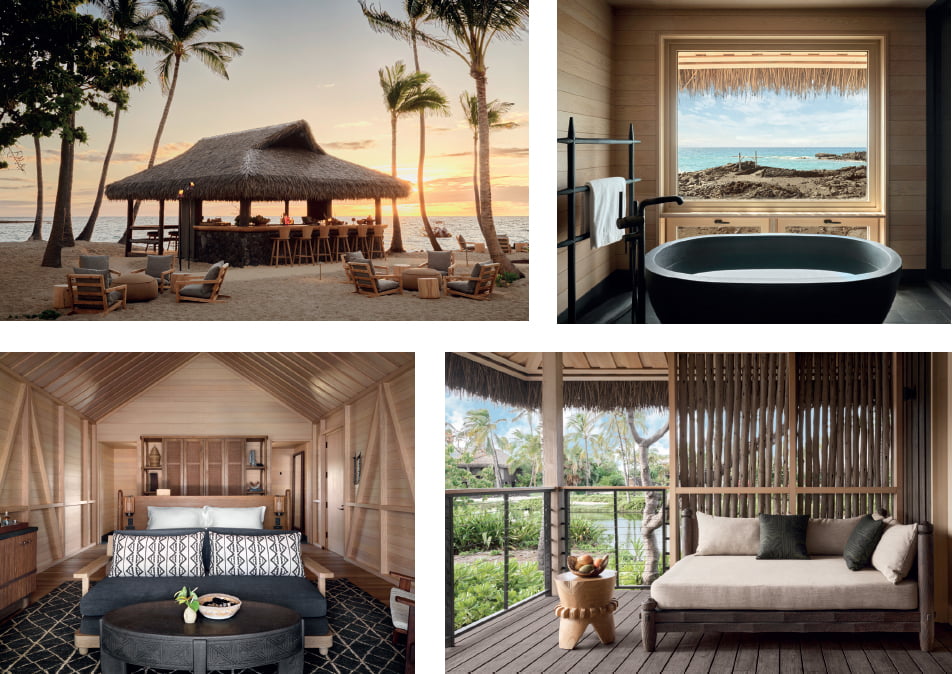
The revisioning of the resort was guided by Rosewood’s partner Kennedy Wilson, a real estate investment company renowned for its commitment to responsible and sustainable development on Hawaiʻi, with a core mission to be as minimally disruptive to the land as possible. Greg set out to restore the relaxed Pacific Island-style that epitomised the original property while elevating it with modern touches and sustainable elements. Several of the key buildings were designed according to LEED Gold Certification standards.
Kennedy Wilson employed Re-Use Hawaiʻi, a non-profit organisation, to manage the demolition of Kona Village’s previously existing structures. More than 80 percent of materials were salvaged, repurposed and brought back to the island as affordable building materials. The current architecture includes nods to the past, with changes made to any previous elements that were no longer aligned with current sustainability standards. Returning guests will recognise the property’s iconic silhouette and single-house layout – which stands in stark contrast to the other resorts on the island. Walker Warner organised the guesthouses, which are traditional Hawaiian structures similar to refined beach bungalows, to stretch across small village-like crescents around the perimeter the resort. In the middle, set against the glistening waters of Kahuwai Bay, are the dining, wellness and recreational facilities. This physical footprint of the accommodations and amenity spaces pays homage to the former days of Kona Village and re-establishes the convivial, summer camp-like environment that it was known for back then.
Discreetly tucked along the island’s treeline, the architectural scheme harmonises with the diverse geography and biology of The Big Island. The buildings were positioned with the trade winds in mind, underscoring one of the ultimate luxuries of oceanfront living. They were also built and outfitted using natural and responsibly sourced materials that would not deplete the island’s resources. Thatched roofing is made of recycled materials, rather than the native leaves that islanders used to rely on. Additional choices that reinforce the natural feeling of the place include exterior siding inspired by the colours of coconut tree trunks and exposed wood framing.
Don Vita, president of VITA Planning and Landscape Architecture, has created gorgeous grounds that pull inspiration from the rawness of their surroundings, placing an emphasis on the stark, primal beauty of the shoreline, as well as the cultural imprint of native flora and fauna.
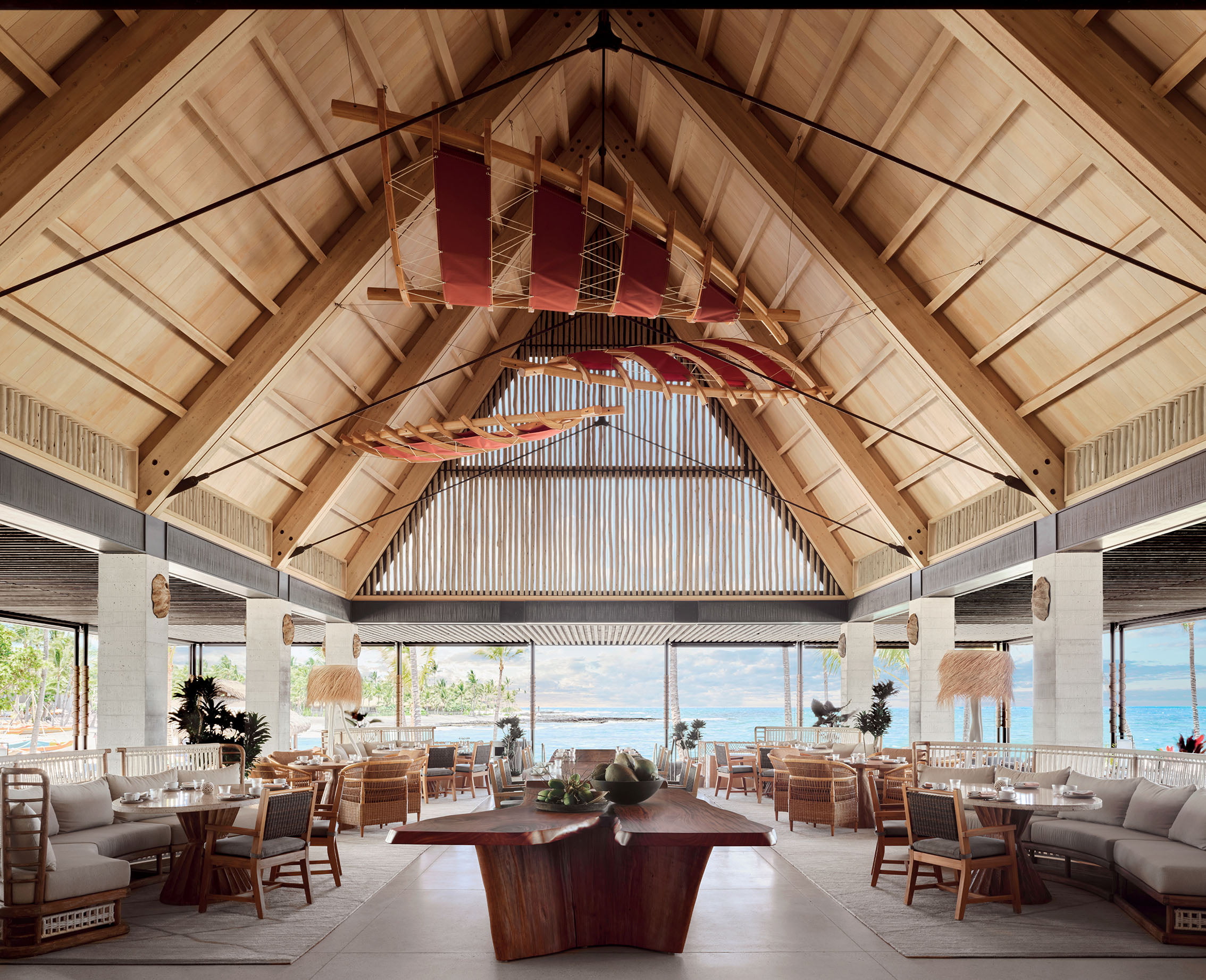
To complement the exterior architecture, the resort’s distinctive interior aesthetic is rustic and relaxed, locally relevant and luxurious. A long-time visitor of The Big Island, having spent time at Kona Village before its closure, designer Nicole Hollis was committed to retaining the identity of the original property while cementing it firmly in the 21st century. Inspired by the concepts of ‘ohana and cultural heritage, her work set out to tell the rich and layered story of this land. She relied on a range of strategic elements including custom furnishings made from natural materials and placed to prompt social interactions. Additional design details that support her vision include site-specific colour schemes and specially commissioned art pieces from native and resident Hawaiians.
Across the 150 guesthouses, which range from one to four bedrooms, Hollis has created striking indoor-outdoor retreats that serve as an extension of the natural beauty found beyond their walls. One of three distinctive schemes envelop each, dependent on where it sits on the site. In the South Village, guesthouses are bathed in blues and yellows reflective of the nearby ocean waters and sandy shores. In the North Village, black and red tones pay homage to the surrounding lava fields and Mauna Kea volcano in the distance. Accommodation by the lagoons is distinguished by darker wood tones and a palette of deep greens and teal blues, drawing from the striking colours of the natural brackish water and the plants and fish that call them home. No matter what scheme they adhere to, all rooms are appointed to ensure the eye is drawn to the exterior views seen through a soaring window wall.
For the custom fixtures, furnishings and décor, Hollis focused on materials that are both inviting and enduring, such as scraped wood floors and Douglas Fir walls and ceilings. Statement pieces commissioned from expert craftsmen include beds inspired by the shape of a boat, evocative of Kaʻūpūlehu’s origins as a fishing village. Upholstery textiles, rugs and accessories portray traditional Hawaiian artforms and motifs to improve understanding of the local land and culture. Decorative pieces inspired by Hawaiian tools used for fishing, carving and knot tying have been placed along the walls and surfaces. Bathrooms boast custom sinks and soaking tubs formed in concrete, reflective of the lava flows around the resort.
Throughout the reimagined layout are landmarks of the legacy property – reinforcing a commitment to commemorate what came before, while creating a new and elevated experience. Perhaps the most impressive of the original architectural elements are five inimitable guesthouses. Positioned mere feet from the ocean cliffs, these accommodations exist on their original foundations, providing sweeping views of the bay and direct access to the shore.
The restaurants and bars also conjure a familiar feeling. Constructed from Johnno Jackson’s shipwrecked schooner, The New Moon, Shipwreck Bar has been lovingly restored to its original glory just feet from the shoreline. Talk Story Bar also returns, in its original location on the sandy beach. Moana, the property’s signature restaurant that was a key fixture of the old Kona Village, also remerges. Its iconic thatch roof mirrors the design of the former Moana’s, and the interior design showcases a modern approach to the kind of communal dining that was quintessential to the concept in years past.
With the reimagination of the iconic Kona Village resort comes the understanding that the sacred land will always be borrowed, and it should be protected along with its stories and its people. Nicole Hollis saw an opportunity to tell these stories through arts and craftsmanship, and the result is a property that serves almost as a gallery—with an assortment of works both classic and contemporary that speaks to the rich history, heritage and culture of Kaʻūpūlehu.
Under Hollis’s stewardship, a myriad of arts and culturally important items from the original property were salvaged during its deconstruction. Among these are vintage photographs and historical objects, which will be on display in the resort’s cultural centre. Beyond preserving the treasures that remained, the NICOLEHOLLIS team worked closely with King Kamehameha School’s Cultural Committee to bring new items into the space that would further educate guests on the land’s legacy, curating a diverse collection of art and furnishings thoughtfully created by Hawaiian artisans. These unique commissions convey the storied history of Kona Village and the sacred site it lives on, while introducing a new generation of Hawaiian artists and craftspeople to a wider audience.
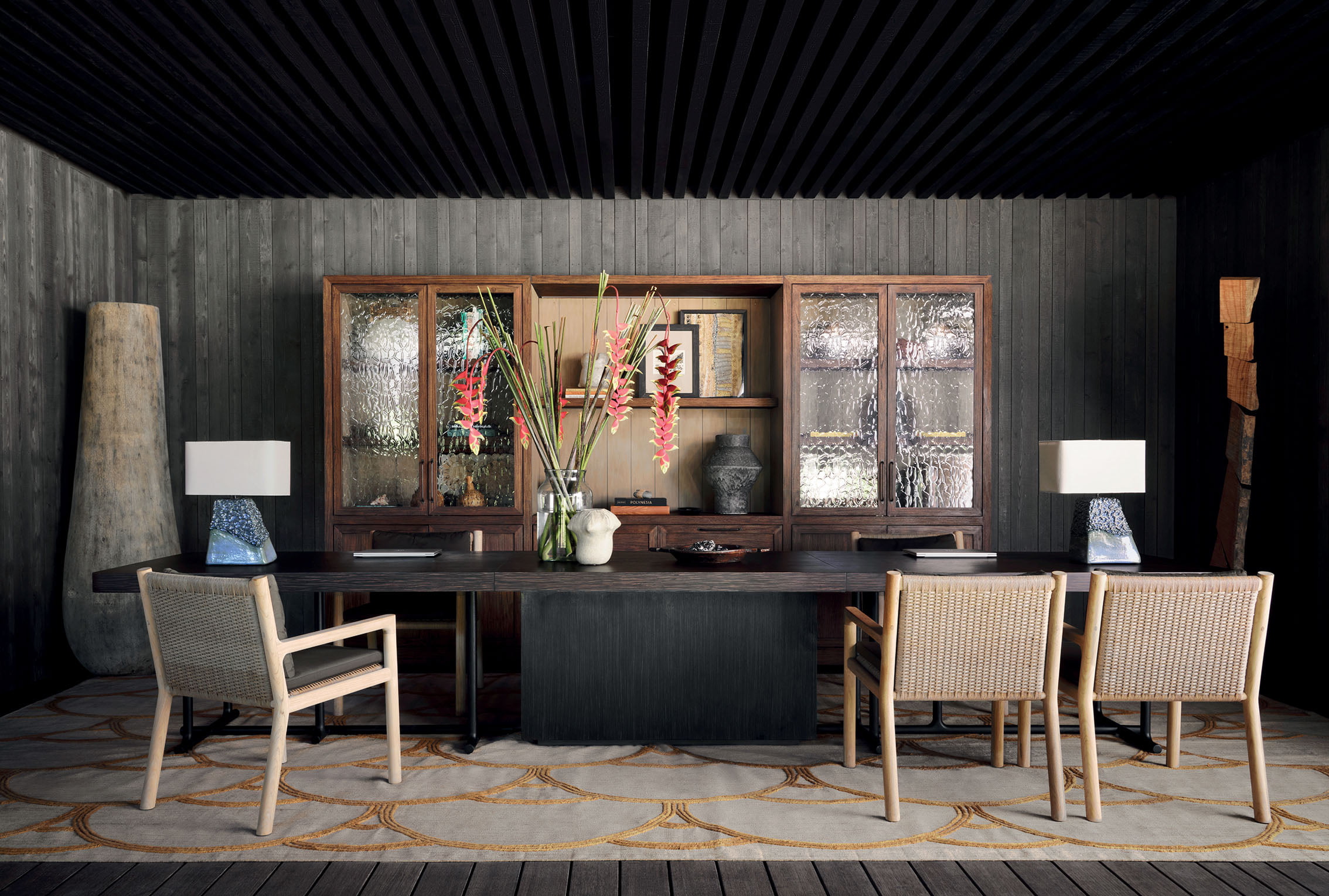
In the welcome lounge area, a ceramic installation by Christopher Edwards portrays the constellation of Makali’i rising over Hualālai, while in the surrounding garden an abstract terrazzo sculpture of a Piko – or a human navel – by Randall Shiroma symbolizes where life begins. Suspended from the vaulted ceiling of Moana, an installation by Kaili Chun is inspired by the crab claw shaped sails of the great voyaging canoe. This motif is emblematic of both the old and new Kona Village and can be seen all around.
Nearby, above the display kitchen, a 16ft-long painting by Lynn Capell illustrates the days of Kahuwai Bay before Kona Village, and sculptural ceramic sconces by Suzanne Wang, etched using shells from the property’s seashore, line the dining area. The ever-present connection to the Bay and ocean is further conveyed through traditional lashing patterns in the building’s columns, reminiscent of those found in canoes and fishing nets. The centrepiece of Moana, a vast live-edge table made from a Hilo-grown mahogany tree, was designed by Kamuela Hardwoods in Waimea. It is surrounded by oversized monkey pod tables that cater to the rest of the restaurant as well as the two private dining rooms, which are lined with prominently printed historical images.
Situated within the lava flow along the walk from the resort’s spa reception area to the treatment rooms, a multi-piece structure by John Koga brings the concept of flowing water back to the arid expanse of lava. Each guesthouse is adorned with a curated selection of pieces from additional Hawaiian artists, including Nancy Vilhauer, Pegge Hopper, Terry Field, Linda Spadaro, Roen Hufford, Jamie Makasobe, Jordan Souza, and Abigail Romanchak.
Related Articles

The Milestone Hotel & Residences London, England
Refurbished and extended Stables Bar shines new light on fabulous cocktails in a plush setting. W...
Read more
Son Xotano, Mallorca, Spain
In the rural centre of Mallorca, Annua Hotels’ latest opening swaps spectacle for stillness, where...
Read more
JW Marriott Crete Resort & Spa, Greece
Construction and conservation combine to create restorative hospitality sustainably. Set on the r...
Read more
Anthology by Style Library Contract
Testimonials
“SPACE has excellently researched, well-rounded, and informative editorial, presented in a stylish glossy layout, which is ideally suited to the calibre of our clients. The team, both editorial and advertising, are knowledgeable, helpful, and fun. Working with them is always a pleasure.”
Karen Brooks, Esprit Media Ltd
“Working closely with Space magazine, means that Barlow Tyrie products are seen by the right target audience and relative to premiere outdoor garden spaces.”
Steven Still, Barlow Tyrie
"Armourcoat has partnered with Space Magazine since launch in 2015, and is now regarded as an essential part of our international marketing strategy. Recognising the scale of subscribers and quality of content, we truly value the opportunity the platform (both in print and digital) presents."
Daniel Nevitt, Armourcoat
"We have partnered with SPACE Magazine since it’s launch and SPACE have now become one of our most influential media partners. Their readership of senior hoteliers and interior designers are exactly the audience we invite to attend the Independent Hotel Show and SPACE delivers on helping us position our brand in front of them. Not only does SPACE have the readership we want but they also work with us to tailor content they think is right which when time poor is much needed. I couldn’t recommend SPACE enough."
Sam Chance, Fresh Montgomery