Inside The Newman, London: A New Chapter in Fitzrovia Living
Blending bohemian heritage with refined contemporary design, The Newman offers a quietly confident take on luxury in one of London’s most characterful neighbourhoods.
WORDS BY EMMA KENNEDY
Opening a luxury hotel today, in London’s heady hospitality scene, you really do need something ‘other’ to offer. The evolving competition is borderline bonkers – and the choice for visitors has never been greater. I almost pity anyone having to make the decision.
However, nestled in the heart of Fitzrovia, on its namesake street, The Newman is a handsome new build that holds its head high among its Georgian and Victorian neighbours. With a cultural legacy left by London’s bohemian elite of the early 19th century, today the area is a mix of good-looking bars and cafés, independent shops, and many a creative business.
It’s the first hotel for the British hospitality brand Kinsfolk & Co.,Its location is its first ‘other’. Though only a short walk from the West End and all that brings, Fitzrovia feels markedly more local – and far less touristy. It’s a win-win: all the benefits of central London by day, without the chaos by night.
The hotel speaks ‘design’ from the moment you cross the threshold. It’s in every gentle curve, every fluted wood panel, and every bespoke fixture and fitting. As my husband said on arrival, “Wow, this is ringing a lot of bells.”
But they ring softly, with small details at every turn that reveal themselves quietly. And the joy is that nothing feels over-designed – just incredibly well thought out from the start.
“It was a labour of love,” Richy Almond, one half of design studio Lind & Almond, tells me as we begin the tour. “In a good way…” he adds quickly, in his gentle Geordie accent.
Chosen at the planning stage by Paul Brackley, Founder and CEO of Kinsfolk & Co, Pernille Lind and Richy Almond are the creative vision behind The Newman.
Delving deep into the neighbourhood’s history, the hotel’s narrative centres around the characters that once inhabited it. From bed frames and table bases that echo Nancy Cunard’s penchant for bangles, to carpets and cocktails inspired by occultist Aleister Crowley in the darkly seductive Gambit Bar, many of the influences and ideas were sparked by reading British writer Julian Maclaren-Ross, whose acute observations of the area are found in his 1947 novel Of Love and Hunger.
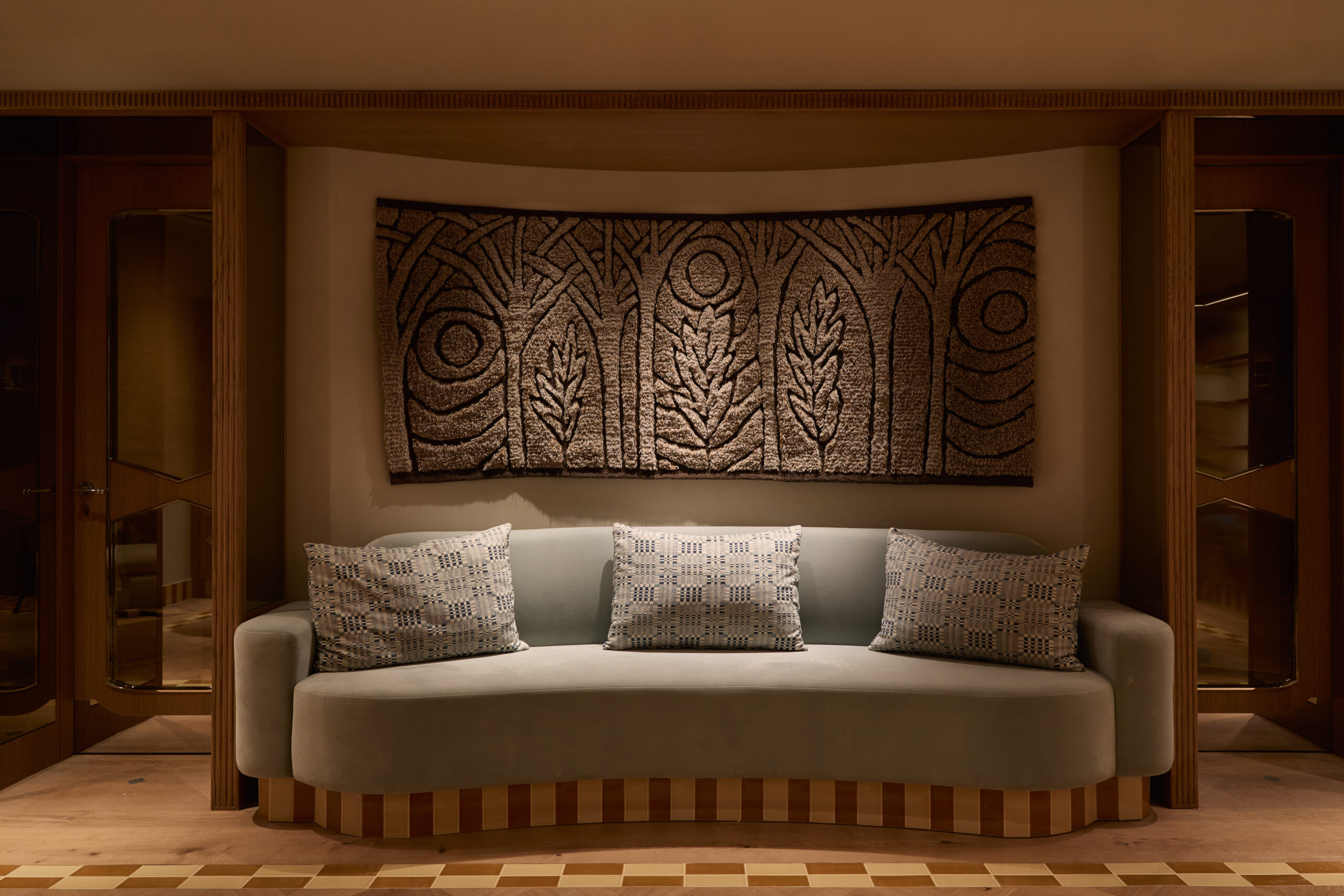
The design overtones, though recognisably Art Deco throughout, avoid all clichéd references. There’s no place here for chevrons and sunbursts. Instead, it’s quietly referenced through materials – from the dark oak burr that lines the lobby walls, to the punches of polished steel that curve around furniture, fixtures and fittings, to the lacquered finish on the staircase that sweeps down to the basement.
Throughout, curves permeate almost everything. In part, this is a response to the wedge-shaped plot the building occupies, which leaves few symmetrical spaces. The curves successfully distract the eye, while flooring patterns of squares and circles remain deliberately non-directional. They are clever solutions that cost Rich and Pernille more time than they care to remember, as they worked through floors and ceilings alike.
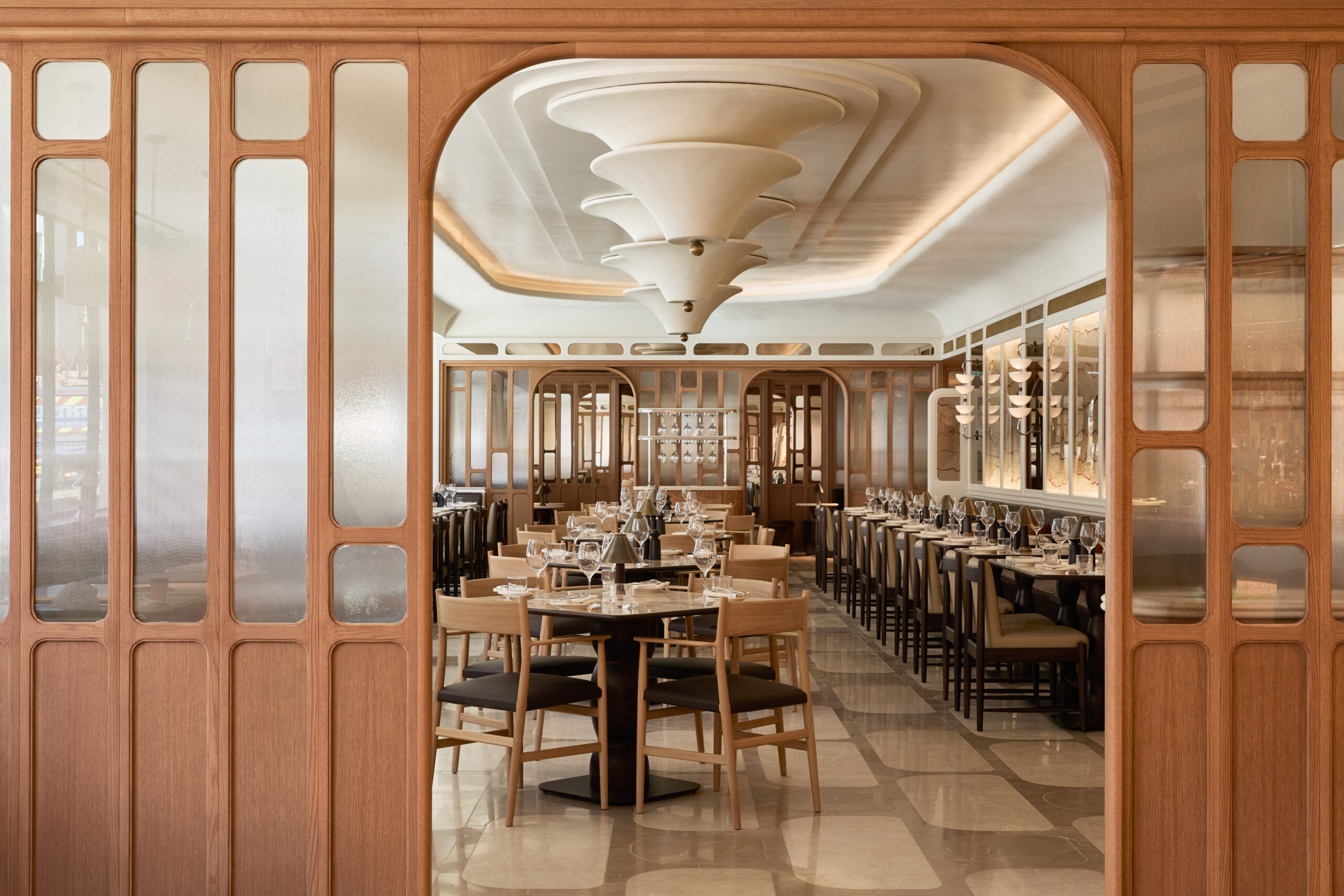
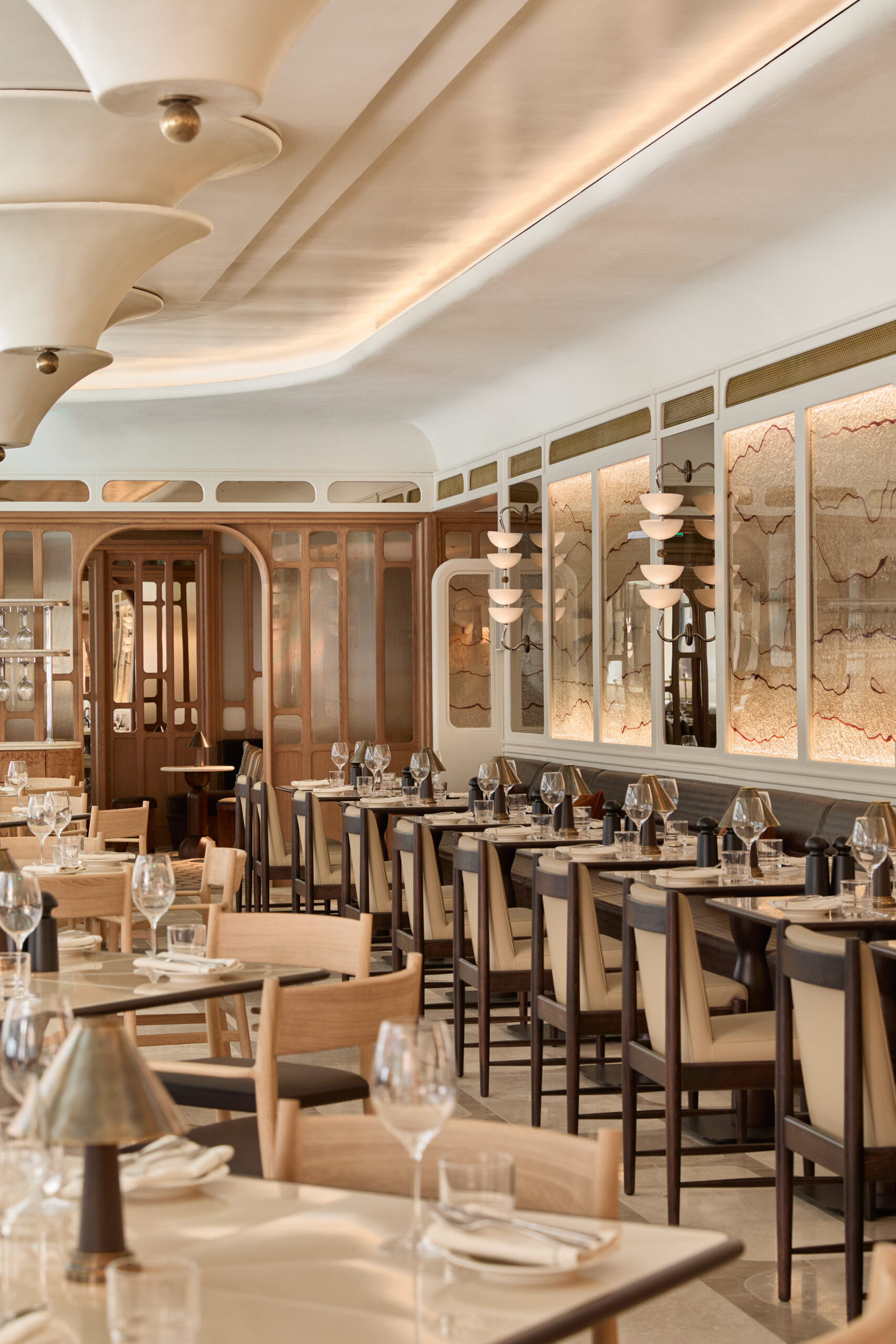
Off the lobby, divided into three distinct areas, Brasserie Angelica is a buzzy all-day restaurant. The monochrome palette and stripped-back, graphic aesthetic nod to British furniture designer and one-time local resident Gerald Summers, who came to prominence with his mid-century design of the Bent Plywood Armchair. Mixed in with more traditional Victorian influences evident in the joinery and layered glass screens – which visually blur the open kitchen beyond – it feels calm and elegant.
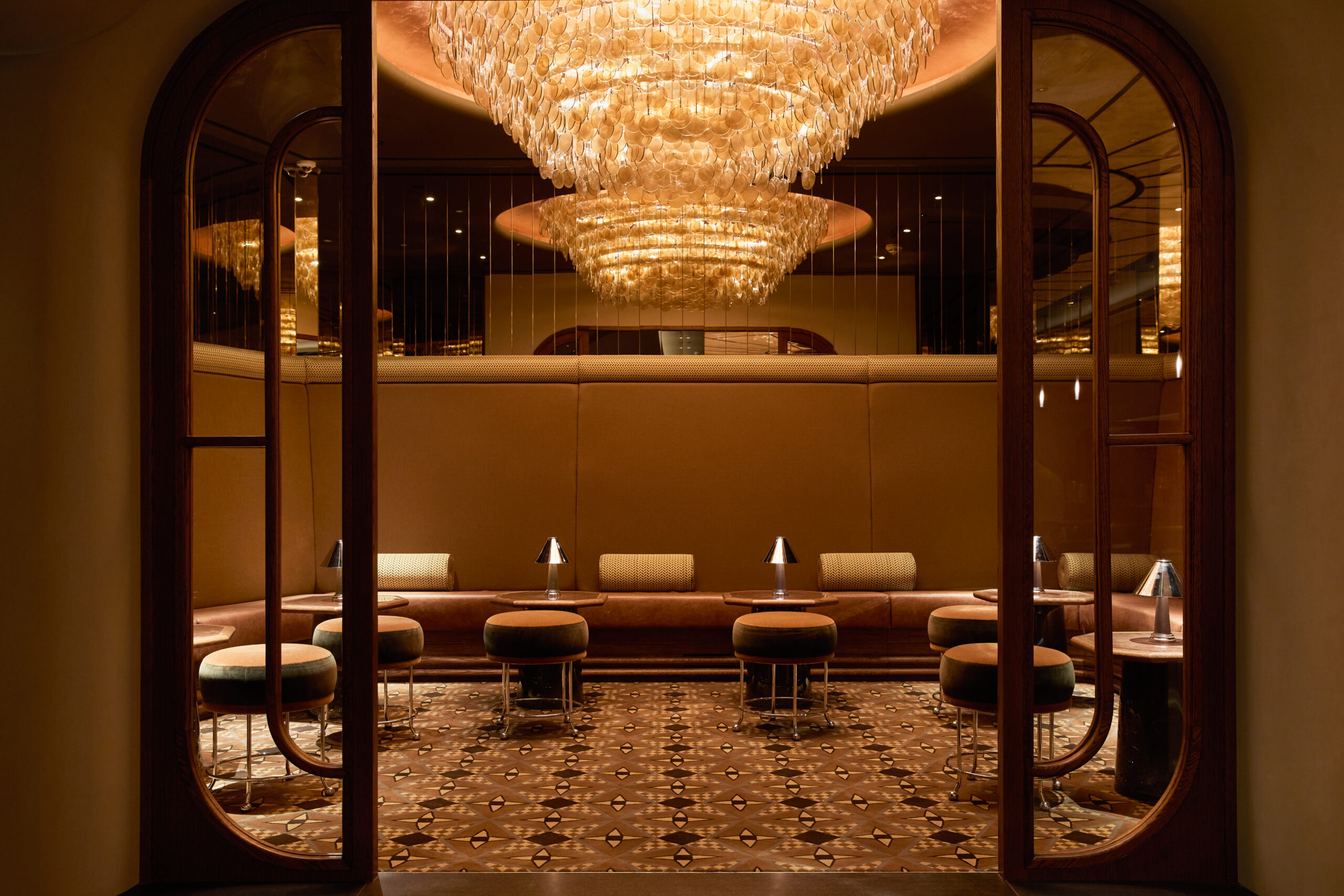
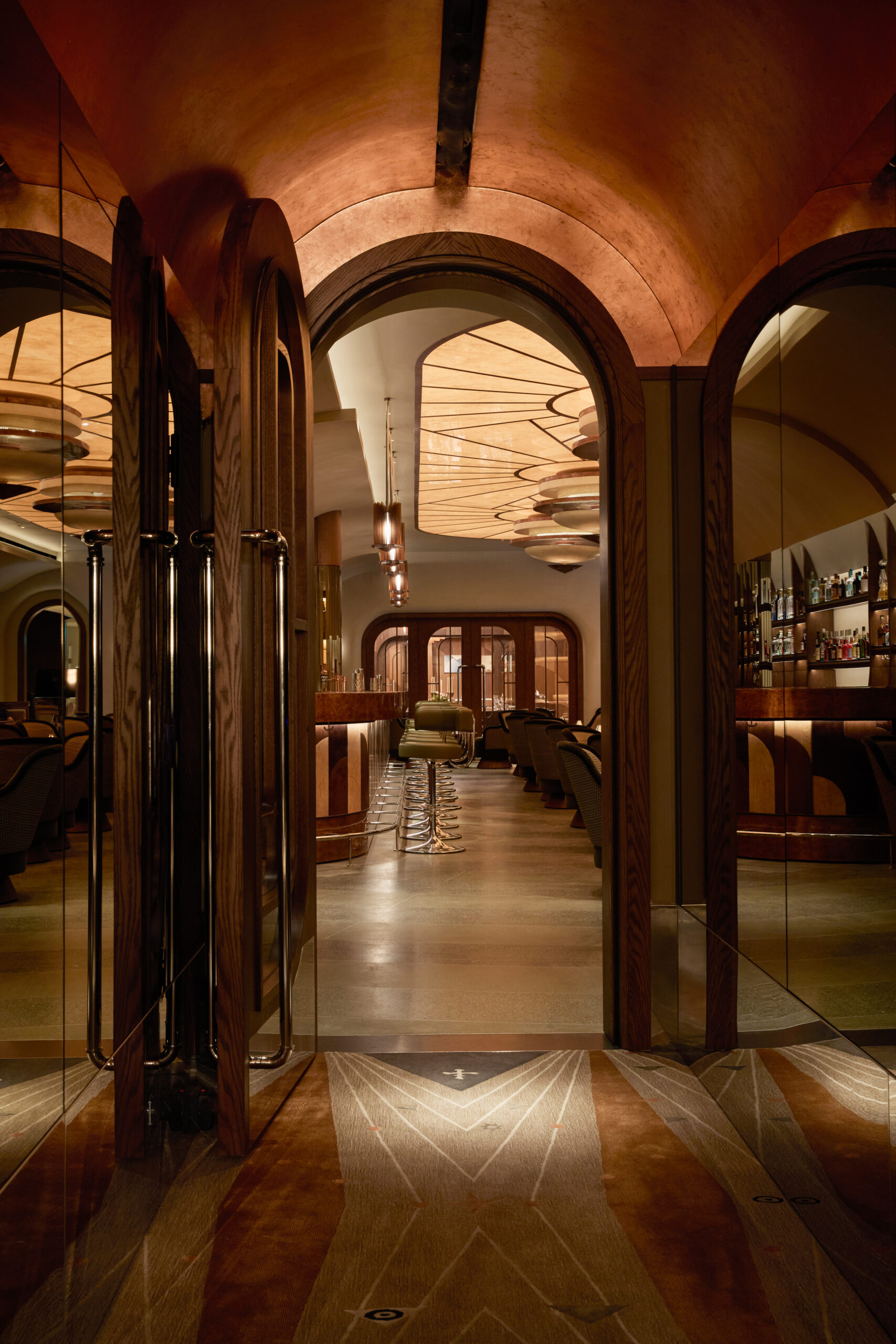
With one eye on the locals and one on hotel guests, the basement is home to Gambit Bar. With a separate entrance for the former, whatever your point of entry, it’s an impressive space. Dark and very moody in every sense, it takes on a very different feel from the lightness of touch upstairs. Here, a striking trio of domed lights dominates a backlit ceiling, casting a soft glow on the tables below.
“Everything above ground is more prim-and-proper, and then everything below is a lot darker,” Richy tells me.
Drawing on two of Fitzrovia’s darker characters for inspiration – Aleister Crowley, an eccentric occultist who created his own Egypt-influenced religion full of symbolic imagery, and Percy Wyndham Lewis, who founded the Vorticist art movement – the result is a contained departure from the softer lines that grace the floors above, with a design that has a harsher, more fractured geometry.
The depth of Lind & Almond’s research into the locale is an impressive demonstration of the studio’s approach. Left mostly to their own devices in terms of design, a rare request to deviate from the narrative brings a Scandinavian influence to the wellness floor. Inspired by the Swedish Grace movement, it has an earthy, artsy feel. Wall hangings by Christabel Balfour and Laura Vargas Llanas nod to the work of celebrated textile designer Märta Måås-Fjetterström. Sparing pops of rich colour sit beautifully among the natural tactility of warm oak, walnut, bronze and leather, which frame the doors and extend across the floors and furniture.
The added layer of creativity makes sashaying between its many offerings – an ice and salt room, steam room, sauna, hydrotherapy pool and treatment rooms – feel more gallery than spa. It’s a welcome and noticeable departure from the more traditional spa environment.
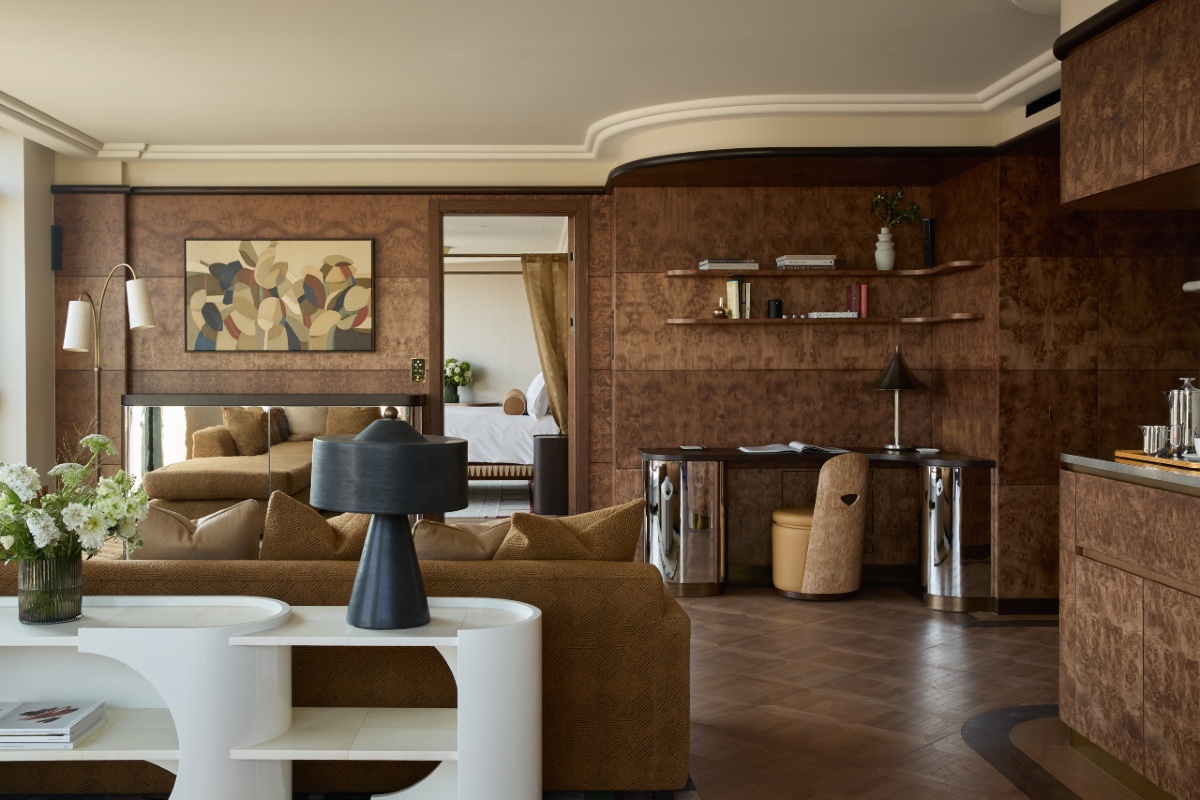
With 81 rooms, suites, studios and apartments across 12 categories, strictly speaking The Newman is a little too big to be described as boutique. But with no two spaces the same, it shares the bespoke ambience of something much smaller.
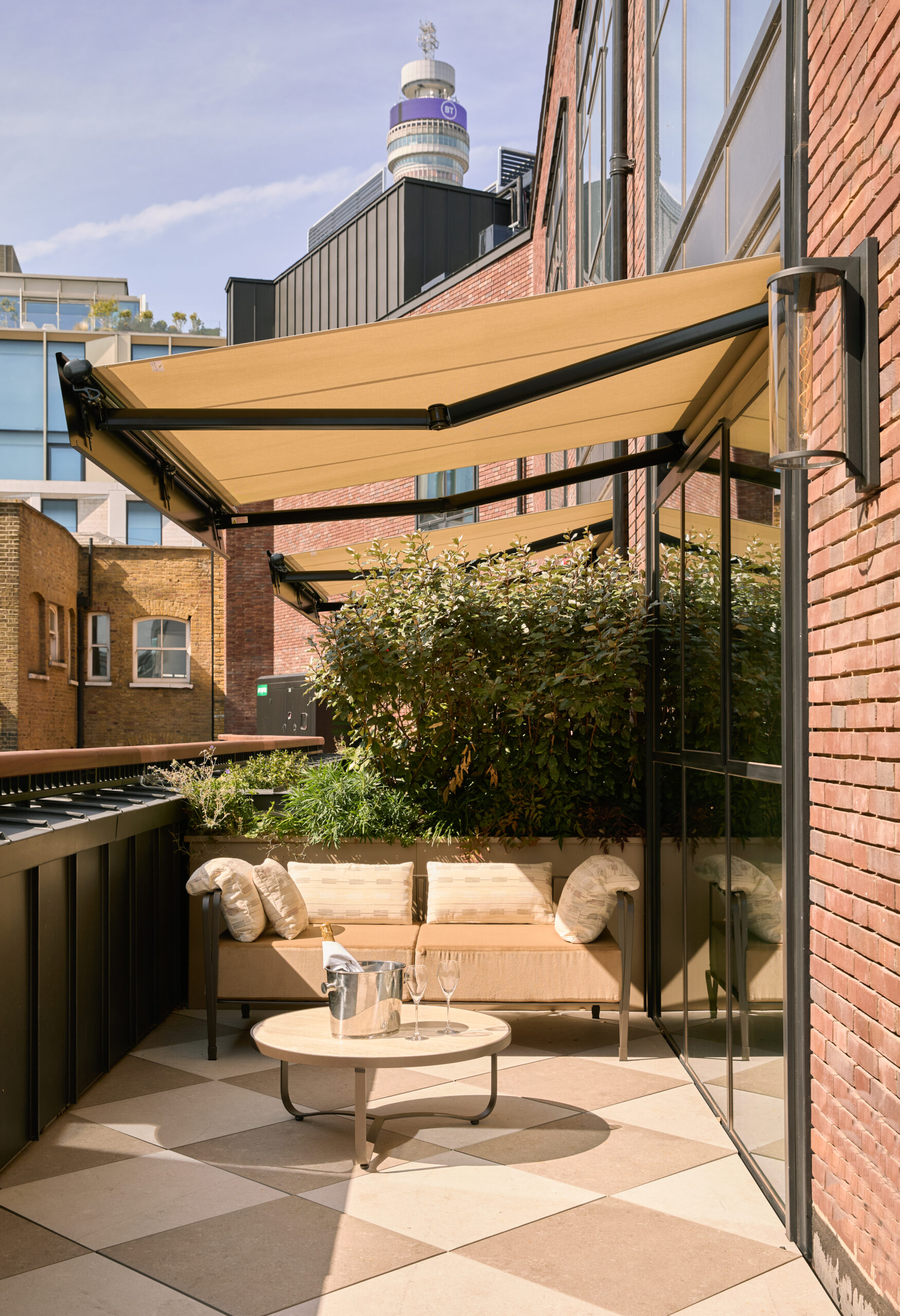
Following the fourth-floor corridor, peppered with contemporary black-and-white photographs of Fitzrovia, by Rory Langdon-Down, I arrived at my one-bedroom suite. On entering, straight ahead in full view, a vast floor-to-ceiling Crittall-esque window frames the Victorian building opposite and the BT Tower to the left – a visual reminder of just how central you are.
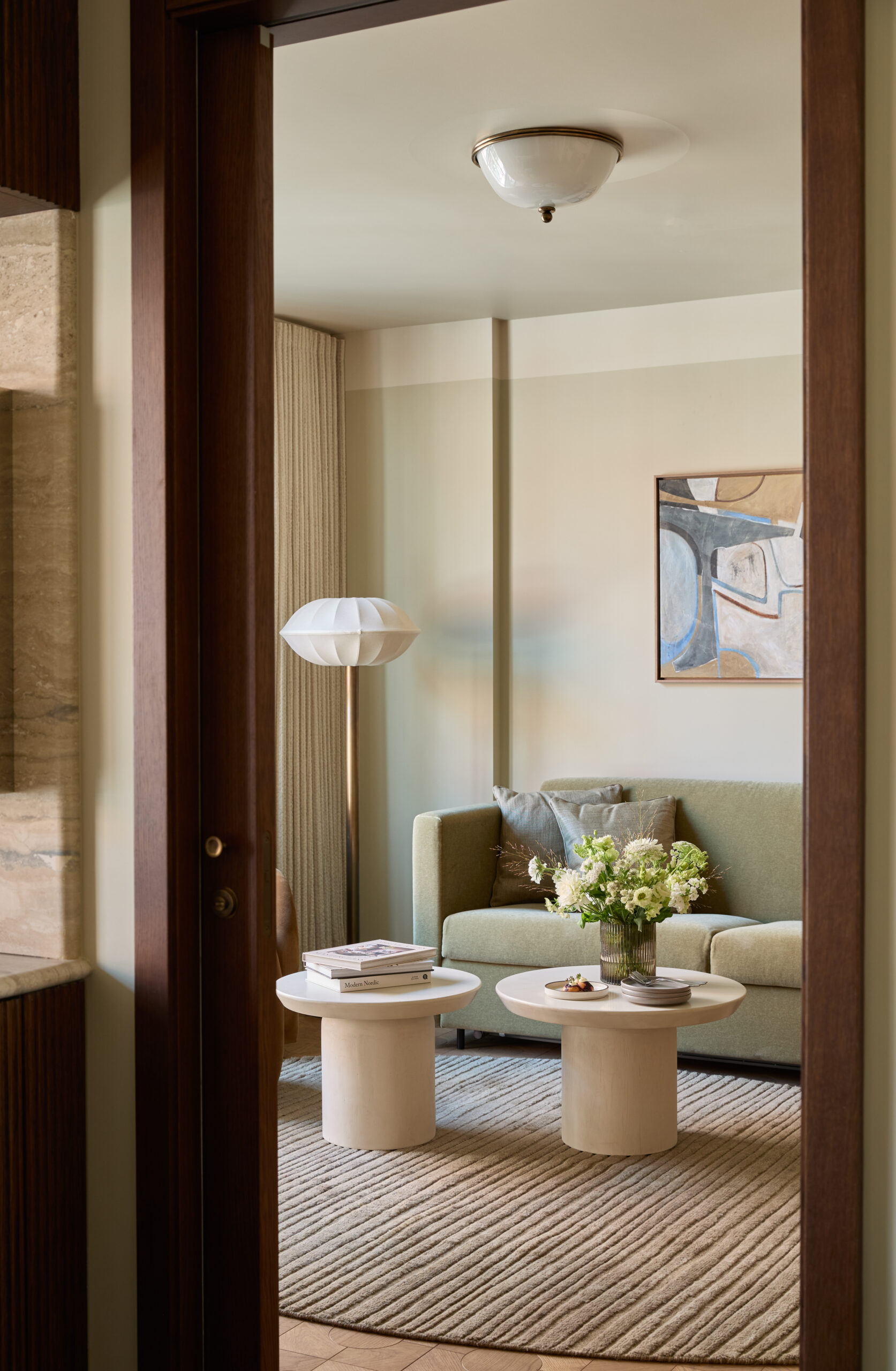
Like downstairs, the tones are muted and earthy – and unlike many hotels, where the design language in the rooms is dialled down, here the aesthetic continues. The curves, the squares and circles, the woods and polished steel once again stretch across the desks, floors and ceiling. Thick rugs echo the design of the inlaid wood floors they sit upon; slubby velvets and interesting jacquards in greens, ochres and deep reds; steel polished so brightly it could double as a mirror; and an actual mirror in the shape of the familiar French tabac sign.
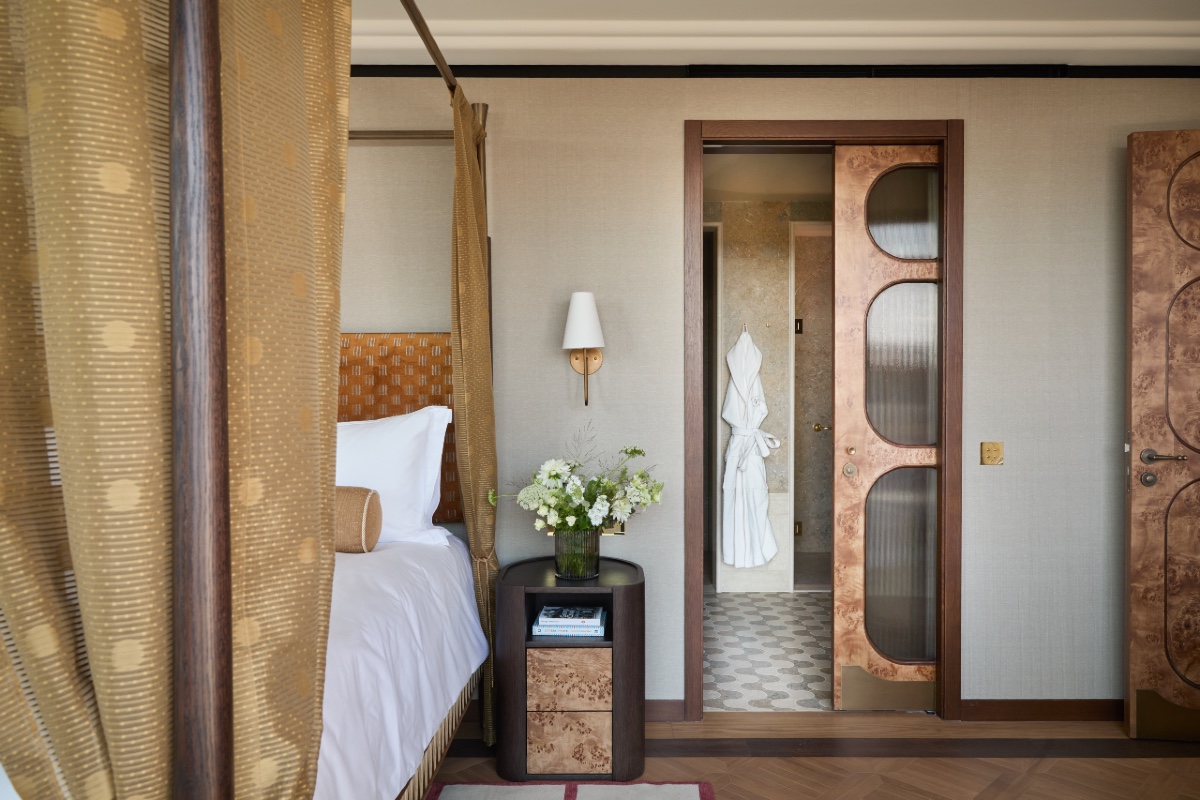
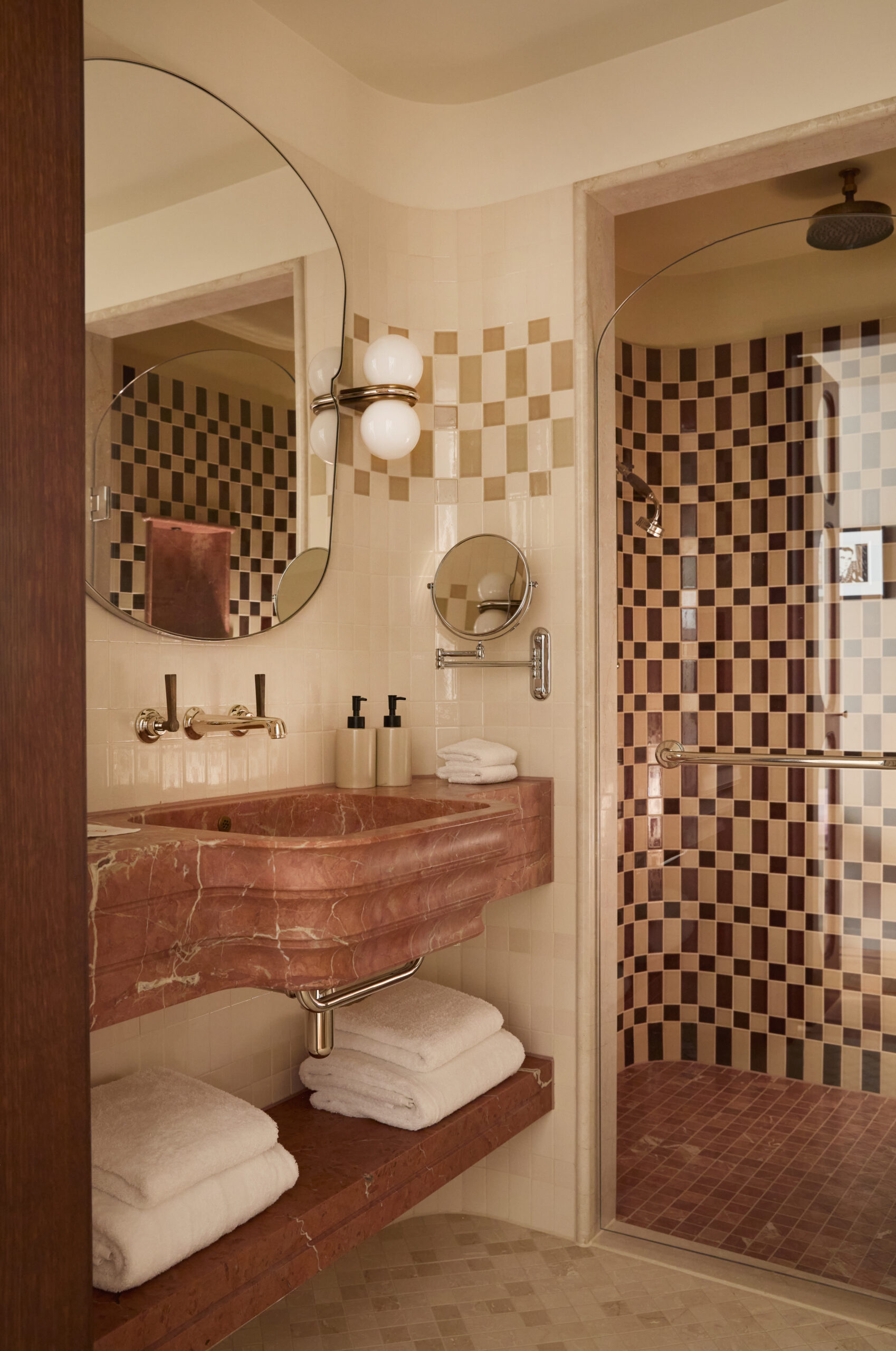
Bold and beautiful, the colour and curves extend into the bathroom, where the generously sized shower feels like a room of its own. Inspired by the Victorian glazed façades and bubble balconies found on neighbouring streets, the walls are finished in custom-made tiles, and a bespoke stone-carved vanity with a stash of Anatomē products sits opposite the freestanding tub.
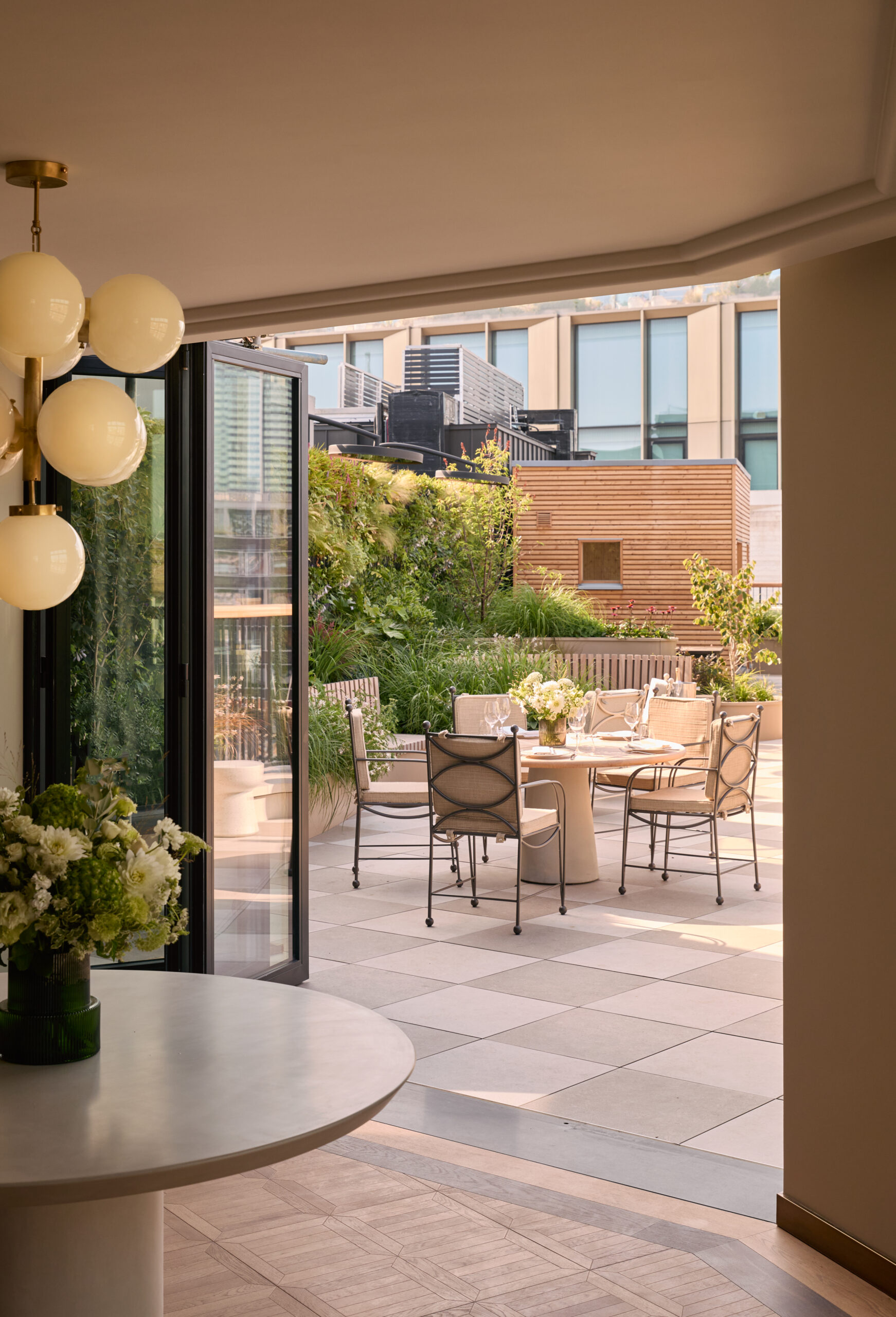
There is plenty of room choice – perhaps not quite ‘something for all budgets’ – but nothing that will disappoint, least of all the Penthouse. The generous residence spills onto a 130 sqm private terrace, offering its own sauna (and shower), cold plunge and far-reaching views across the London skyline.
Inside, the layout is calm and deliberate – an amplified version of the rooms below. Comprising a living room, dining room, bathroom, powder room, dressing room, guest cloakroom, private bar, dining table for up to eight guests and a leather-topped writing desk – there is plenty to enjoy.
As I write this review, The Newman is already scooping up awards. Its interiors and service deliver in spades, and the quality of every design element is unwavering. Compromise either never entered the equation, or has been so deftly resolved that, to the naked eye, it simply doesn’t exist.
Tapping into London’s bohemian past is a hospitality path well-trodden, but its hats off to Kinsfolk and Lind & Almond for sidestepping cliché, repetition and the lazy obvious with a design that clearly deserves the recognition it is receiving.
Images courtesy of Kinsfolk & Co.
Related Articles
Six Senses London, reimagined by AvroKo and EPR Architects
Six Senses has made its long-awaited UK debut inside the former Whiteley's emporium on Queensway, wh...
Read more
Inside Hannah St Hotel, Melbourne
Part grand hotel, part neighbourhood hangout and part cultural clubhouse, Hannah St Hotel brings a s...
Read more
Inside ISSUE 62, from the Editor
Read the latest issue of SPACE design magazine online now. DIGITAL EDITION | ...
Read more
We'd love to hear from you! Click the button to open the SPACE Magazine Survey and have your say.

Make sure you don't miss a single issue of SPACE by subscribing to receive the magazine. Click the button above to signup.