Egypt’s hotel pipeline: inside Africa’s largest development boom
Twenty-three years late and at twice its original budget, the Grand Egyptian Museum has finally opened. And so has the floodgate – on a hotel pipeline four times the size of any other on the continent, with the world's biggest operators first through the door
WORDS BY JESS MILES
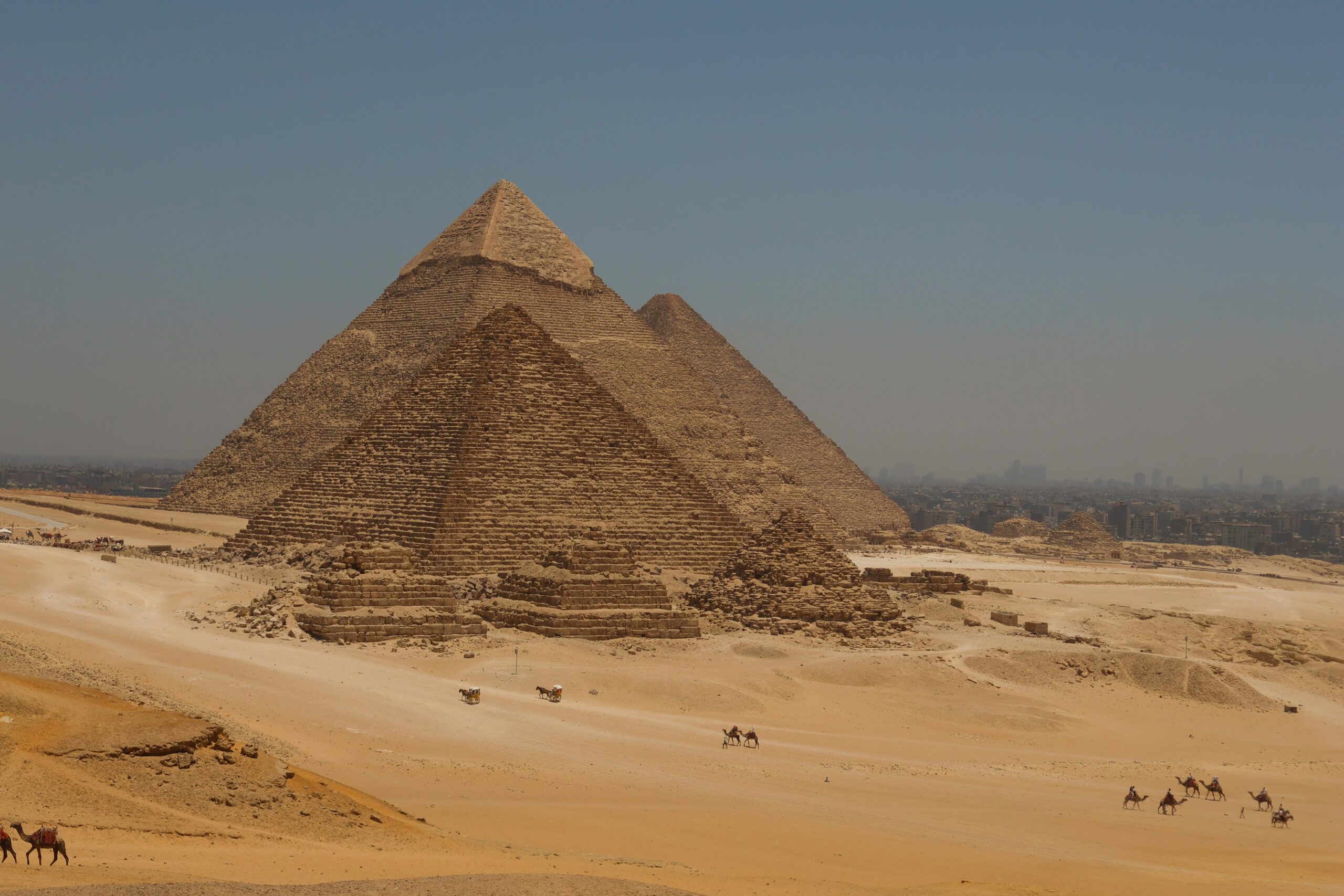
If 2025 was the year Egypt finally reopened the door to its own past, 2026 is the year the global hospitality industry walked through it. The November 2025 inauguration of the Grand Egyptian Museum (GEM) – a $1 billion, 500,000-square-metre complex two kilometres from the Pyramids of Giza, two decades in the making – was the catalyst. Attended by King Felipe VI of Spain, King Philippe of Belgium, Queen Rania of Jordan and a roster of heads of state, the opening ceremony reframed Egypt as a contemporary cultural destination rather than any other standard post-pandemic recovery story. The world’s largest museum dedicated to a single civilisation now holds more than 100,000 artefacts, including, for the first time since Howard Carter’s 1922 discovery, the complete 5,398-piece Tutankhamun collection.
The numbers behind the moment are emphatic. According to the Egyptian Ministry of Tourism & Antiquities, Egypt welcomed 15.7 million tourists in 2024 and is on track for 18 million in 2025, with the government targeting 30 million by 2032. International arrivals were up 48% year-on-year in the first quarter of 2025 alone, and tourism revenue reached $12.5 billion in the first nine months. The GEM itself is forecast to draw five million annual visitors at maturity, with daily attendance projected to triple from 5,000 to 15,000.
That demand has translated into the most concentrated hotel development surge anywhere on the African continent. According to W Hospitality Group’s 2026 Hotel Chain Development Pipelines in Africa report, Egypt now leads with 185 planned hotels and 45,984 rooms – more than a third of the entire continental pipeline and four times the volume of second-placed Morocco. Of those, 51.4% are already under construction. The country signed 39 new hotel deals in 2025, and 33 openings are forecast for 2026 alone. Greater Cairo accounts for 88 of those projects and 22,111 rooms, the largest urban hotel pipeline of any city in Africa, with Accor (28 properties), Marriott (20), Hilton (18) and IHG (14) collectively committing some 16,400 rooms to the capital. Beyond Cairo, Sharm El Sheikh’s pipeline carries the largest average resort size in Africa’s top 10 markets at 539 rooms, and Marsa Alam has 14 new resorts in development. Putting the numbers into context, SPACE looks at the projects shaping Egypt’s next chapter.
RECENT OPENINGS
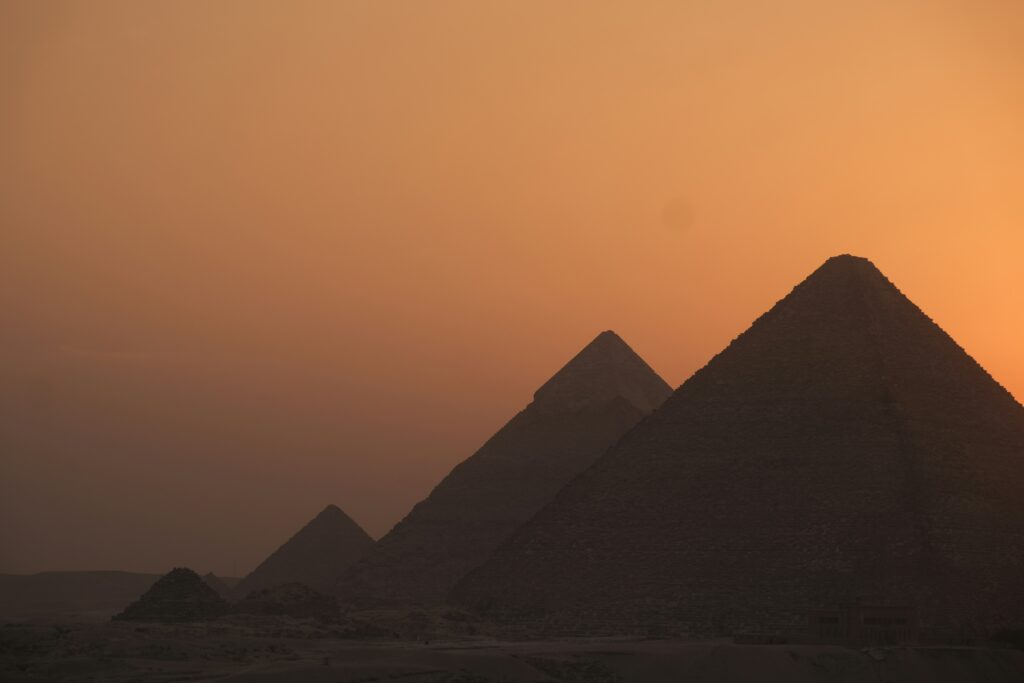
The headline opening of the recent cycle is Sofitel Cairo Downtown Nile, which began welcoming guests in early 2025 and is said to be the largest Sofitel anywhere in the world. Designed by Egyptian firm ElGhoneimi Architects – the same studio behind Conrad Cairo and Sofitel Legend Old Cataract Aswan – the 615-key, 24-storey property occupies a prime stretch of the Nile’s east bank, minutes from Tahrir Square. Interiors thread Sofitel’s French codes through Egyptian craft references, with a sculptural mahogany-and-smoked-glass staircase rising to a cluster of droplet-shaped pendant lights in the lobby. The hotel runs to seven restaurants and bars, a 300-square-metre outdoor pool, a Club Millesime concierge floor and more than 2,000 square metres of event space. It is Accor’s fourth Sofitel in Egypt, joining the El Gezirah, Winter Palace Luxor and Old Cataract Aswan.
On the Red Sea, Rixos Radamis Sharm El Sheikh opened in 2023 in a phased fashion which is still carrying on through 2026 and is the most significant single piece of new resort supply in Sinai. With more than 1,600 rooms across multiple wings (the newest ‘Blue Planet’ wing carrying the highest specification), the integrated resort signals a deliberate move beyond Sharm’s traditional all-inclusive volume play and toward a Las Vegas-scale entertainment-led model. Other recent openings on the coast include Jaz Albero Hurghada, a more design-conscious upscale family resort that solves the location problem of the more isolated Sahl Hasheesh enclaves, and DoubleTree by Hilton El Gouna Mangroovy, a younger, kitesurf-led debut on El Gouna’s only open-sea beachfront.
IN THE PIPELINE
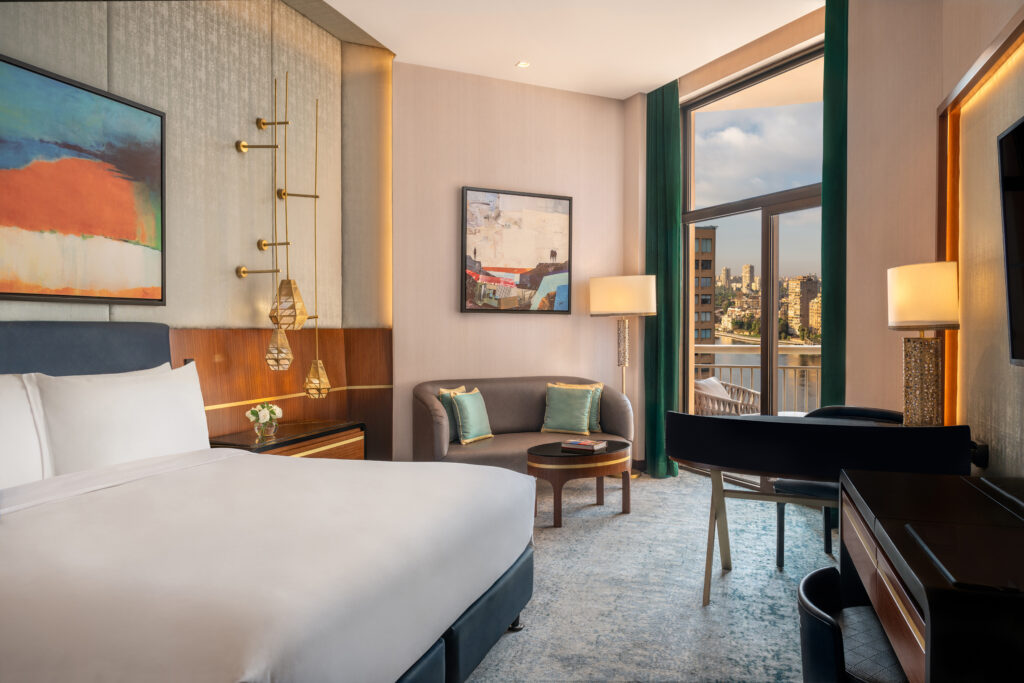
The most-watched Cairo opening is Mandarin Oriental Shepheard, Cairo – the rebirth of the celebrated 1841 hotel that hosted Winston Churchill and the Maharajah of Jodhpur before being destroyed in the 1952 Cairo Fire. Owned by Saudi Arabia’s Al-Sharif Group and operated by Mandarin Oriental as the brand’s first property in Egypt, the 276-key hotel (188 rooms, 88 suites) sits on the Nile’s east bank, with interiors by Paris-based Sybille de Margerie tasked with preserving the building’s heritage. After several timeline shifts, current expectations point to a 2026/27 reopening.
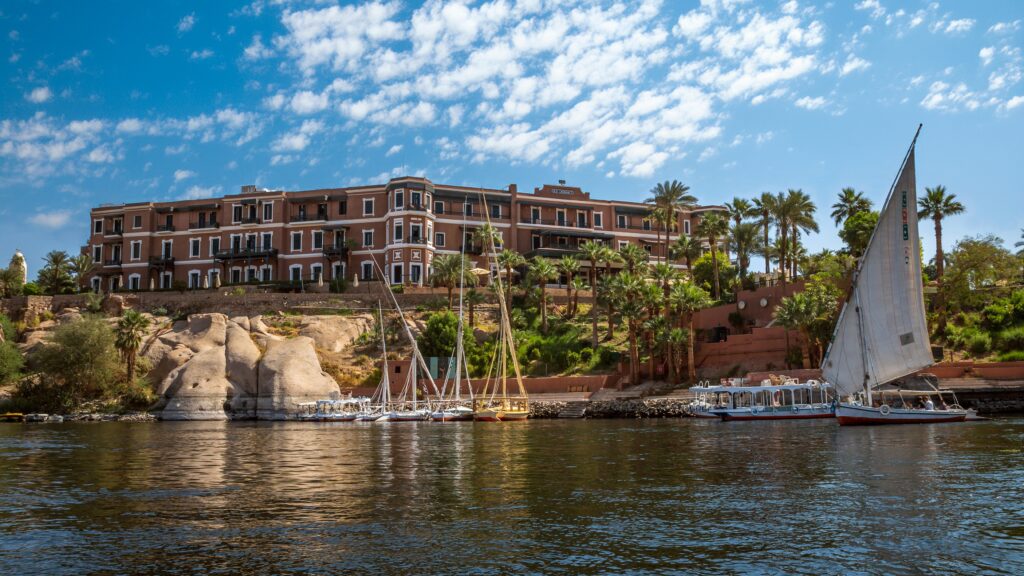
Mandarin Oriental’s Egypt strategy goes considerably further. In March 2026 the group announced it would assume management of two of Upper Egypt’s most historic hotels: the Old Cataract in Aswan and the Winter Palace in Luxor, both partnered with Talaat Moustafa Group, with full reopenings as Mandarin Oriental Old Cataract Aswan and Mandarin Oriental Winter Palace Luxor scheduled for July 2027. Alongside them, the brand will launch its first-ever Nile river cruise – owned by K G Company (part of Garranah Group) and operated by Mandarin Oriental – with three- and seven-night itineraries between Luxor and Aswan. Group CEO Laurent Kleitman has framed the package as “a seamless, end-to-end experience that unfolds across land and water,” and it amounts to one of the most ambitious single-country plays the brand has ever launched.
Hilton, meanwhile, is moving aggressively. Signia by Hilton Cairo Skywalk and the accompanying 200-unit branded residences will mark the debut of the Signia brand in Africa, located in West Cairo’s Skywalk mixed-use development a 20-minute drive from Sphinx International Airport and the GEM. The 200-key hotel will carry one of Cairo’s largest meetings footprints at 5,000 square metres, including a ballroom and outdoor event lawn. Hilton currently operates 14 hotels in Egypt and has 27 more in pipeline – part of a stated plan to triple its presence and exceed 40 trading properties, with further signings already announced including the Hilton Cairo New Capital Tower and a Hilton + Hilton Garden Inn pairing in the New Administrative Capital, both slated for 2028.
Closer to the Pyramids themselves, Accor and Abu Dhabi Tourism Investment Company are progressing the Sofitel Legend Pyramids Giza, scheduled for late 2027 and positioned to capture the spillover demand from the GEM. Hilton is separately introducing its lifestyle brands Curio Collection and Tapestry Collection to the Egyptian market, while Marriott’s 20-strong Cairo pipeline is expected to broaden the upper-upscale and luxury supply across both the historic east bank and the New Administrative Capital.
On the Red Sea, the development picture is shifting from quantity toward specialisation. Marsa Alam, long the quietest of Egypt’s diving coasts, has 14 resorts in pipeline with more than half scheduled to open in the next 24 months, repositioning the region as a higher-end alternative to Hurghada’s volume model. Sharm El Sheikh’s nine pipeline projects – with that 539-room average – confirm the destination’s pivot toward integrated mega-resorts rather than the standalone all-inclusives that defined the last cycle.
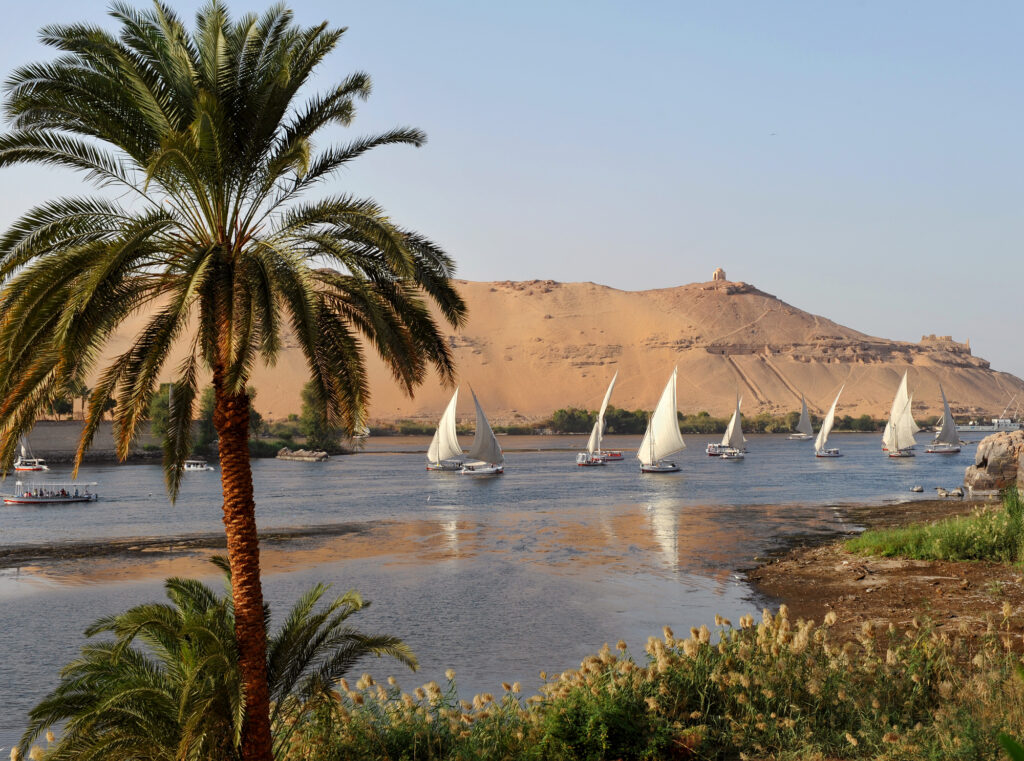
As the country approaches its 30-million-visitor target for 2032, what is happening across Cairo, Luxor, Aswan and the Red Sea is not as recovery focused as many of the destinations we cover, but more a renewal of its public persona. Egypt’s hotel line-up has historically lagged its archaeological pull, but the current wave – led by the luxury likes of Mandarin Oriental, Hilton, Accor and Marriott, and underwritten by Gulf and domestic capital – is finally closing that gap. The harder question, as W Hospitality Group’s 2026 report notes, is timing. Across the African continent, only around a third of pipeline rooms typically open on schedule, and 20% of those due by end-2026 are not yet under construction. Egypt’s figures sit slightly behind even that: seven hotels opened in the country in 2025, up from just three in 2024 – a doubling, but still modest against the scale of what is signed. The reason is partly the youth of the pipeline itself. Some 60% of Egypt’s 185 projects (111 deals) were signed in 2022 or later, meaning a large share may be still too early in the development cycle to complete in time for the government’s tourism targets. The pipeline is coming, but how much of it actually trades by the museum’s second anniversary is the story to watch.
Related Articles
How a Franciscan cloister became Four Seasons Cartagena
A 16th-century Franciscan cloister, a 1920s social club and a clutch of old theatres have been knitt...
Read more
The SPACE Edit: our pick of bathroom products to know right now
Sculptural basins, jewel-like brassware and a transparent bath: here is our Editor’s selection of ...
Read more
Objects of desire: Lee McNichol’s little black book of obsessions
Lee McNichol, CEO and Creative Director of Studio Sixty7, shares his latest obsessions and inspirati...
Read more
We'd love to hear from you! Click the button to open the SPACE Magazine Survey and have your say.

Make sure you don't miss a single issue of SPACE by subscribing to receive the magazine. Click the button above to signup.