Joyce Wang Studio looks to Hong Kong’s heritage for Mandarin Oriental The Landmark
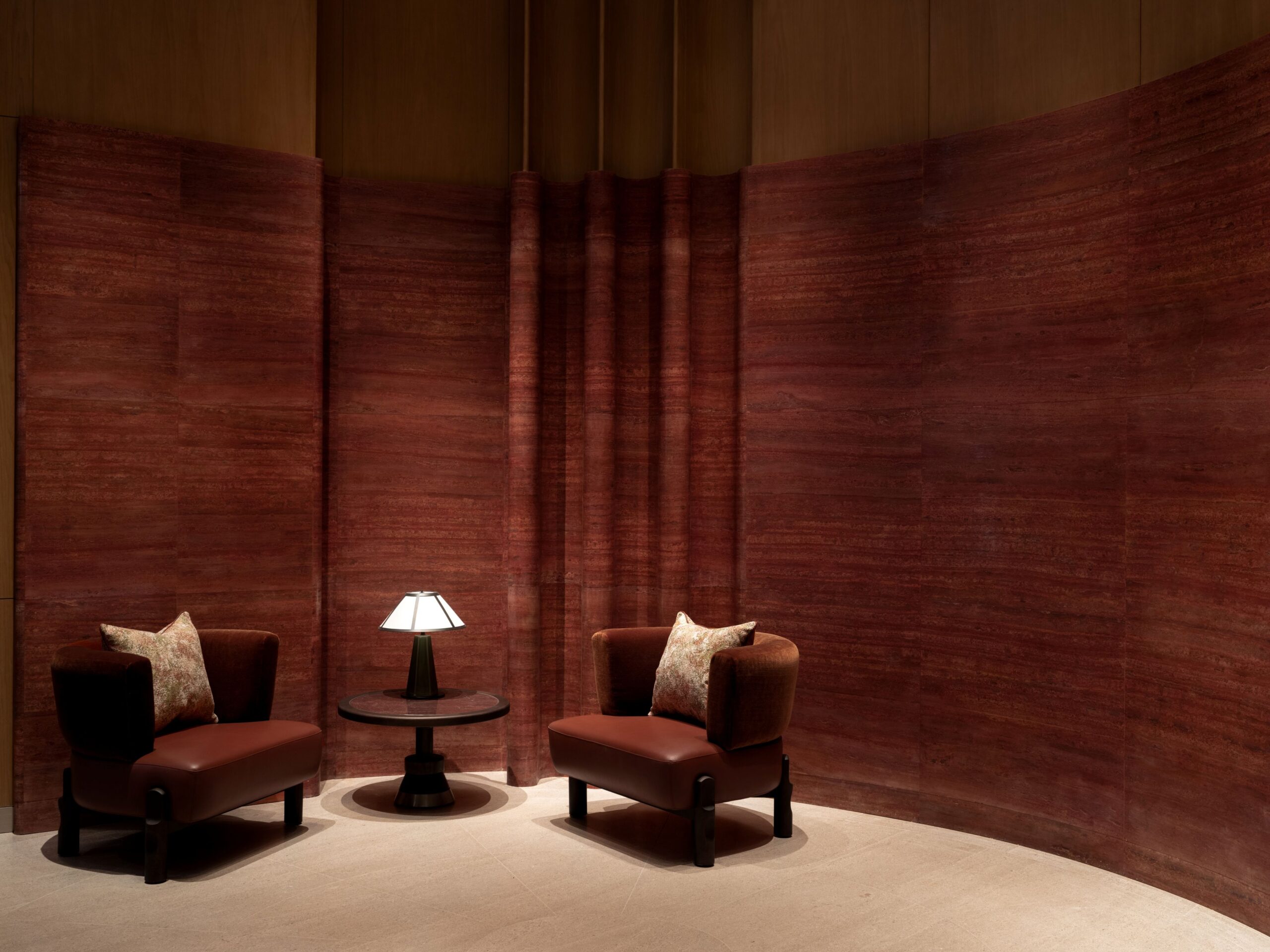
Mandarin Oriental The Landmark, Hong Kong enters a new era through Joyce Wang Studio's thoughtful reimagining of one of the city's most celebrated luxury hotels, creating interiors that draw inspiration from Hong Kong's architecture, artistry and enduring spirit.
WORDS BY SPACE EDITORIAL
Luxury hotels have long sought to immerse guests in the destinations they visit, yet few cities present a richer source of inspiration than Hong Kong. Defined by dramatic contrasts between heritage and modernity, dense urban energy and moments of unexpected tranquillity, the city offers a complex identity that extends far beyond its famous skyline. Increasingly, designers are looking beyond familiar cultural references to create hospitality experiences that feel genuinely rooted in place, allowing architecture, materials and craftsmanship to tell the story of a destination as powerfully as its views.
That philosophy underpins the reopening of Mandarin Oriental The Landmark, Hong Kong, where Joyce Wang Studio has completed a comprehensive redesign that reimagines the hotel as an elegant urban residence rather than a conventional luxury property. Situated within the LANDMARK development in Central, itself undergoing transformation as part of Hongkong Land's Tomorrow's CENTRAL masterplan, the hotel introduces a renewed arrival experience, refreshed guestrooms and suites, expanded dining destinations and a revitalised wellness offering, while strengthening its connection to the city that has shaped its identity for decades.
Charged with giving the property a new streetside statement, Neri&Hu took on the transformation of the façade – solidity and mass in a district that has settled on glass. The former Harvey Nichols wedge is kept and re-covered in custom cast terracotta, laid in a staggered bond across shallow scallops that pick up the pleat of the old curtain wall without repeating it. Bronze shelves carry each row; cast glass tiles, set sparingly, light the surface after dark.
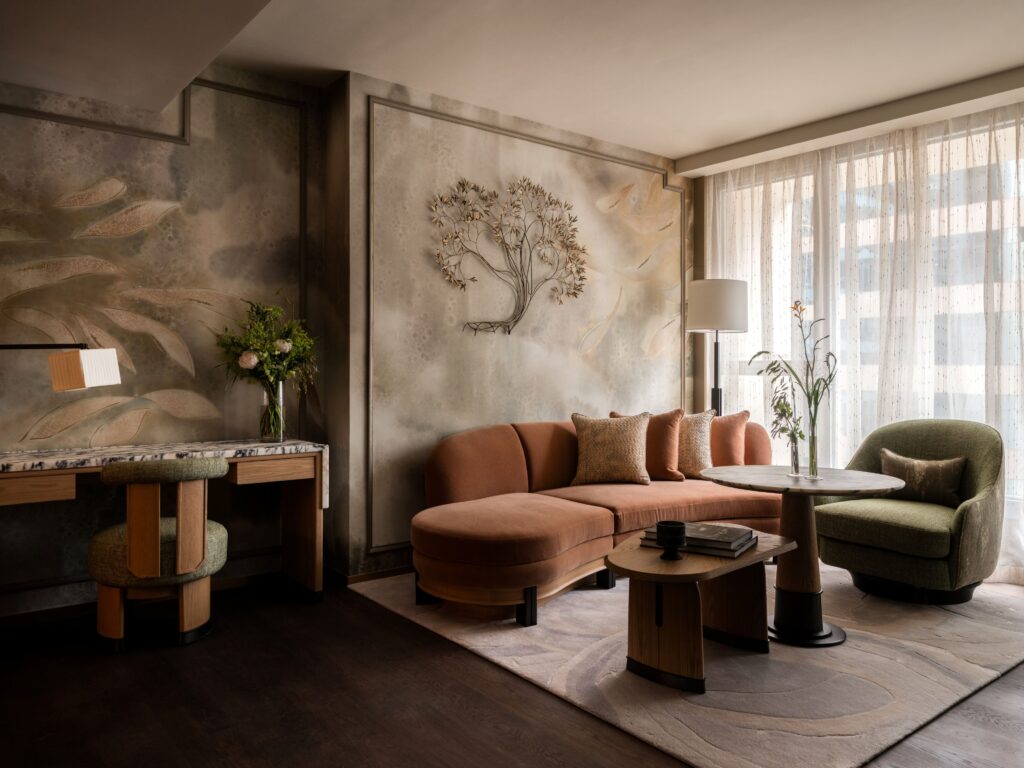
Inside, for Hong Kong-based Joyce Wang – who returns to the project a decade on from her original design – the latest renovation represents an opportunity to deepen that relationship with Hong Kong itself. Rather than adopting an overtly decorative approach, the studio looked to the city's historic mansions and colonial residences, drawing inspiration from landmark buildings such as Yu Yuen and Tai Fu Tai. Rich terracotta, deep green and natural timber reference the gardens, brickwork and architectural detailing of these historic homes, while stone, textured wallcoverings and handcrafted finishes create interiors that feel warm, layered and unmistakably residential.
Guests now arrive through a new entrance on Queen's Road Central before ascending a sweeping stone staircase that unfolds like the entrance hall of a grand private residence. Sculptural alcoves display specially commissioned artworks, while gilded glass, bespoke tapestries and custom carpets abstract the familiar silhouette of Hong Kong's skyline into subtle artistic interventions that continue throughout the hotel. Rather than simply decorating the interiors, art becomes an integral part of the narrative, encouraging moments of curiosity and reflection as guests move through the building.
The residential philosophy continues across the hotel's 109 guestrooms and suites, where lightened timber floors, cracked gesso finishes, Fromental silk wallcoverings and bespoke rugs inspired by historic Hong Kong brickwork establish a calm counterpoint to the city's fast pace. Larger suites retain the property's signature curved glass-walled bathrooms centred around seven-foot circular bathtubs, while the 167sqm Entertainment Suite introduces a private dining room, Gaggenau kitchen and climate-controlled FreshBed sleep system, further blurring the line between luxury hotel and sophisticated city residence.
Beyond accommodation, Mandarin Oriental The Landmark continues to strengthen its reputation as one of Asia's leading culinary destinations. Under Culinary Director Richard Ekkebus, the hotel now brings together seven Michelin stars and one Michelin Green Star beneath one roof, anchored by the three-Michelin-starred Amber and complemented by Sushi Shikon, Kappo Rin, SOMM and the newly introduced champagne bar BLANC DE NOIRS. Elsewhere, COMMUNE, designed by Joyce Wang Studio as a contemporary coffee atelier and social hub, reinterprets the warmth of a family gathering space through richly patinated metals, jade-toned tiles and domestic-style lighting inspired by historic Hong Kong homes.
Wellbeing forms the final chapter of the redesign. Scheduled to reopen shortly after the hotel, the new spa takes its conceptual inspiration from the rhythm of breathwork and the expressive gestures of Chinese calligraphy. Custom flooring, layered textures and carefully curated artworks create spaces intended to slow movement and quiet the mind, while dedicated yoga, Pilates and Gyrotonic studios, thermal experiences and holistic treatments establish a contemporary urban sanctuary at the heart of Central. Rather than imposing a new identity, Joyce Wang Studio has distilled the character of Hong Kong into an environment that feels both deeply familiar and quietly luxurious. The result is a hotel that celebrates the city's past while embracing its future: one that offers guests not simply a place to stay, but a genuine sense of belonging within one of Asia's most dynamic destinations.
Related Articles
Leaders: Bianca Passera on Lario Hotels’ new 5-star luxury brand, Vista
As she contemplates ceding control of the family business to another generation, Bianca Passera, Pre...
Read more
Six Senses London, reimagined by AvroKo and EPR Architects
Six Senses has made its long-awaited UK debut inside the former Whiteley's emporium on Queensway, wh...
Read more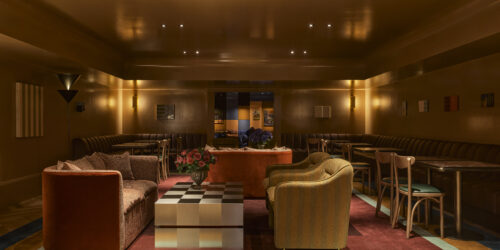
Inside Hannah St Hotel, Melbourne
Part grand hotel, part neighbourhood hangout and part cultural clubhouse, Hannah St Hotel brings a s...
Read more
We'd love to hear from you! Click the button to open the SPACE Magazine Survey and have your say.

Make sure you don't miss a single issue of SPACE by subscribing to receive the magazine. Click the button above to signup.