Visionaries: designed to Roam with Mary Alice Palmer
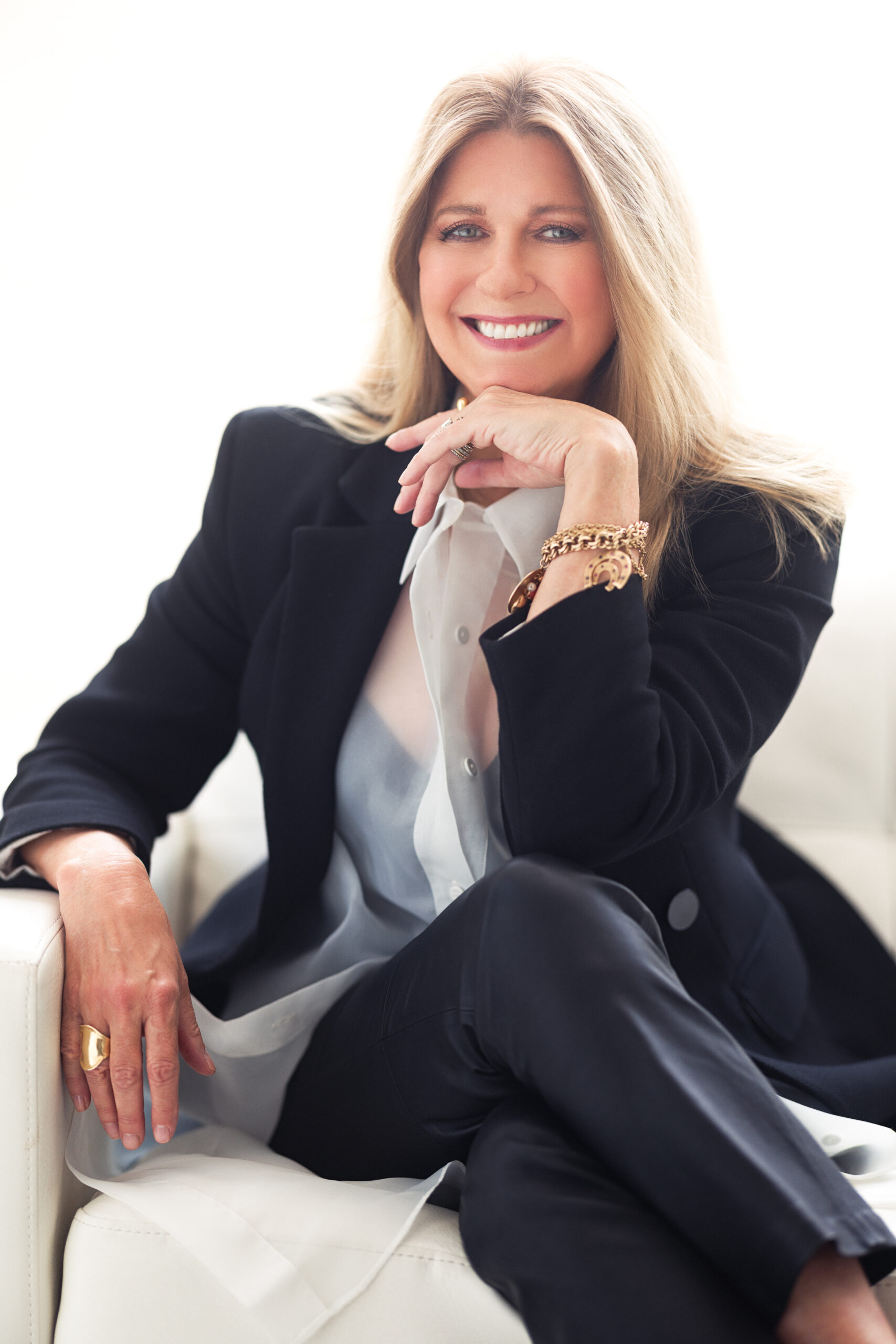
Three years after taking her practice independent, Mary Alice Palmer is designing hotels layered with the stories of their destinations. SPACE meets the Founder and Global Creative Director of ROAM Interior Design
WORDS BY JESS MILES
Mary Alice Palmer grew up in transit, between her mother’s family ranch in Texas and her father’s in Los Angeles. The hours in between were hers to fill, and she filled them with invention. “I sometimes refer to myself as a westerner, a hybrid of both Texas and California cultures, my mother a native Texan from a 150-year-old family ranch and my dad a native Angeleno,” she says. “Wide open spaces and traveling the roads between them have shaped my imagination as my mind wandered across the desert, the mountains and the Pacific inventing stories to entertain myself.”
Decades later, she founded her own studio, ROAM Interior Design – a name the practice explains in terms of journeys, discovery and what happens when the mind is let loose, and one that matches a portfolio running from Portland to Rhodes to the Baja Peninsula.
Careers rarely begin where the CVs say they do, and Palmer was on this path long before her working life started. She describes her father as “a stifled architect”, who took a career in business and education over the arts but gave his children as much creative exposure as he could manage – starting with two years crossing Europe in a Volkswagen campervan. “My memories start there, and continue through Switzerland and Spain and all points beyond and between, instilling a wanderlust and passion for all things beautiful and culturally unique,” she says. “These flashes of memory represent a lifetime of inspiration – and that was only the beginning.”
With an appetite for a creative career and a love of travel, Palmer packed up and moved to the Big Apple to study architecture at Parsons, but found the syllabus was just a small part of the learning. “New York was a world of extremes for me,” she says. “The city itself was the teacher and critic, exposing students to the world in a collection of inspiration and influence and opportunity.”
Clearly Palmer is a self-starter, so her first job was always going to be one she made for herself. Walking into shops she liked and asking whether they could use some visual merchandising worked out. For a time, she was composing stories in windows alongside a full load of design projects at Parsons until, in her third year, a friend working for John Saladino told her about an opening. Propelled into a new world, the job came with a penthouse office and a client list drawn from the very top of the residential market.
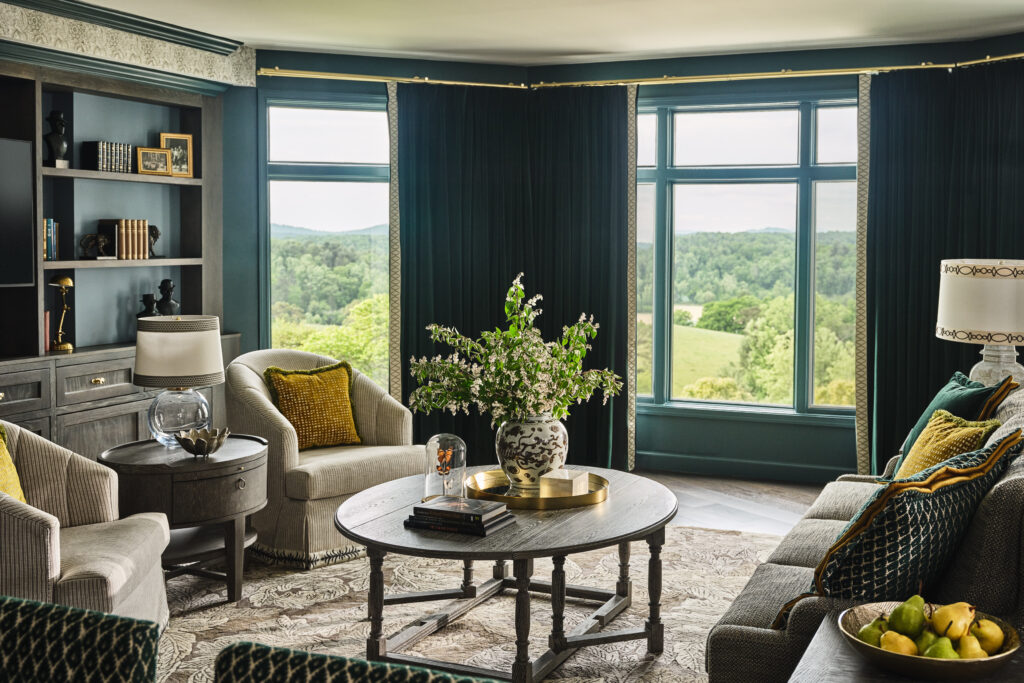
“My days downtown with the art crowd were juxtaposed with a glamorous job working the wealthiest of clients in their fabulous homes,” she says. “I gained a new layer of understanding around colour, texture, history, aesthetics, and furniture design and antiques, on top of the invaluable lessons in analytical and innovative thinking I gathered at school.”
Set design in the film world and a venture in leather goods followed, before she settled on hospitality design – but Palmer treats none of it as a detour, making the work she does today all the richer. “Hotel design is cinematic. It is fashion and product design. It is art and residential design,” she says. “I have synthesised my experiences to create hotels that resonate across all of these channels and put the guests in their own personal movies. Set design and decoration is about storytelling, creating environments that support and propel the plot down to the smallest detail.” What interests her most about hotel design is not dissimilar to the after-effect of a brilliant film – etched in your mind as something you keep returning to. “The emotions that are generated by these unique environments engage with memory and create a lasting impression that resonates across time. We remember the stories.”
Plenty of studios call their work narrative-driven – so many so that the phrase has come to feel more default than differentiator. Palmer’s version starts with a defence of daydreaming. “There is practical in the impractical. It is only through dreaming and storytelling that we can create and innovate,” she says. “The research is essential for the contextual understanding gained when ferreting out the influences of history, contemporary culture, creative culture, and secrets inherent in a destination - the things that make it unique. Weaving together these threads creates the cloth and the frame for the experiences we envision, and become the backdrop for every design decision throughout the evolution of a project.”
What separates the genuine from pastiche in narrative-driven design, Palmer says, is a refusal to reduce. “Sense of place is never a one-note solution. That becomes thematic.” In ROAM’s projects it’s rarely about creating an obvious visual tie, but rather a layered design made up of many contextual inspirations and stories. “It is often hidden to create curiosity and a sense of discovery, delight and surprise – the unexpected. We want guests to learn something important about a destination built in layers of nuance to come away better than they were before.”
Prior to ROAM’s founding, Palmer joined HKS in 2011 to build a hospitality interiors practice that at that point the firm didn’t have. “Heads down, do the work,” she says on her approach to making it a success. “I have always been an entrepreneur in spirit and HKS provided a perfect platform and freedom to build something that had not previously existed – so essentially what felt like a start-up,” she says. “The first few years we were less than ten people, requiring tremendous tenacity and determination to build relationships, opportunity and portfolio to keep our heads above water in this highly competitive industry.”
A shift in wider leadership drove the HKS Hospitality Interiors section of the firm from one strength to the next, and the team eventually went on to make the business case for a brand of its own, winning the backing of the larger firm’s board. HKS Hospitality Interiors then became ROAM Interior Design and launched in November 2023. “Now, as an independent boutique studio with our own authentic story to tell, we can truly move beyond the perception that we are just embedded in a capital ‘A-architecture’ firm and demonstrate what we can do.”
Three years on, Palmer is clear that what shifted was the access rather than the work. “It is the opportunities that have changed, allowing us to share our potential and deliver work that is raising the bar continuously,” she says. Nor is the separation a severance. “We continue to work with our partners at HKS on amazing projects, as well as pursue projects independently and with other studios. As partners and leaders in the larger firm we continue to share our voice to guide strategy for the hospitality practice as a whole.”
Ritz-Carlton, Portland and the Inn on Biltmore Estate are ROAM’s most recent projects to complete. On Portland, Palmer’s own description makes the case better than any summary of it could. “Imagine you are traveling on a road trip, glamping through the beauty of the Pacific Northwest in luxury style and arriving at Ritz-Carlton Portland to discover the uniqueness of this gritty city, this maker’s Mecca,” she muses, her passion for the work completely radiant.
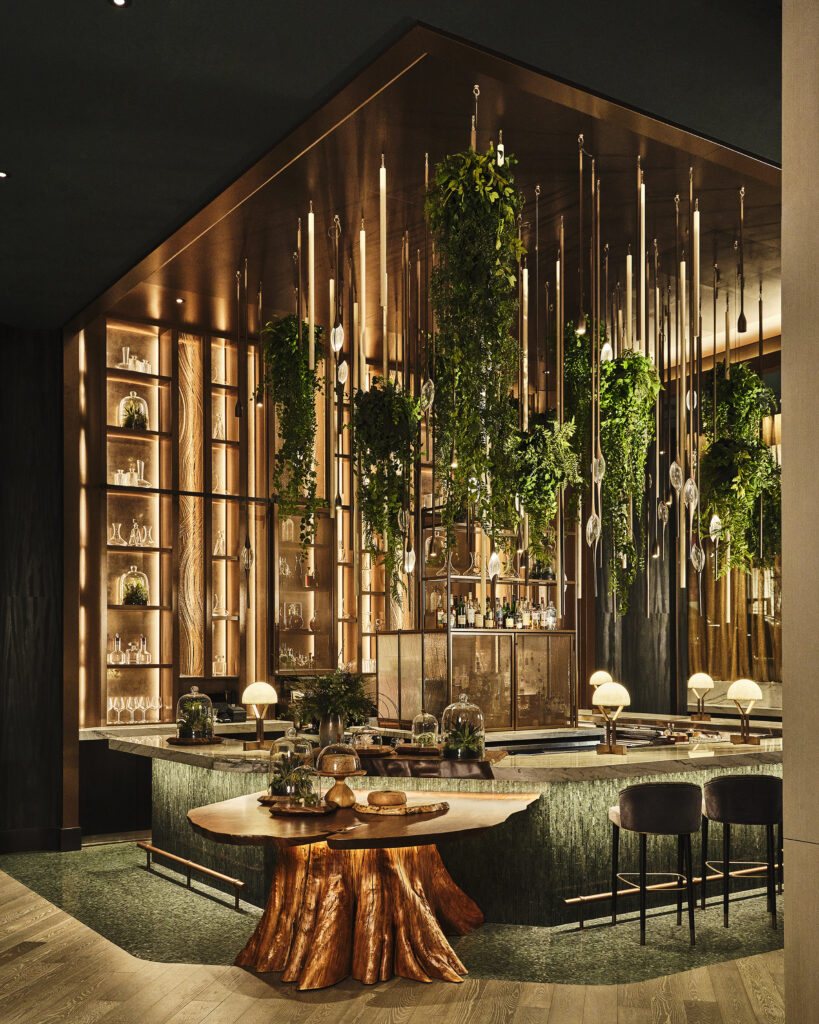
“A warm and luxurious hearth welcomes you into an enchanted forest hall inspired by the spectacular nature of the surrounding verticality of verdant green, snowcapped mountain peaks, legendary waterfalls, deep converging rivers and rugged coastline.” In Forest Hall, the lobby, rustic logs are bound with copper beneath maps tracing the Lewis and Clark expedition. The library fireplace sits behind backlit verre églomisé, the bar is built from indigenous woods, and the club lounge is full of handmade pieces and local artwork. No single detail shouts Oregon – like Palmer described earlier, lots of layers come together to form a genuine sense of place.
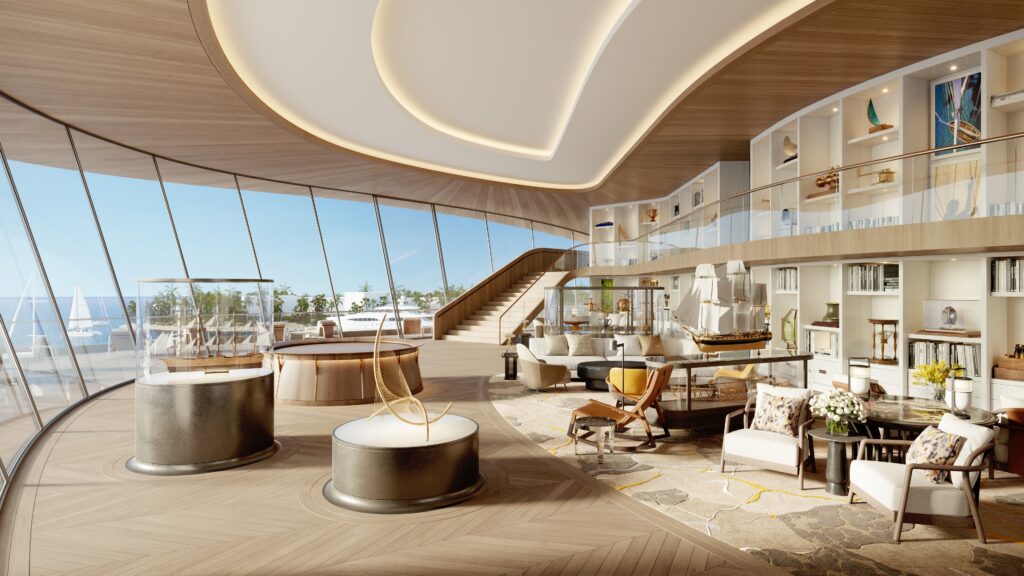
The AMAALA Yacht Club set a harder test for the studio, because Triple Bay didn’t exist until recently. With no backstory to dive into, the research turned to what the sea and the region’s wider history could share. “HKS Architecture began dreaming of a master plan that initiated the framework of the story: a story of coastal luxury, embellished and shaped by the wind and the sea, by ships that have sailed the region for thousands of years, of ports of call, created by trade and romance and the mysteries of ancient travellers drawn to exploration,” she says. “Modern forms took shape to welcome a contemporary culture bound for luxury, and nautical adventure. You have to dream the dream.”
Asked which project represents the epitome of her philosophy, Palmer doesn’t name a recent one. She chooses Esperanza, Auberge Resorts Collection, in Cabo San Lucas, Baja California Sur. “Growing up along the various borders of Mexico, from Texas to New Mexico to California, Mexico has always held a large piece of my heart. Esperanza represents what is essential in my impressions and inspiration from the border towns to the spectacular Pacific coastline,” she says. “From the crafts found in small Mexican/Texas towns to the adobe and Spanish architecture of New Mexico, from Tijuana to Ensenada and the Baja Peninsula, Mexico ranks as one of the most creative cultures in the world.”
“Our desire was for Esperanza to fully represent all of these influences and rise up out of the dramatic cliffs as the most authentic representation of this magnificent people and place. That authenticity, passion and romance are at the heart of my philosophy.” Decades later, her answer goes back to the start, drawing on her early life experiences that first set her on her way.
Looking forward, her future ambition for ROAM is global reach, though she measures it in people rather than pins on a map: “This depends on cultivating talent and succession so that the next generation can continue the ‘Story of ROAM.’” Her advice to anyone starting out skips the corporate pep talk for something more intuitive. “Do not let fear of the unknown stand in your way. Be prepared to take new roads and forge a new path,” Palmer shares. “Every step is just a step in the journey that takes you where you are going, and don’t worry if you have zero idea where that is. Stay curious, that’s the adventure.”
Related Articles

SPACE opens nominations for its top 20 Rising Stars 2027
SPACE is looking for the emerging architects and interior designers making their mark on hotel desig...
Read more
Inside The Companion Vienna, a new hotel designed by weStudio
At Vienna’s Westbahnhof, a 19th-century building has been transformed into The Companion Vienna. B...
Read more
HIX Europe unveils this years talks programme
HIX Europe has unveiled the HIX Talks Programme for 2026, bringing the people behind some of the wor...
Read more
We'd love to hear from you! Click the button to open the SPACE Magazine Survey and have your say.

Make sure you don't miss a single issue of SPACE by subscribing to receive the magazine. Click the button above to signup.