Check-in to The Dean, Berlin’s newest destination for on-the-go travellers
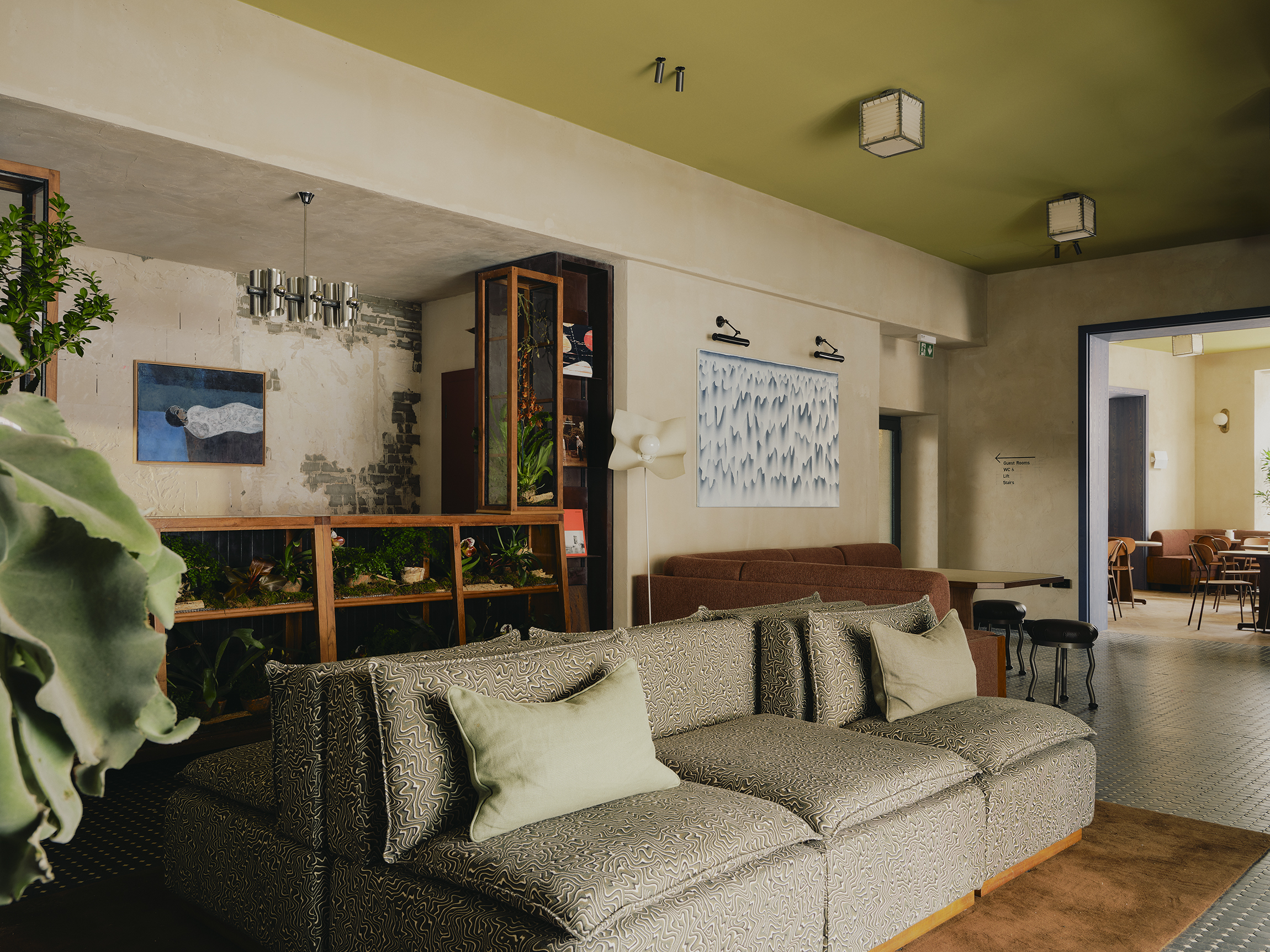
Rachael Gowdridge captures the edgy spirit of Berlin for The Dean Group’s latest opening, designing a hotel that encapsulates the city’s effortless tension between rawness and refinement.
WORDS BY ZANA WILBERFORCE
To say that The Dean can throw a party is an understatement. For the launch of their German debut in Berlin’s leafy Charlottenburg neighbourhood, the independent lifestyle brand brought a dose of cheery Irish hospitality to west Berlin for the night. For the launch, some of the hotel rooms were transformed into intimate gig spaces for emerging and established artists to perform. Fashion designers presented their latest collections, a cellist performed in the listening room and – true to the city’s nocturnal reputation – there was a designated techno room.
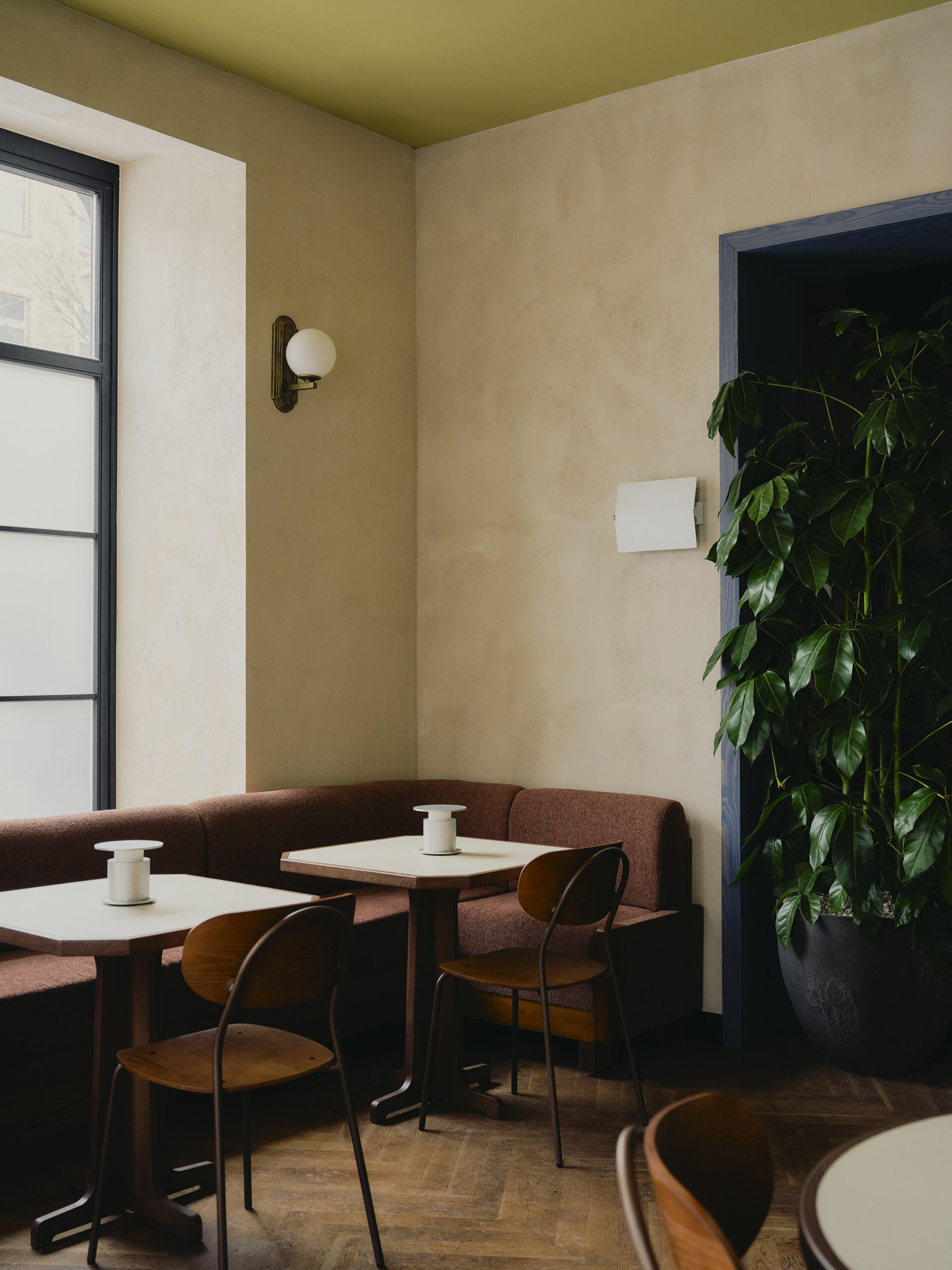
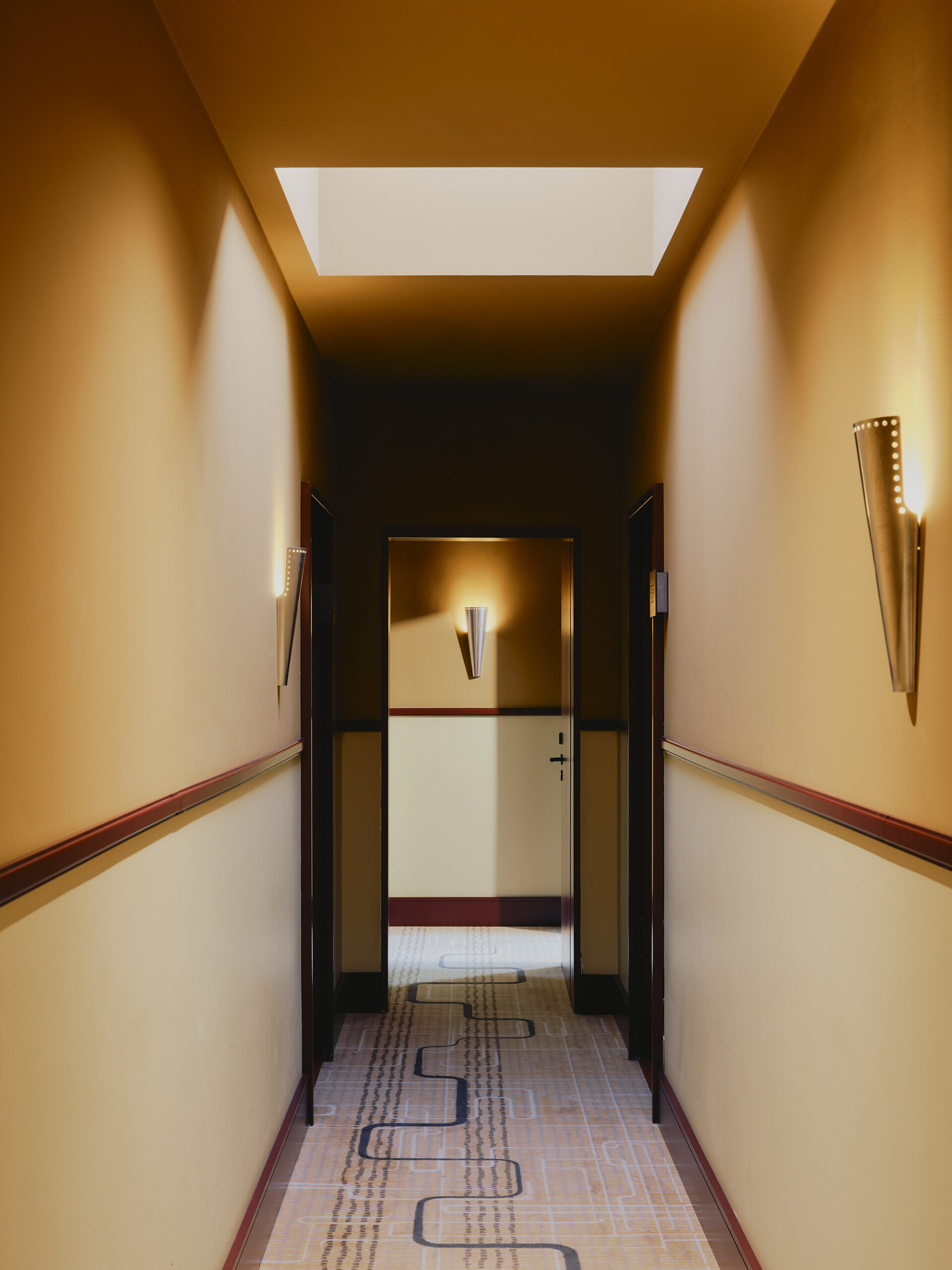
This display of local creativity is central to The Dean experience, starting with Rachael Gowdridge’s complete redesign of the property. In the lobby on arrival, you’re immediately hit with patterned tiles and striking artwork in unexpected curves and corners. Original architectural details contrast with a bold palette and sculptural lighting. “[We] wanted the hallways to feel like a transition space,” says Gowdridge, whose portfolio includes The Hoxton Hotels and Gleneagles. “By adding yellow it feels soft and welcoming, and that merges into the [green] ceiling, completely enveloping the space in colour.”
Standout but subtle first impressions are nothing new to The Dean hotels, an Irish-born, culture-rich lifestyle brand for on-the-go travellers. Spread across Dublin, Galwin, Cork and now Berlin, each property is uniquely designed to capture the essence of its location and neighbourhood. This sense of calm confidence, declares Gowdridge, was used to create an “arrival experience that feels grounded and welcoming without being overly formal. It’s about creating an immediate connection, so guests feel both intrigued and at ease, as though they’ve stepped into somewhere familiar but with a distinct point of view.”
Making the move to Berlin felt like the natural next step – a city bursting with creativity and an irreverent spirit. Charlottenburg is one of Berlin’s most storied and creative districts, lined with galleries and literary hotspots once frequented by writers, artists and philosophers during the Cold War. As Gowdridge puts it, “Berlin has this effortless tension between rawness and refinement, which really guided us. There’s a freedom in the way the city mixes eras, styles and influences without overthinking it. We allowed the design to feel slightly undone in places, curated but not overly polished, with a sense of individuality running throughout.”
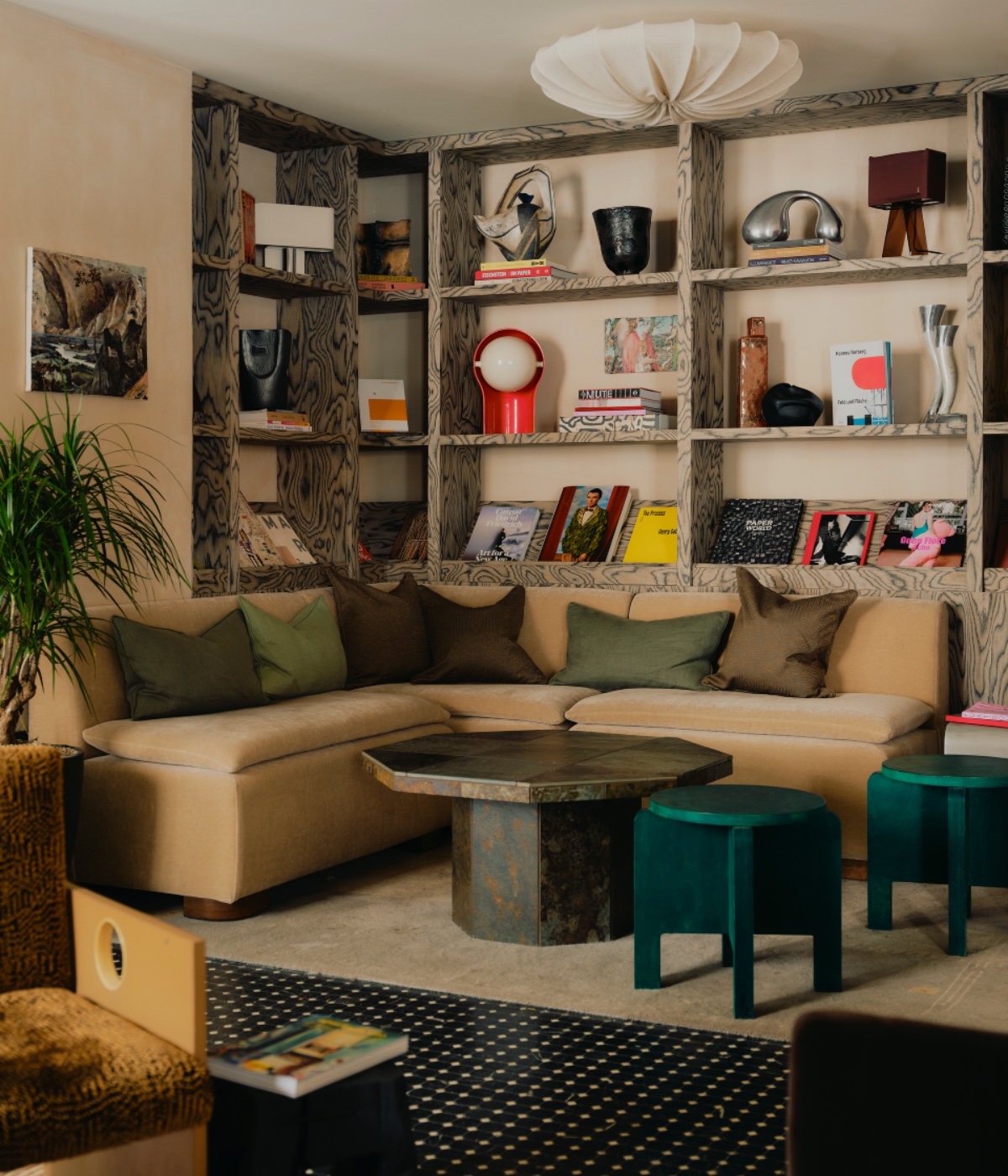
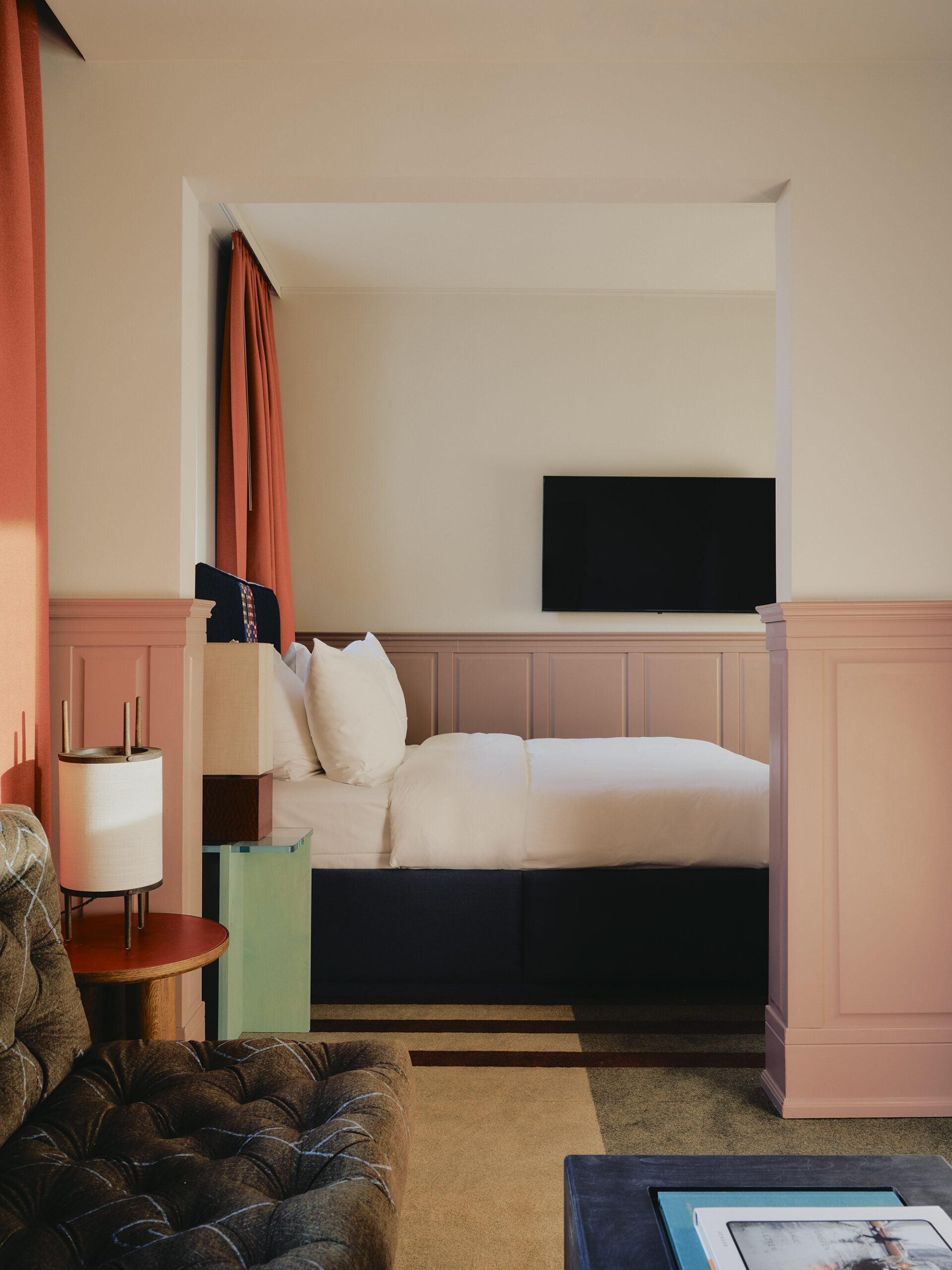
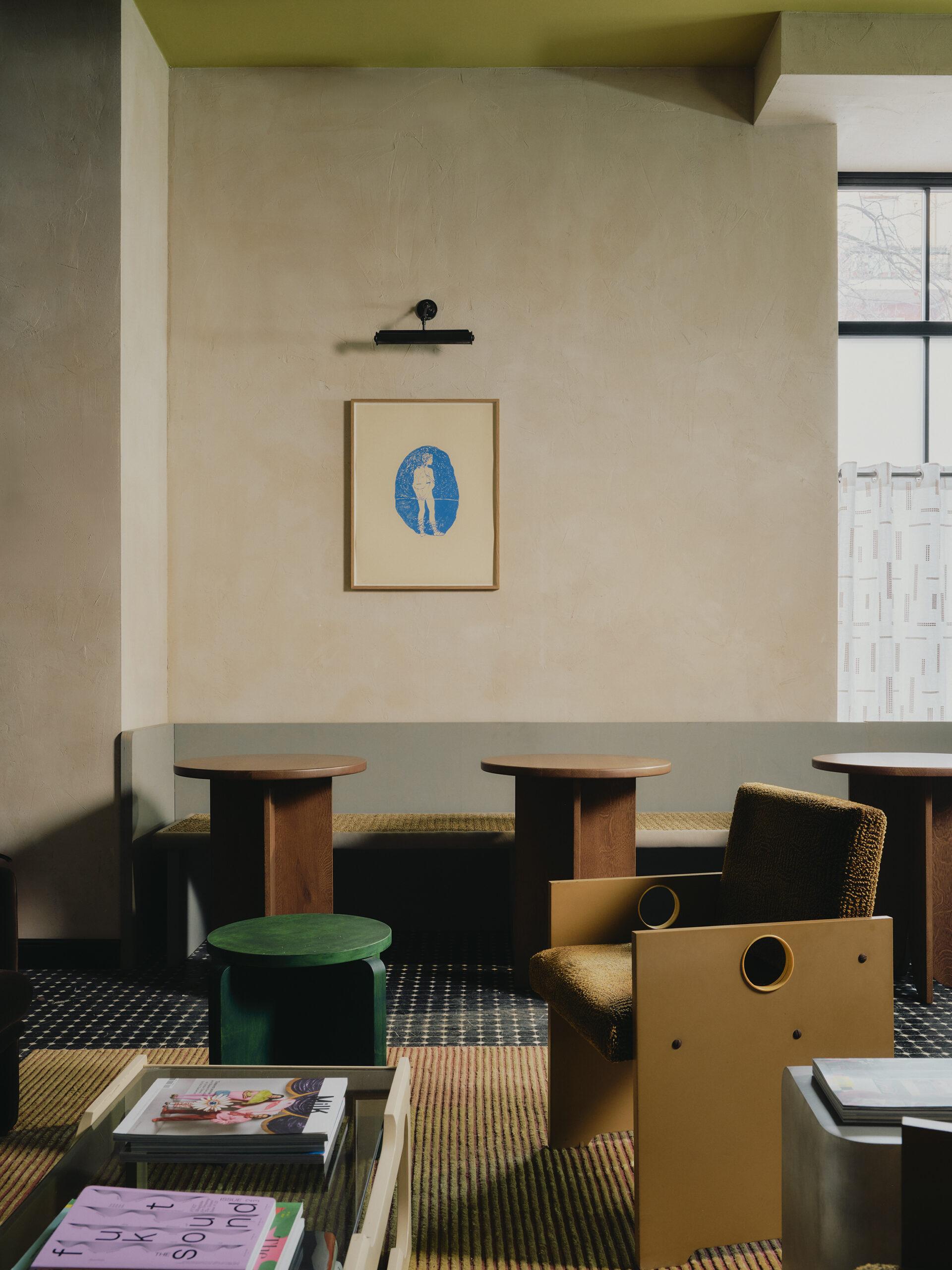
One way this mix of eras is achieved is through the mishmash of vintage items and bespoke furniture, spanning several decades. “The mix of vintage pieces was very intentional,” explains the designer, adding that they “wanted the interiors to feel collected over time rather than designed in a single moment. There’s a blend of mid-century seating, European antiques, and more utilitarian pieces – each bringing its own texture and story. It reflects Berlin’s layered identity, where different influences coexist quite naturally.”
By preserving the building’s original architectural details – raw plaster walls, original tiles – Gowdridge has created a deliberate tension of old and new that runs through every space. “Because the building has changed use a number of times over the years, a lot of the original features had been eradicated. Rather than reintroduce features, we instead chose to work with what was left behind, which created more of a contrast to some of the contemporary interjections, such as the joinery and furniture,” says the designer. Thresholds are a theme. Entering the lobby, the mood shifts through colour and texture to create a transition space between the bakery, lobby and restaurant. Rather than separating the public spaces, they blend and merge to create an open-plan space that feels immediately warm and inviting.
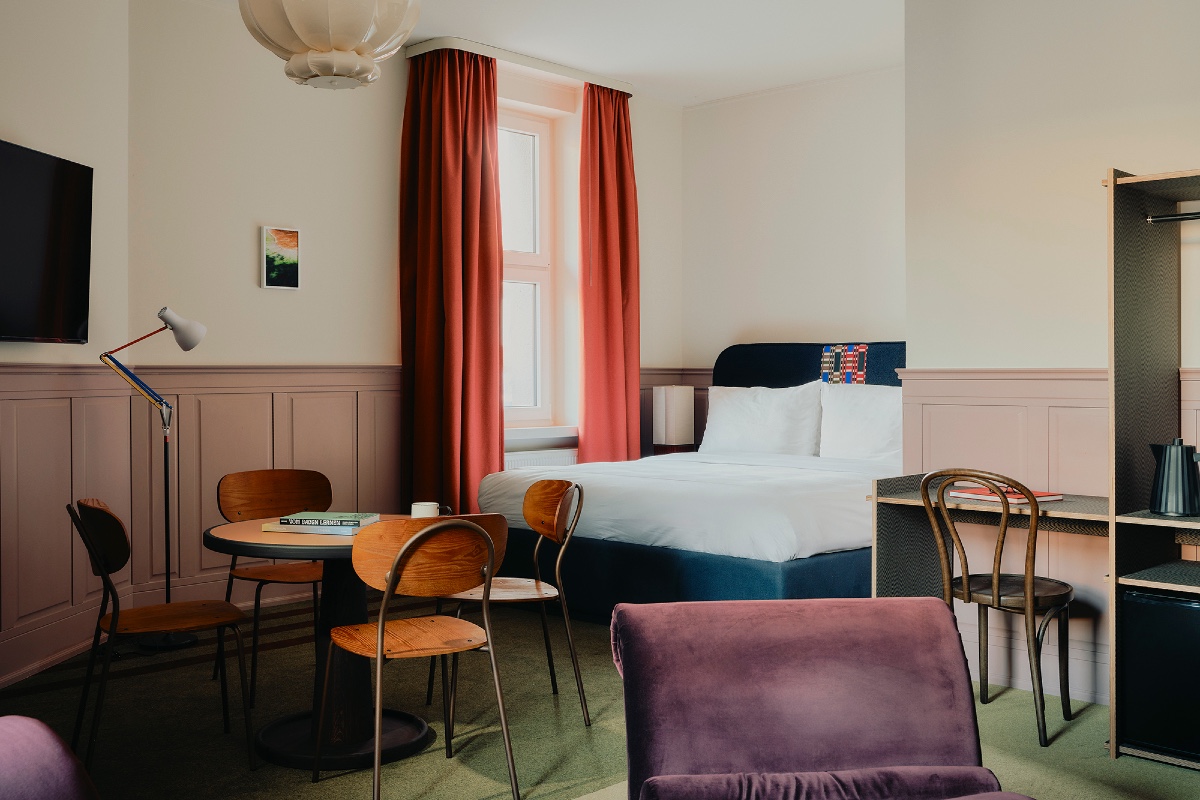
The 81 guestrooms welcome you with a colour-drenched vestibule in deep red. The dramatic entryway is deliberate, acting as a cocoon-like threshold or liminal space between the outside world and your private space. “There’s a moment of intensity… before you step into a softer, more muted environment,” Gowdridge reflects. “That contrast heightens the sense of retreat.” Bathrooms are just as striking, with original tilework and an unexpected green-painted ceiling that creates a trippy, topsy-turvy feel to the space – in a good way. Tiny details point to the brand’s Irish heritage, including some playful micro-copy on the phone and a few Irish cocktails in the minibar. Details like this are so small you might miss them, nodding to the brand’s heritage while keeping Berlin’s avant-garde spirit front and centre.
On the ground floor, Dean Group has teamed up with Berlin brunch favourite Benedict for its downstairs bakery, restaurant and bar. Whether you opt for the stacked Tiramisu pancakes or your eggs of choice – which come with two sides and a batch of freshly baked bread – the portions are substantial. For breakfast on the go, the bakery is as popular with the locals as the hotel guests. The window into the kitchen is a nice touch; you can marvel at the pastry makers kneading dough for their artisan handmade sourdough bread, a slow and considered ritual that takes three days in total to make. Retreat to the hotel’s cosy kaffeeklatsch reading nook by the bakery for a quiet read, where you’ll find a curated selection of coffee table books to choose from. New and old copies of Apartamento, Sleek and MiLk encourage spontaneous perusal and occasional interactions with strangers.
Doubling as an art gallery, the hotel’s select paintings and sculptures are just as much a conversation-starter. Throughout the hotel, curator Thom Oosterhoff has selected a more-than-100-strong collection of original works by emerging and established artists, guided by curator Jenn Ellis of Aspara Studios. As you step into the hotel for check-in, artwork from contemporary painter Xia Peng welcomes guests on arrival. Outside, an installation by Fiete Stolte and Julia Stolte is spread across the curvature of the building which reads: “If I Weren’t This Sculpture I’d Be The Horizon”. The quote is purposefully poetic and slightly cryptic, encouraging passersby to stop and contemplate the wording and spark conversation.
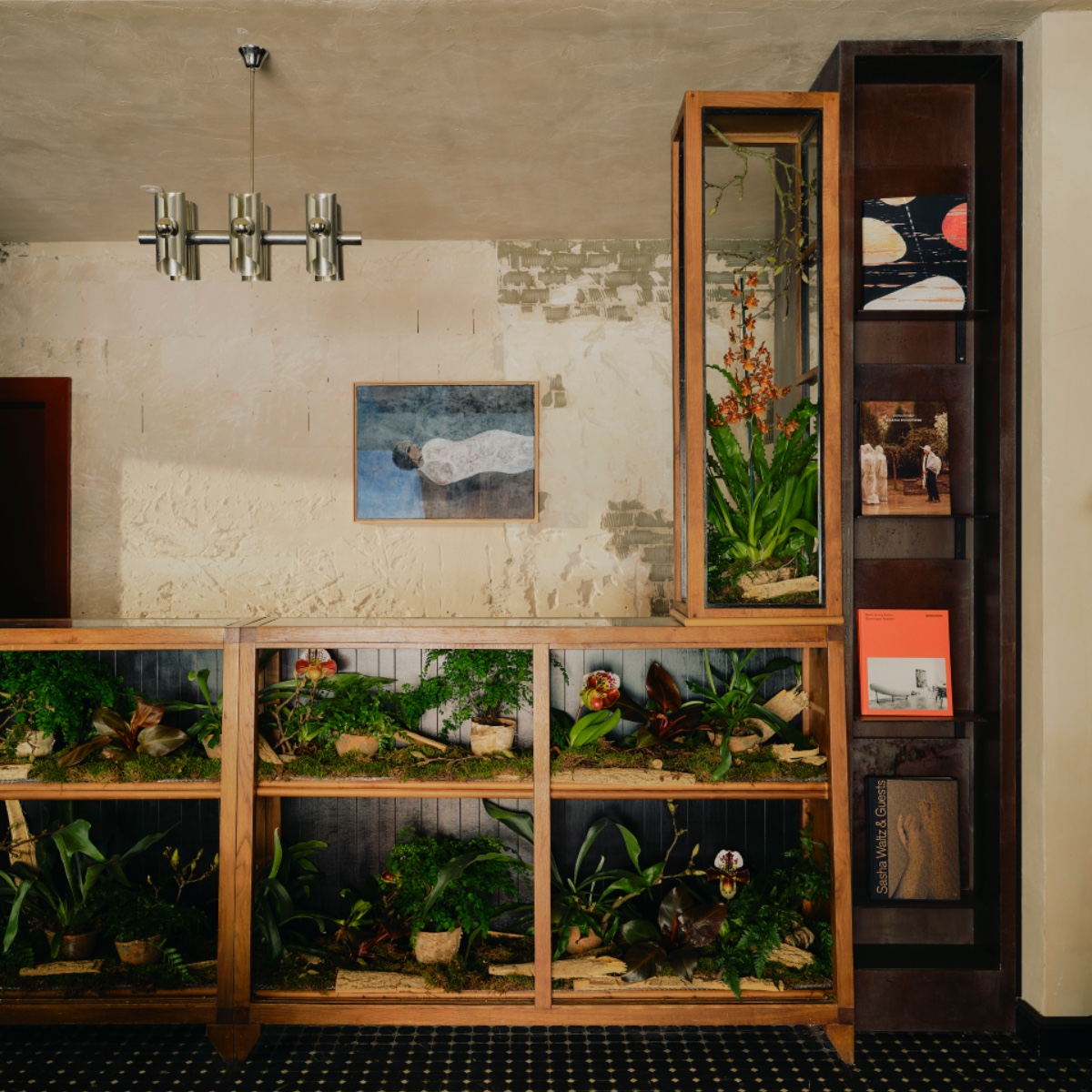
“In the public areas, we have large hero-pieces that contrast against smaller works that have been deliberately placed slightly off-centre,” Gowdridge explains. “It’s a subtle move, but it encourages people to pause and engage with the space in a less predictable way.” One standout piece is a small but striking sunset and horizon by Fiete Stolte and his wife Julia Stolte. Unlike a normal diptych, which is typically displayed side by side, this particular piece is presented in a flipped, portrait arrangement, using the natural line of the frame to form the horizon. From a slight distance, it looks like a painting, but it’s actually made out of dyed bin bags in the spirit of artepovera (making art from nothing). In the guestrooms, Gowdridge describes her approach as more of an intimate process. “The pieces are all unique and they’re deliberately petite in scale, which makes them feel more personal. We positioned them quite carefully within the rooms so that they’re not just decorative, but something guests will naturally notice and take a moment to engage with,” Gowdridge adds.
As for guest diversions, immersive gallery and artist studio visits can be arranged. The hotel’s partnership with Fiete Stolte Studio takes visitors through the artist’s bright, airy studio in Berlin, where he works with his wife, Julia Stolte. From C/O Berlin to the CFA Contemporary Fine Arts Berlin, there are endless independent galleries to explore in and around the area, positioning the property as a base for serious design- and art-centric exploration. With forthcoming openings in Munich and Miami, Dean Group’s global expansion is far from a move away from its Irish portfolio; if anything, it will continue to push for creative partnerships in a similar way, celebrating the people that give each city and neighbourhood its distinct identity.
Related Articles
Five of the chicest designed hotel rooftop and terraces
From poolside bars to leafy courtyards and rooftops built for golden-hour views, SPACE rounds up t...
Read more
Aethos makes its UK debut as a transformed London landmark
Tokyo meets the East End at Aethos London, where Astet Studio has transformed a former Shoreditch la...
Read more
Inside ISSUE 61, from the Editor
Read the latest issue of SPACE design magazine online now. DIGITAL EDITION | ISSUE 61...
Read more
We'd love to hear from you! Click the button to open the SPACE Magazine Survey and have your say.

Make sure you don't miss a single issue of SPACE by subscribing to receive the magazine. Click the button above to signup.