Aethos makes its UK debut as a transformed London landmark
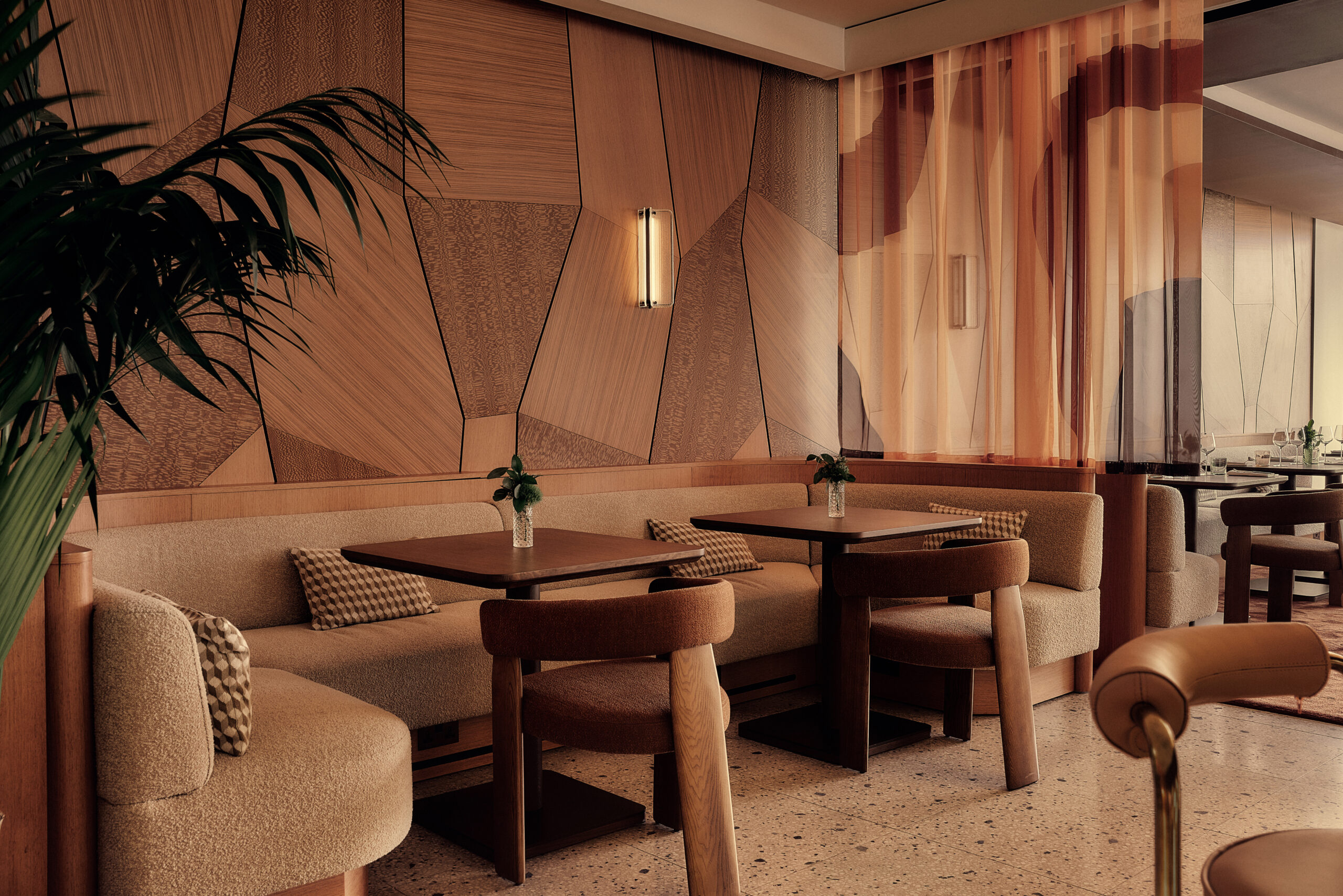
Tokyo meets the East End at Aethos London, where Astet Studio has transformed a former Shoreditch landmark
WORDS BY JESS MILES
Shoreditch wears its identity like a grass stain on white clothing - vibrant and unwavering despite how many times you try to clean it. Personally, it's what I love about this area. Once the gritty, graffiti-scrawled fringe of the City, it has been gentrified, glossed and gentrified again, and yet somehow it has refused to surrender its scrappy creative pulse. The cranes still loom over Old Street, the Friday-night queues still snake outside the bars on Curtain Road, and the smell of jerk chicken from the market on Rivington Street still wafts its way past the latest trendy concept café.
To open a credible hotel here today is a brave move – it’ll fly or flop, dancing along to the beat of the lively neighbourhood, or watching the world outside go on by without it. Having opened a string of hotels that strike the balance between refined and bohemian, young European hospitality brand, Aethos, has already proved its mettle in high-vibe destinations such as Milan, Mallorca, and Lisbon. For its UK debut, the challenge of Shoreditch was exactly the kind of opportunity the brand seems to seek out, and the prospect to transform a local architectural landmark? Too hard to resist.
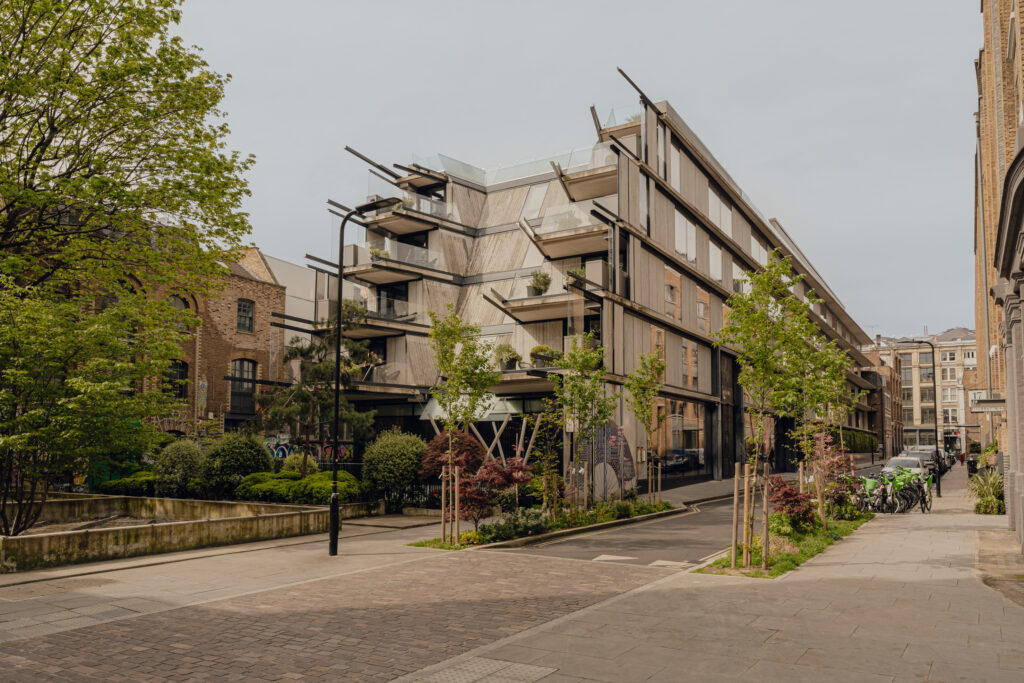
Set within the imposing concrete shell of the former Nobu Hotel, the new Aethos London occupies a building that, when it first opened in 2017, divided opinion. Some loved its industrial bravado, others felt it sat awkwardly amid the area’s jumble of Victorian warehouses and tagged shutters. A bit too swanky – perhaps, but another defining point of interest in Shoreditch’s eclectic vista it became, nonetheless.
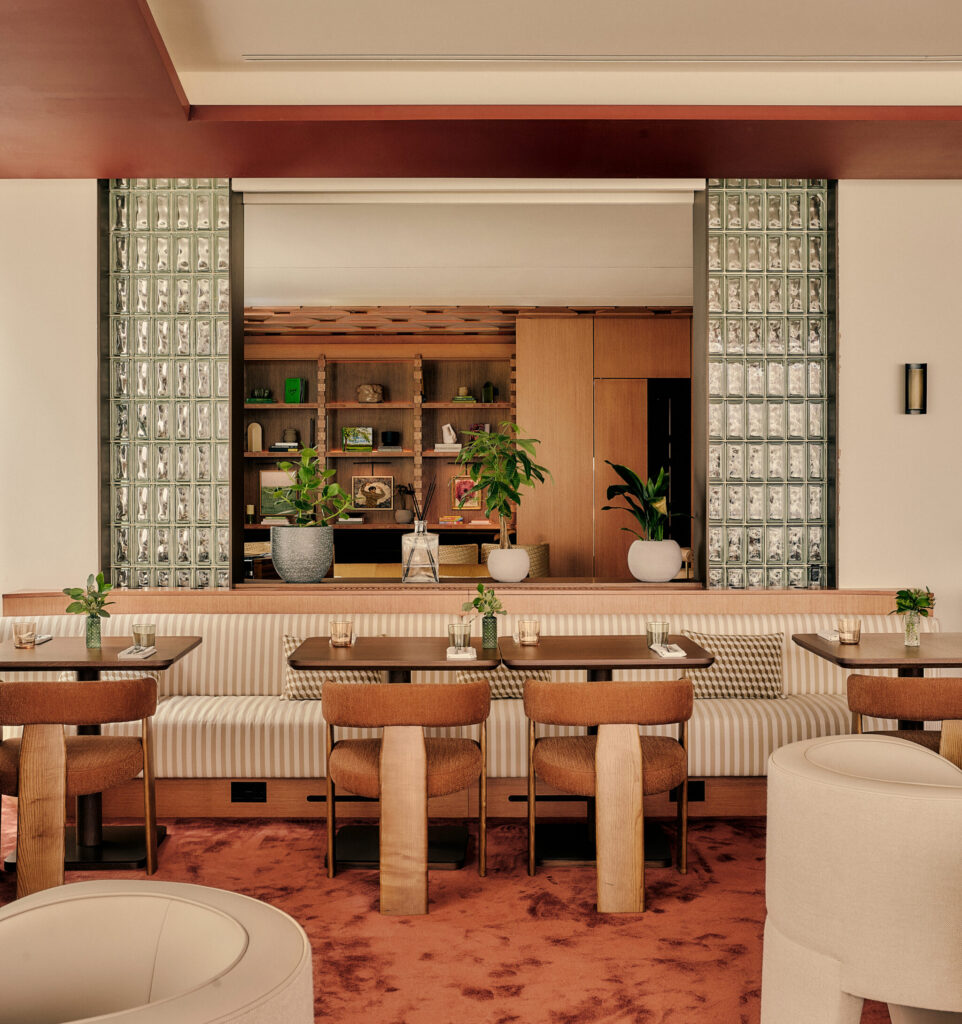
Acquired by Limestone AG in 2025, the 164-room property was handed to Barcelona-based Astet Studio for a reinvention. As prime real estate already fit for purpose, Aethos took an efficient approach with a phased renovation on tight timelines. True to word, the hotel reopened with a soft launch last October just a few months later, joined in the new year by The Willow Room members’ space, and rounding out only weeks ago with the unveiling of Mitsu, the modern izakaya that offers a more accessible, and arguably more trendy Japanese dining destination than its predecessor. Walking in for the first time this spring, the property has certainly blossomed since its Aethos take over. Of course, the scent curation and flowers by Bornay Floral Design help, but the space is alive with quiet conversation in sync with the hotel’s surroundings, natural light flooding in over laid-back faces. Keeping the building’s bones on show removes the overly polished aesthetic a new hotel often takes a while to shake, and Astet’s interior vision feels at home, invigorating the big expanse of space in the lobby with a fresh take.
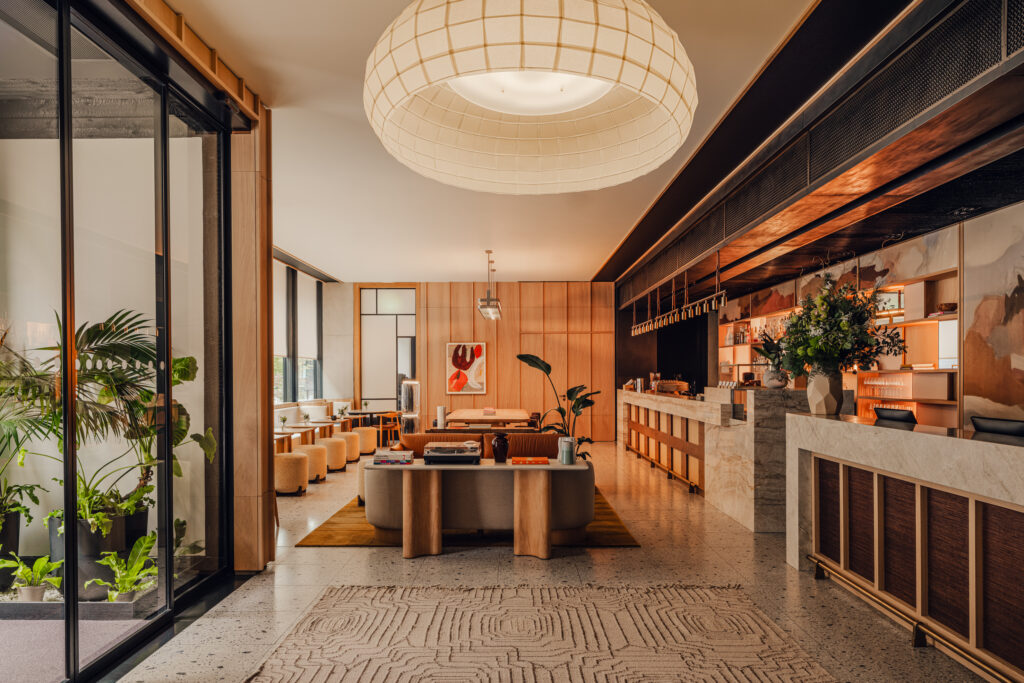
Astet, founded by architects Ala Zreigat and Oscar Engroba and twice listed in the AD100, isn’t the obvious choice for Shoreditch, as a Spanish studio better known for Marbella seafood restaurants than East London hotels, but perhaps they were exactly what was needed. Rather than reaching for the usual Shoreditch shorthand of exposed brick and Edison bulbs, the studio has braided in a thread of Asian craftsmanship and Mediterranean warmth that runs the length of the building. “Tradition and modernity converge in a space shaped by Asian references and the rebellious spirit of Shoreditch,” they say of their design. The lobby best embodies their narrative – behind the reception desk, a sprawling abstract botanical mural referencing Japanese Bijutsukai drawings and Shoreditch’s graffiti anchors a room of dark tones and richly patterned floors. Bespoke lighting commissioned from local artisans throws pools of warm light across original architectural features the studio has been careful to preserve. Brushed metals meet terracotta, layered wood meets textile screens, the polished sits next to the raw. Astet describes the project as a dialogue between the contrast, and the lobby is where the conversation is loudest.
Flowing openly from the lobby, Aethos Café has been the building’s most accessible foothold since the soft opening, and it makes a smart introduction to the rest. The decision to plant a Mediterranean menu here is unexpected but it works, and acts as a thread to the designer’s own story and brand’s track record. By mid-morning the room hums with the kind of remote workers that have made Shoreditch their de facto office, laptops jostling with flat whites, and by the time the lunch service runs into early-evening drinks the locals have begun to claim it as their own. Whatever else this hotel is doing, it has managed to give the neighbourhood somewhere it actually wants to spend time – not just somewhere to stay.But this was exactly what Aethos set out to do – create community – and they bed deeper into that territory with the introduction of a brand wide membership programme. The Willow Room, opened in January, is where Aethos’ members’ club ambitions become tangible. Restaurant, bar, library and terrace flow into each other in a single low-lit sweep, the black marble countertop running from The Willow Room’s dedicated reception, through to the bar.
"Functional elements are discreetly integrated, and the lighting introduces a more intimate rhythm,” Astet notes of the space, which used to be a bare bones conference and meeting room. Rethinking the room with intimacy in mind has transformed an underutilised space into one that operates as a co-working hub by day, shifting by evening into something that feels almost domestic and familiar. Rattan chairs fill, the bottle-lined shelves catch the bar light, and the room takes on a relaxed atmosphere where people can wind down and socialise.
Aethos pitches all of this against Shoreditch’s well-stocked cupboard of velvet ropes, where club and co-working memberships have multiplied faster than they’ve differentiated themselves. CEO Benjamin Habbel talks about a hospitality that “doesn’t just serve people – it brings them together,” and hotel memberships offer more than most. A wellness floor with sauna, cold plunge, hot baths and a class studio sit one level away, while up above rooms are ready to absorb the late nights.
Up in the rooms, Astet’s hand is lighter, which is a sensible call given the building’s relatively young bones. The previous fit-out has been refined rather than ripped out, the palette warmed, the textures layered up. Drapery and upholstery do most of the work, softening the architecture’s harder edges into something that feels distinctly more residential than the corporate-leaning original. Suites take fuller advantage of the Shoreditch skyline of brick chimneys and glass towers with several opening onto private terraces that, on a clear evening, frame the City’s glass cluster on one side and the patchwork of Hackney rooftops on the other. Then below ground there’s Mitsu. Opened just a few weeks ago, the new restaurant is the project’s big moment and calling card – its mysterious buzz spilling out on to the street above, likely to draw in many a curious passerby. With thanks to the building’s architecture, guests experience a dramatic entrance, descending from Willow Street through a sunken Japanese garden into a soaring, double-height room that feels miles from the pavement above. Bright and open by day, the restaurant drops into a more heady space by night, soaked in low red lighting and the sounds of easy DJ sets.
Mitsu restaurant, and the lobby lounge at Aethos London. Image credit: Aethos
"Japan and Shoreditch meet in the transition from day to night, where the light fades, the music rises and the space becomes more intense,” Astet says. Their interiors borrow from the izakaya tradition without becoming cliche. Framed glass and textile screens reinterpret washi paper, filtering light into a diffuse glow, while carpentry that nods to Japanese temple woodwork rises in a clean lattice between bar and ceiling. The open kitchen is framed and slightly elevated, the robata grill treated as theatre – fire, smoke and the rhythmic clatter of a busy pass becoming part of the restaurant’s soundtrack. “The space does not reveal itself all at once; it is built through layers, filters and subtle transitions,” Astet says on utsuroi, the Japanese idea of subtle change over time, which they used as a design principle for Mitsu.
Walking out onto Willow Street after a long lunch that has bled into early-evening drinks, what stays in mind isn’t the room count or even the attractive membership pitch, but rather the sense of a hotel that has successfully embedded itself in the challenging neighbourhood it inhabits. Mitsu may have been the big finale of Aethos London’s phased opening, but what’s exciting is seeing how the hotel continues to establish itself within its locality. If it keeps up with the pace, there’s no doubt it will become a Shoreditch stalwart in no time.
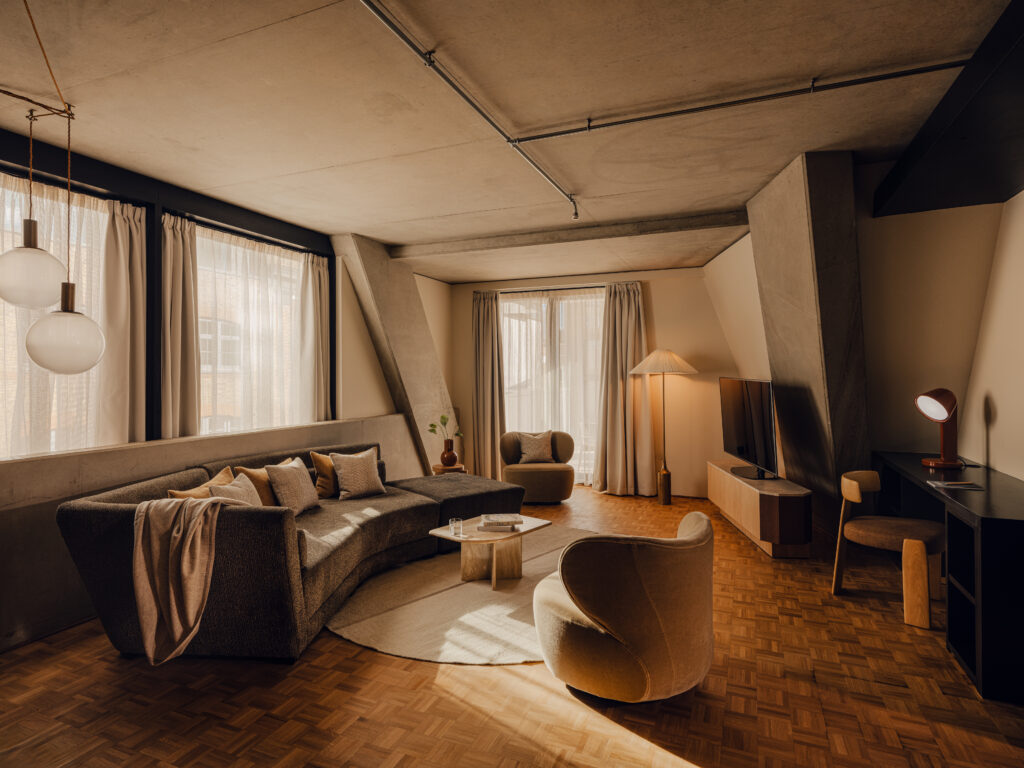
Image Credit: Aethos London
Related Articles

From runway to check-in, couture takes the keys
Fashion brands are increasingly partnering with hotel groups, or opening properties of their own. SP...
Read more
HIX returns this November with a new home
HIX Europe returns this year with an expanded format and a theme that reflects an industry in consta...
Read more
How a Franciscan cloister became Four Seasons Cartagena
A 16th-century Franciscan cloister, a 1920s social club and a clutch of old theatres have been knitt...
Read more
We'd love to hear from you! Click the button to open the SPACE Magazine Survey and have your say.

Make sure you don't miss a single issue of SPACE by subscribing to receive the magazine. Click the button above to signup.