Visionaries: Afroditi Krassa on blending art, experience and effectiveness in design
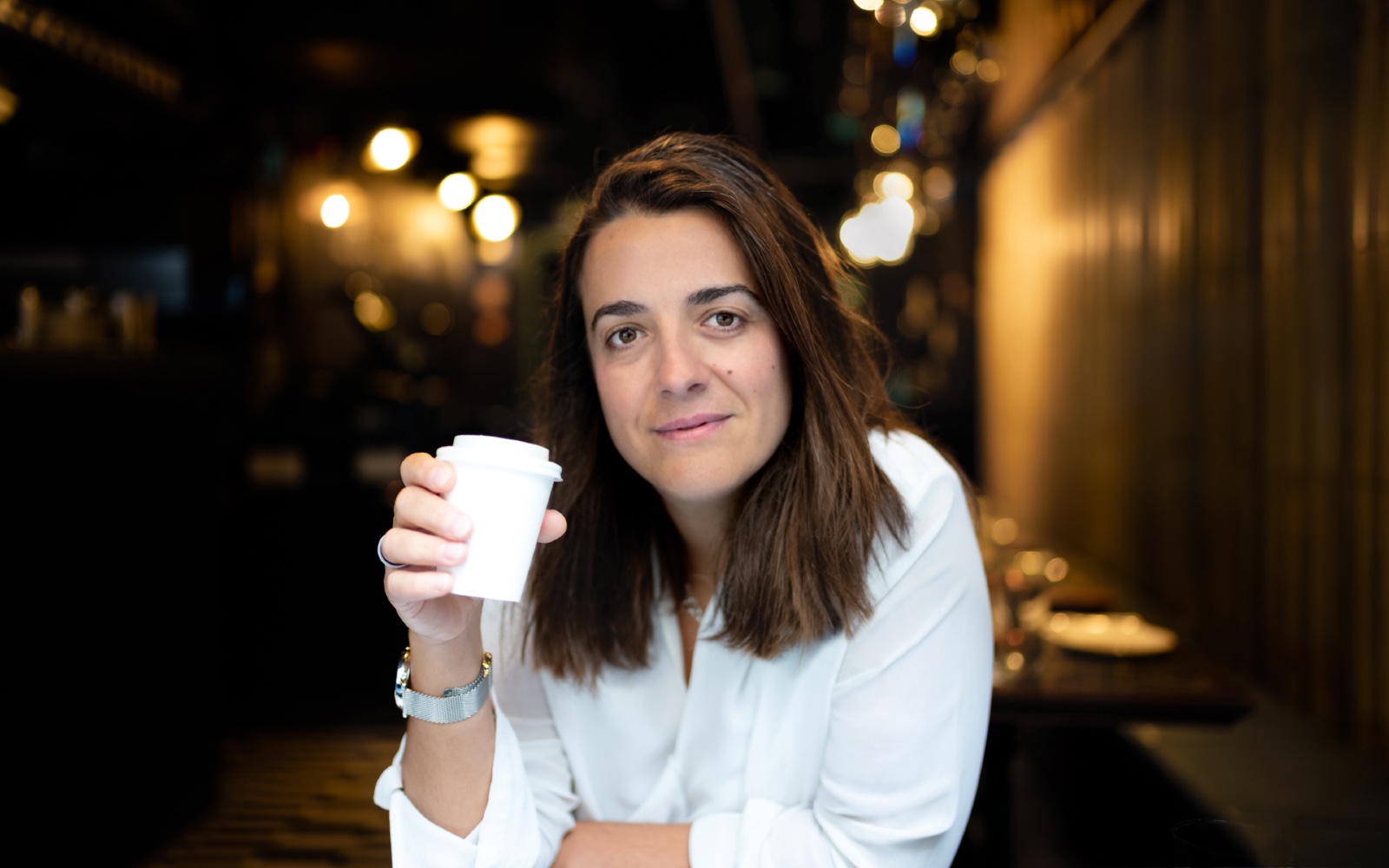
As the creative force behind Michelin-starred restaurants, A-list bars and luxury hotels, Afroditi Krassa proves that great design is measured not just in aesthetics, but in effectiveness
WORDS BY EMMA KENNEDY · IMAGES COURTESY OF AFRODITI
Taking my seat among a host of hungry journalists at Mezzogiorno, the newly opened Italian restaurant at Corinthia London, I’m struck not just by the design but by the ambiance. For a restaurant barely out of the starting blocks in one of London’s grandest hotels, it’s relaxed – albeit in a dressed-up way – with several guests already looking like regulars.
Eight-metre-high ceilings, tall arched windows and four vast columns dominate the space. From the top down, the deep curve of a latticed cornice frames and divides the ceiling sections. Overhead, Murano glass shades bloom from bold black stems, echoed by hanging globes that line the walls like streetlights. Linen screens add a relaxed air of privacy to pockets of seating. Hand-painted stucco panels in a chalky neutral form the backdrop to a palette of faded terracotta, earthy browns and dusky pinks. It’s both warm and welcoming, tapping into the Mediterranean flavours created in the walk-through kitchen.
As the Calabrian dishes of Michelin-starred chef Francesco Mazzei begin to arrive, I find myself thinking – though I can’t quite put it into words at the time – that they are somehow at one with the décor. To call them as layered and textured as the design would be too obvious, but the parallel is hard to ignore.
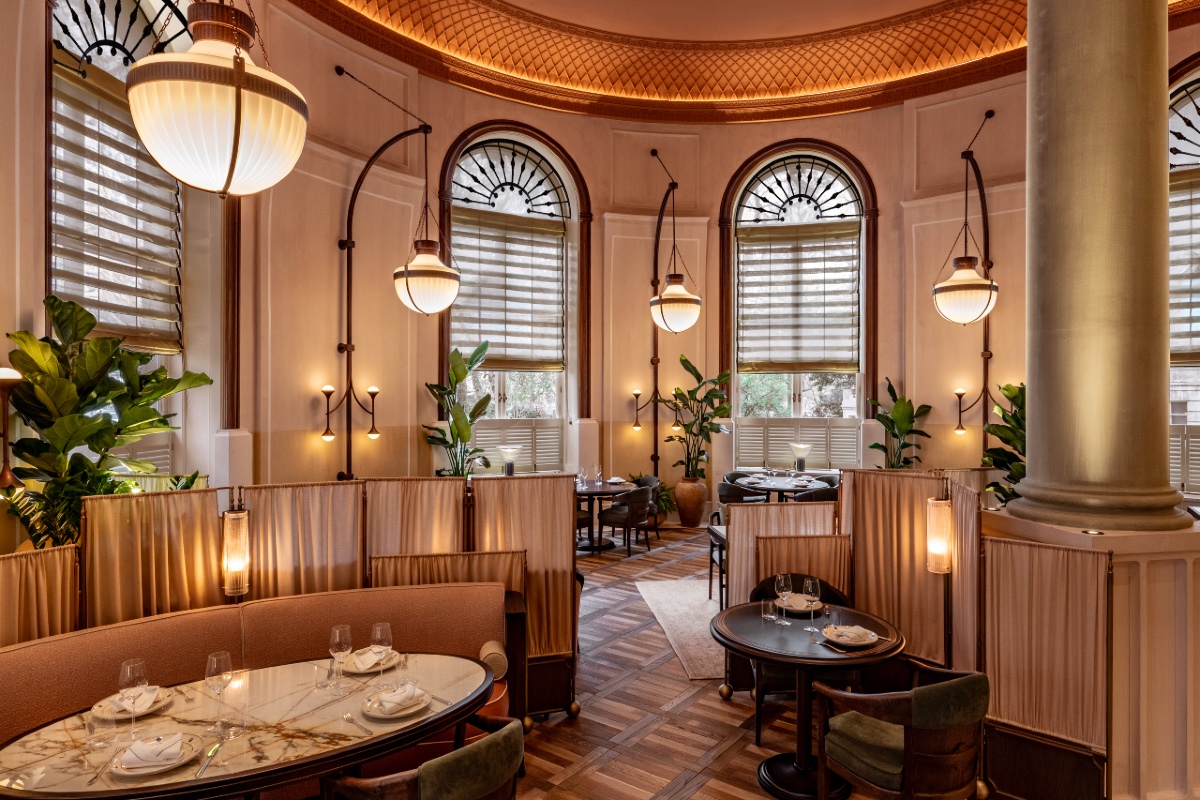
Enjoying the moment as much as her guests, Mezzogiorno designer Afroditi Krassa joins the group with Flo, her Bichon Bolognese, who – clearly no stranger to Michelin-starred restaurants – promptly falls asleep on the banquette.
Born in London, Krassa grew up in northern Greece, returning to the UK in 1992 to complete a BA in Product Design at Central Saint Martins. Finding herself one of eight women in a year group of 68 prepared her well for an early role at leading design firm Seymour Powell as their first-ever female designer.
“I still remember the interview,” she recalls. “The founding director said to me, ‘We have an upcoming project which needs a female designer.’ Intrigued, I asked what it was. ‘It’s to design a bra,’ he told me.”
At a time when the company was better known for working for clients including Nokia, Renault, Jaguar and Concorde – designing “all the boy’s toys”, as Krassa puts it – she completed the bra and stayed with the boys for the next three years. “It was an amazing learning curve, with an incredible team. But I knew that, as much as I was enjoying it, it wasn’t my calling.”
Still convinced product design was where her future lay – though not quite on the industrial scale her years at Seymour Powell had suggested – she secured a place at the Royal College of Art.
“My master’s degree was very much focused on furniture design, where I could concentrate more on craftsmanship and take an artisanal approach. Suddenly I had the freedom to design one-off pieces, which I loved.”
Afroditi Krassa
Soon she was exhibiting, selling and creating pieces bought by high-end manufacturers, including Ligne Roset. After setting up her eponymous studio, she was approached in her first year by visionary restaurateur Mourad Mazouz, leading her on an unplanned path into restaurant design.
In the throes of creating the now celebrated Sketch London, Mazouz reached out to Krassa with an invitation to collaborate on the design of something for his new venture.
“He wanted a gallery space in the restaurant to showcase the work of new designers – to be seen as a kind of cultural hub in London. It was an interesting concept, organically done, and for me it was exciting to be showcased in this type of environment.”
This was a turning point which elevated Krassa into a field she hadn’t previously considered. “One thing led to another,” she tells me. “And suddenly the calls started to come in. Commissions for hotels, private members’ clubs and installations followed, and I found myself at this weird junction between installation, art, design and architecture.”
As she created pieces for numerous projects, she developed a habit of writing letters to people she admired. One of those recipients was Pret-A-Manger founder Julian Metcalfe. Impressed by a wallpaper – drawn from the archives of an Australian designer from the 1960s – in the recently opened Pret on London’s King’s Road, she wrote to him to express her appreciation.
To her amazement, she received a call from his PA inviting her to his office.
“To be honest, I thought it was a prank,” she laughs. “But I went along, and the meeting quickly became a round of questions: could I design furniture? Yes – that’s my training. Mugs? Of course. Spaces? No – I don’t design spaces; I’m a product designer.”
Ignoring her response – or perhaps seeing something she had yet to see in herself – he took her to a small shop space on the ground floor of Vogue House, Hanover Square.
“He told me he had an idea – which was going to be his new ‘Pret’ – with a menu focused on healthy, Asian- and Japan-inspired food – and this was going to be his test ground, to see whether it would work.”
Asking if she would like to design it and, once again ignoring her response, he told her she had eight weeks.
Meeting the deadline and designing far more than the original brief – including the branding – was “completely exhilarating, stressful and exciting, and I was running on adrenaline for eight weeks. I didn’t sleep at all until I collapsed at the end when it opened, and Itsu was born.”
Though perhaps not a direct competitor, in its first week it outdid the large McDonald’s around the corner, and Krassa was made creative director of the Itsu brand. Building the design team as the brand expanded, she spent the next four years overseeing the launch of 30 restaurants before stepping back in 2008.
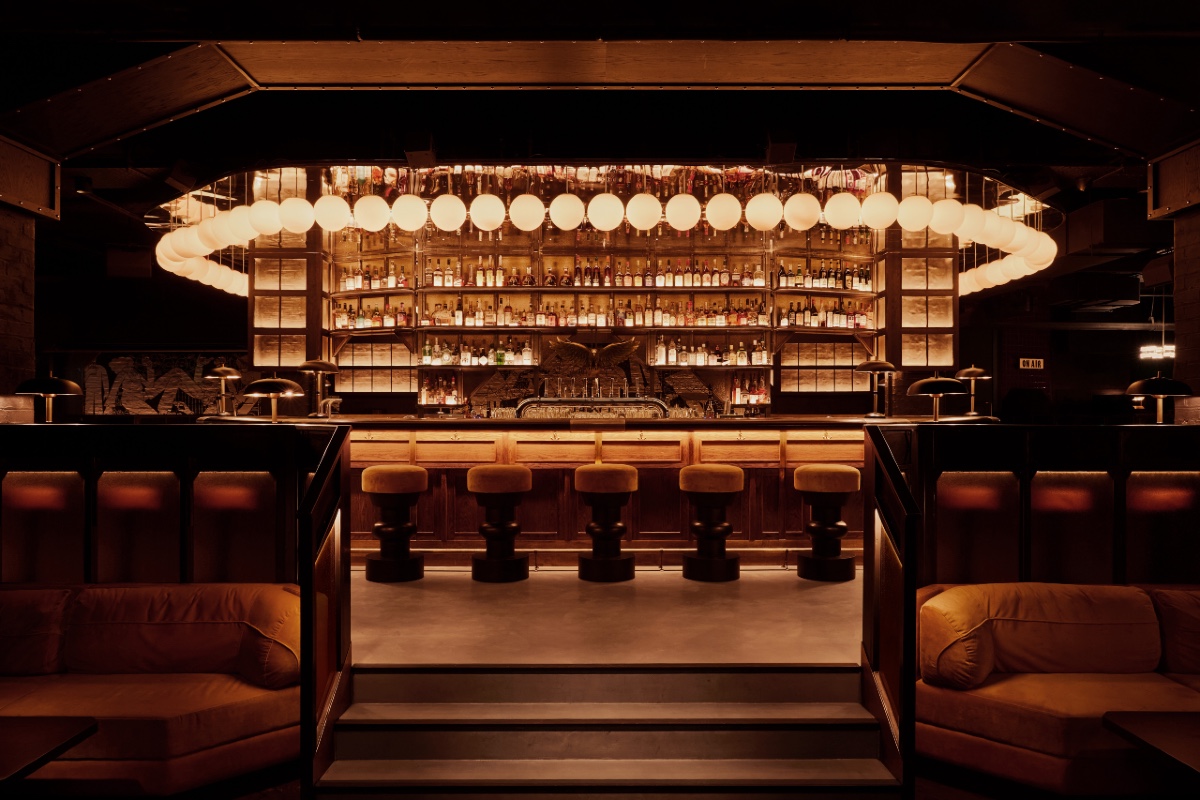
Returning to her own studio, once again with her heart set on furniture design, she thought she would simply carry on where she had left off some five years earlier. “I look back and I don’t know what I was thinking. In my head I was still a product designer and everything else had been a kind of side gig,” she laughs, shaking her head. “And then I had a call from a small start-up that had an idea for an Indian chain.”
In 2010 Dishoom launched. “It wasn’t an overnight success, but it was a runaway success. It took six months to get there, but when it hit the market and became a success story none of us had expected or envisioned – that’s when I realised, okay, this is definitely what I’m doing.”
The studio’s first hotel project followed, courtesy of Hilton, for the TwoRuba bar in their new flagship property in Tower Bridge.
“It was interesting. The hotel operators at the time, without being specific, could not grasp why independent restaurants were much more successful than hotel restaurants. They couldn’t understand what the magic of the independent was, but they wanted to buy into that creativity.”
So what is the magic recipe for success, I ask?
“OK, as creatives we’re all artists, but at the same time creativity needs to go hand in hand with effectiveness,” she begins. “Design needs to move the dial – not just for consumers and culture but also bring results to business. So many design agencies never talk about the commercial value of design, which to me is shocking. We might not want to admit it, but the two usually go hand in hand. If you are doing something revolutionary and different, there should be a commercial reward at the end, because people will listen and notice, and will buy into what you’re doing – if you’re doing it well.”
Admiring her work at Mezzogiorno is a visual affirmation that she stands by what she says. The cohesion of her interiors, however, comes from delivering far more than the décor alone, as she goes on to explain.
“For me, the interiors are only one part of the story,” she says. “What makes our studio quite rare is that we can do everything – the brand and graphics, the interiors, the furniture, the lighting, the uniforms, even things like the refrigerated cabinets in the open kitchen at Mezzogiorno. It’s all coming from the same place, with the same narrative running through it. That’s why our projects feels so coherent – you’re not seeing three or four different agencies layered on top of each other, you’re seeing one continuous stream of thinking.
“If you look at the great architects of the past, they all worked like this. They would design the building, the interiors, the furniture, the hardware, the signage – the whole world. Somewhere along the way the industry became very fragmented. We’re simply bringing that old, multidisciplinary way of working back under one roof, so the end result feels much more singular and resolved.”
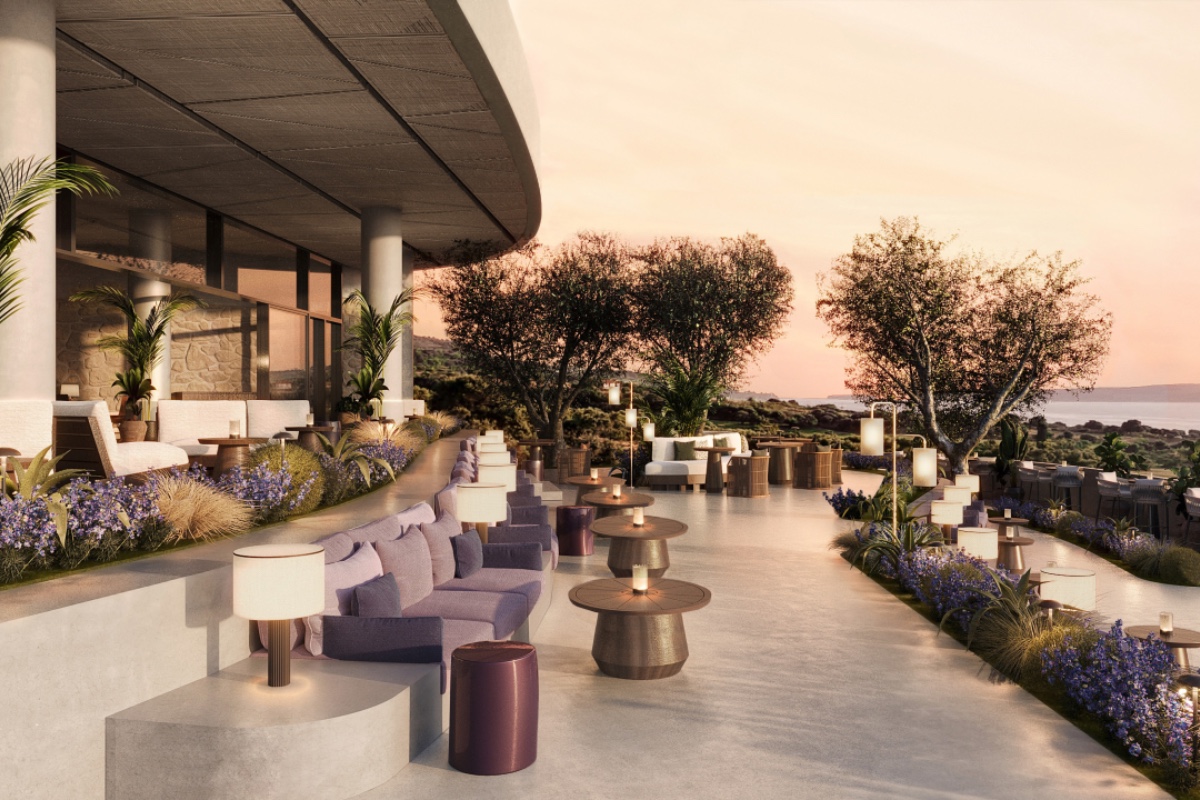
Today, that “singular and resolved” approach is being tested on a remarkable slate of projects for a studio of just 13 designers. Krassa and her team are putting the finishing touches to their first full hotel, a 1930s modernist landmark on the Danish Riviera reborn as the Cori Hornbæk hotel; they are shaping the public spaces and F&B for Rosewood’s debut property in Greece, on Crete; masterminding the interiors for what will be the largest island development in the Maldives; and working on an experimental resort in the Exumas, in the Bahamas, with Brazilian architect Marcio Kogan. Closer to home, there is a gritty new restaurant for chef Andrew Wong in Shoreditch and the studio’s first US opening, a high-end Nikkei concept in Chicago. It is an extraordinary workload for a practice of this size, but then, as Krassa’s career suggests, thinking big while staying small – and keeping the human experience at the centre of every decision – has always been the point.
Related Articles
Boronkay Studio channels Art Deco elegance at Hôtel Palais de la Méditerranée
Boronkay Studio has reimagined Hôtel Palais de la Méditerranée in Nice, creating a contemporary i...
Read more
Portugal, built to last: the country’s next wave of hotels
Beach holidays on the Algarve, weekend breaks in Lisbon and Porto – Portugal’s appeal has never ...
Read more
Visionaries: Aaron Clarke and Marta Tuneu, the duo behind ADC & Tuneu
Once at the helm of Soho House's design team, Aaron Clarke founded ADC & Tuneu together with his...
Read more
We'd love to hear from you! Click the button to open the SPACE Magazine Survey and have your say.

Make sure you don't miss a single issue of SPACE by subscribing to receive the magazine. Click the button above to signup.