Visionaries: Stephanie Barba Mendoza on building a hospitality design studio with soul
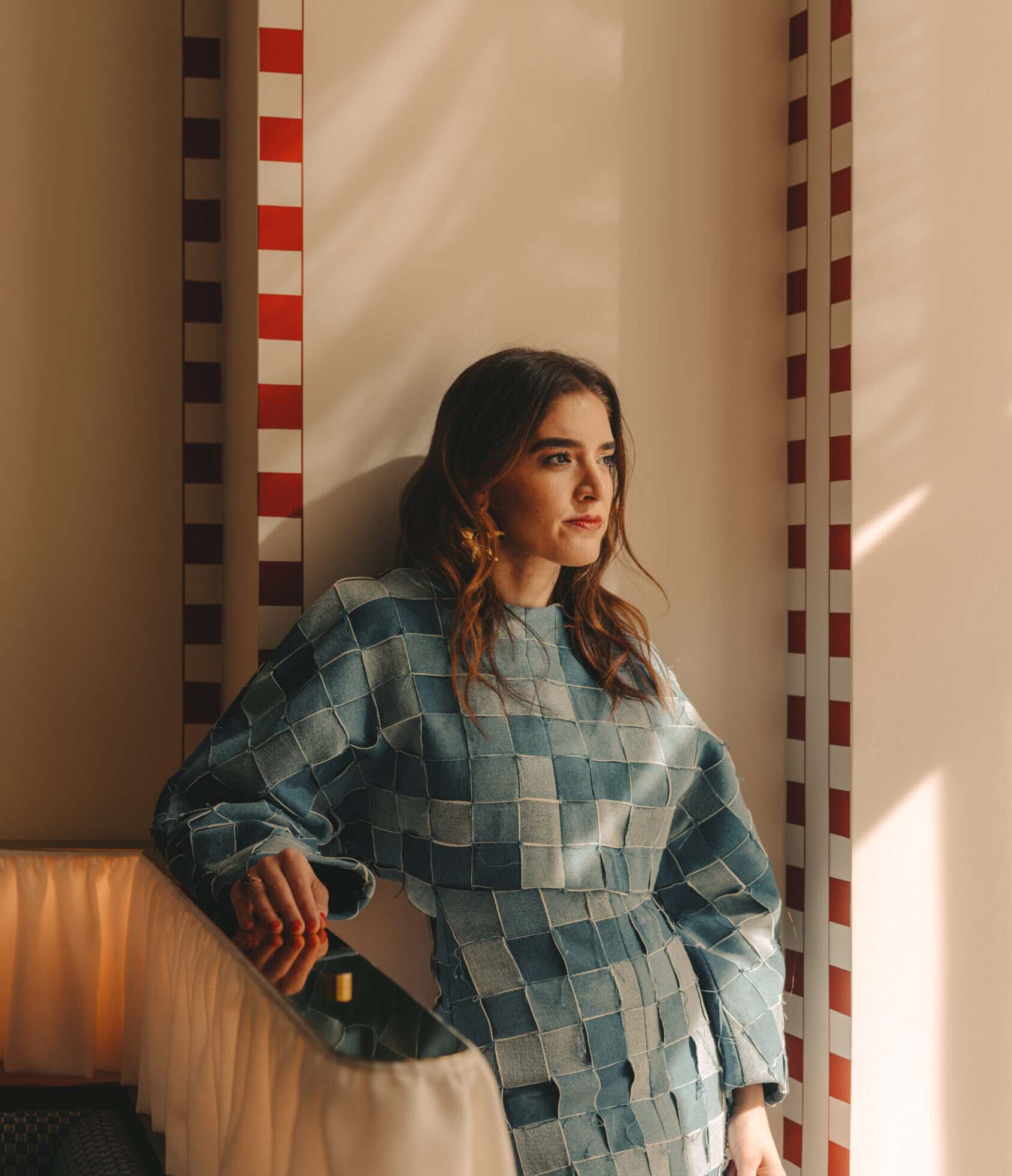
Six years ago, Stephanie Barba Mendoza was perfectly happy. Then she left one of London's most admired hospitality studios to start her own. Sitting down with SPACE, she shares the moments that have shaped her growth, the influences that continue to evolve her work, and where she is heading next.
WORDS BY JESS MILES
Spring really is in bloom for Stephanie Barba Mendoza, as she takes a rare moment of pause in her busy schedule to tell us all about it from her London studio. She’s just back from photographing the recently completed Wilde Vienna, and as part of a multi-site design partnership with the aparthotel brand, Lisbon opened last year, Porto debuts imminently, and Amsterdam follows soon after. As if that wasn’t enough plates to spin, she’s also working on a private members' club in Vietnam, and a hotel in Bordeaux dated for 2027, whilst dreaming up a culture-and-music club in Mexico City designed with her brother. Her studio, founded at the start of the pandemic and now seven people strong, is operating across three continents simultaneously.
Seeing how she’s clearly thriving under her own studio, it’s hard to imagine that six years ago she was an associate at Martin Brudnizki Design Studio, and had no intention of leaving. "I never thought I was going to start my own studio," she says. "I never had this urge of having my own business. I thought I was always going to be there forever."
Barba Mendoza joined MBDS in her late twenties, after studying architecture in Mexico, spending a year at the KLC School of Design in London, and a brief partnership with a friend that ended with the 2008 crash. She arrived as a designer, was made senior in two years, became an associate two years after that, and stayed for nearly a decade. "Everybody was just so inspiring," she says of those years. "I was so incredibly happy to be in this company with so much talent."
As well as learning so much from working directly with Martin Brudnizki himself, Barba Mendoza credits her peers as another reason for never feeling the need to move on. What becomes clear as she reminisces on her time there is that the cohort that came up through MBDS in the 2010s could easily be read as a who’s who in contemporary hospitality design. Linda Boronkay and Bryan O’Sullivan each head up their own studios. Andy Goodwin and Tom Parker teamed up and went on to found Fettle. Gianpiero Gaglione is in Los Angeles, Charlie North is now Global VP of Interior Design at Ennismore.
"We called them the golden days of MBDS," she says with affection. "Of course, the golden days were when it was golden for us – everybody who's that age and there now will probably be saying the same thing about their generation," she explains, before settling on defining that era of MBDS as becoming, “A super school for hospitality interior design."
The project that changed everything was Annabel's. Eight years on, its eccentric design still has interiors editors everywhere drooling, and images still appear in magazines as if they are hot off the press. Barba Mendoza was the lead designer, working alongside Martin Brudnizki on the creative direction for the entire club. "It was a pretty iconic project," she says. "[It was] an incredible opportunity, with an incredible budget, and a client who was brave enough to push boundaries. At the time, maximalism wasn't everywhere. What we did was really fresh."
"You need a client brave enough to just go for it, and who has the budget to accomplish it – they go hand in hand," she says on why the project was as successful as it was. Of Brudnizki himself, she is unequivocal. "Martin gave me a lot of freedom and a lot of trust. I felt creatively very satisfied because I had a voice. A very lucky position, really."
So why leave?
The answer is, in part, motherhood. "I had my second child," she says, "and when I came back from maternity leave the second time, it felt a little bit like Groundhog Day. I thought – okay, my time is done. I need a new challenge."
She looked around but nowhere measured up. "It's such an incredible company that going somewhere else is very difficult. Everywhere felt like a compromise. So, I thought – why leave? I'm going to try it on my own and see what happens."
There were no grand expectations, no business plan polished for investors. Just the conviction, hard-won and quiet, that she had already been trusted with the most important things at MBDS – leading Annabel's, running her team, sitting next to Brudnizki on creative direction – and that she could trust herself with the rest.
She launched the studio in 2020 and signed her first two projects within a week of each other, both high end residentials – one in Miami, the other in Antwerp. For the entire first year, she worked alone, deliberately. "Having been an associate for so long, you stop doing a lot of the actual work. I wanted to go through every part of a project myself, to set up how I wanted my company to run."
Wilde Lisbon. Image credit Francisco Nogueira.
It was also a period of establishing her own style, of understanding what that looked like outside the framework of someone else's vision. Look at her work today, she strikes a balance between brave and soft, time-worn and contemporary, and almost never leaves a room feeling quiet. Perhaps her mastery of contrast is the natural by-product of two cultures rubbing against each other.
"I've always loved colour," she says on being brave with the use of it. "I've always felt very comfortable with it. It's not something I've acquired – it's always been with me. That's probably all subconscious of growing up in Mexico."
You might assume that someone raised on the riot of Mexican colour would find British design comparatively muted, but she’s quick to push back. "The British are adventurous too. You get the most amazing houses with pattern on pattern, layered inside grand stately homes. There's a lot of richness in Britain. Though I grew up in Mexico, my heritage is combined with twenty years here – there's definitely a mix of influences in my work."
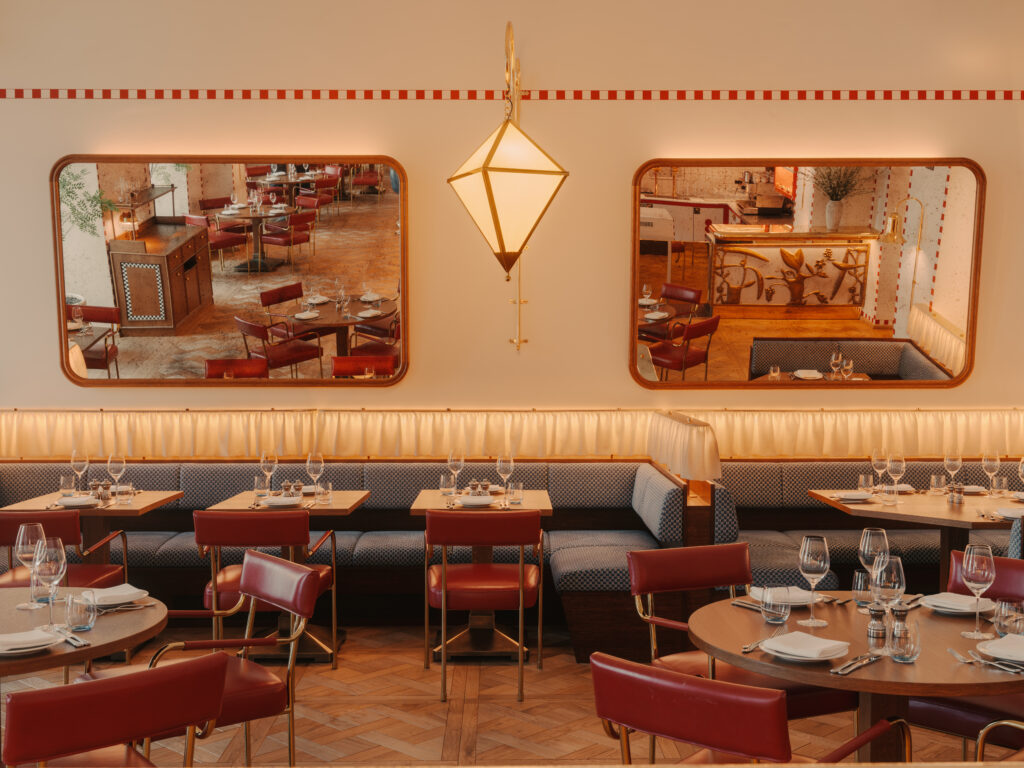
As life goes on and evolves, more cultural influences naturally join the roster. Barba Mendoza’s husband is Austrian, and the recent Vienna project sent her deep into the Secessionists. "The Wiener Werkstätte, the Jugendstil movement – there's so much rich design in Vienna from that time. Josef Hoffmann, Dagobert Peche, Adolf Loos. Even when there's simplicity, there's still detail, something different. It's never just plain."
We continue to talk about looking to the past for inspiration, and inevitably move on to originality in design today. "Everything has been done,” she admits candidly. “No one is reinventing the wheel. You find your own voice by bringing your own take on something you've seen."
The most personal expression of that voice is a recent project in Mexico City – a culture-and-music club in La Roma, in an old house, designed in collaboration with her brother. "He does all the programming. The talent he brings is very experimental," she shares. With a thriving design scene, that wasn’t as prevalent when she was growing up, I wonder if she’d make a bigger return to Mexico. "I'd love to do more projects in Mexico. To have more of a space there," she replies.
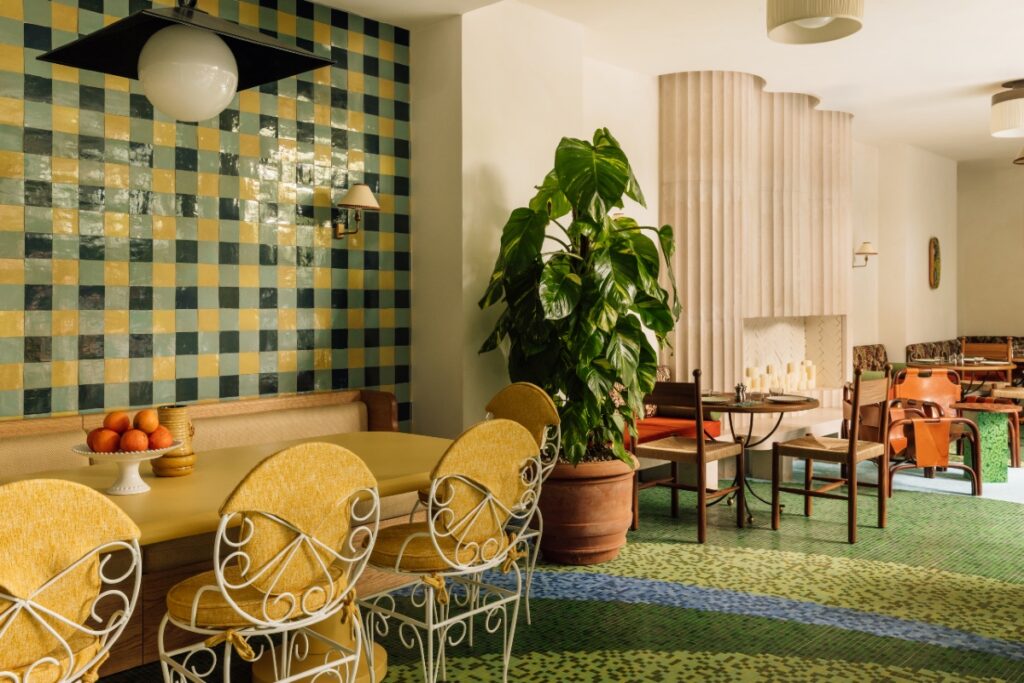
For Wilde Lisbon, the brief began with the brand's keywords – witty, sophisticated, artistic – and ended with the sea. "Lisbon is surrounded by water. I almost wanted to create the feeling of being on the water – calming, serene, energising, all these different elements at once."
Wilde Vienna. Image credit Julius Hirtzberger.
The translations are everywhere but never literal. The curves of a wave, abstracted into the soft lines of the joinery, a bespoke wallpaper that ombrés through the colours of the sea, dark green into lighter green into blue. "When you look at it, you don't think of the sea. But if you know the story behind it, you can feel it," she explains. Underfoot, a mosaic floor that honours Portugal's tile tradition, carries the same curves and palette through the entire ground floor. Then there’s a fireplace carved from limestone that flows into a built-in seat, against walls of chalky plaster – "Playing with textures is so important," she says on Wilde Lisbon’s design, and of all her work.
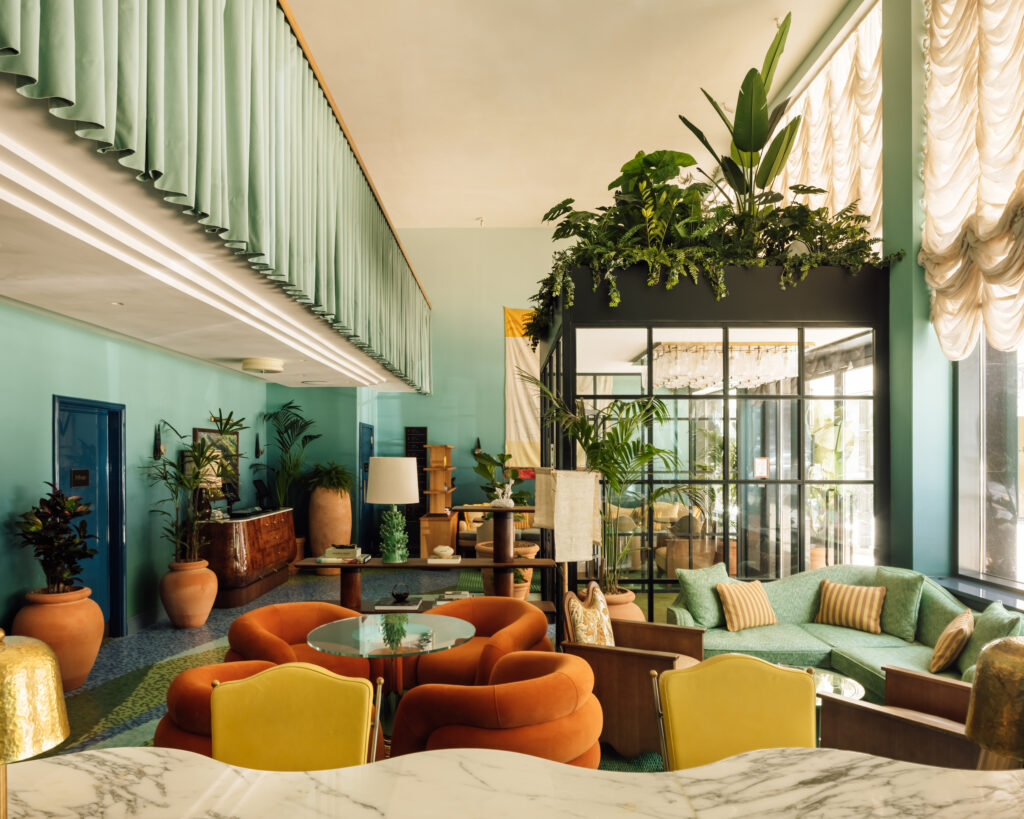
Her attention to detail and flair for layered narratives is something Wild has trusted her to interpret again and again. The studio's relationship with the brand began in 2022 and now spans six properties, each demanding its own translation of the same brand language. Lisbon found the answer in city’s glittering waterfront, Vienna will be a different narrative entirely.
It is a remarkable run for a six-year-old studio. Barba Mendoza talks about the journey so far without flourish or fanfare – self-assured without self-promotion, creative and business instinct in equal measure. Ask her what she'd design if she could choose anything, and the answer comes immediately. "A train,” she says, as her eyes light up. “Like the Orient Express, or a Belmond train. A little jewel carriage – something extraordinarily bespoke, with beautiful materials."
"I love Wes Anderson films too," she adds, as she wistfully begins dreaming up the design. You can picture it now – a small, layered, Stephanie Barba Mendoza world. Rich fabrics and intricate details, sparking curiosity with every detail. Maybe she will get to design the train, maybe she won't. Either way, one thing for certain is that the next project will be just as swoon-worthy as the rest of her portfolio. And who knows – one day, the young designers in her studio may well look back on it as the project that defined their careers, and the start of their own golden days.
Wilde Vienna. Image credit Julius Hirtzberger.
Related Articles
From runway to check-in, couture takes the keys
Fashion brands are increasingly partnering with hotel groups, or opening properties of their own. SP...
Read more
HIX returns this November with a new home
HIX Europe returns this year with an expanded format and a theme that reflects an industry in consta...
Read more
How a Franciscan cloister became Four Seasons Cartagena
A 16th-century Franciscan cloister, a 1920s social club and a clutch of old theatres have been knitt...
Read more
We'd love to hear from you! Click the button to open the SPACE Magazine Survey and have your say.

Make sure you don't miss a single issue of SPACE by subscribing to receive the magazine. Click the button above to signup.