Inside Waldorf Astoria New York, an Icon Reborn
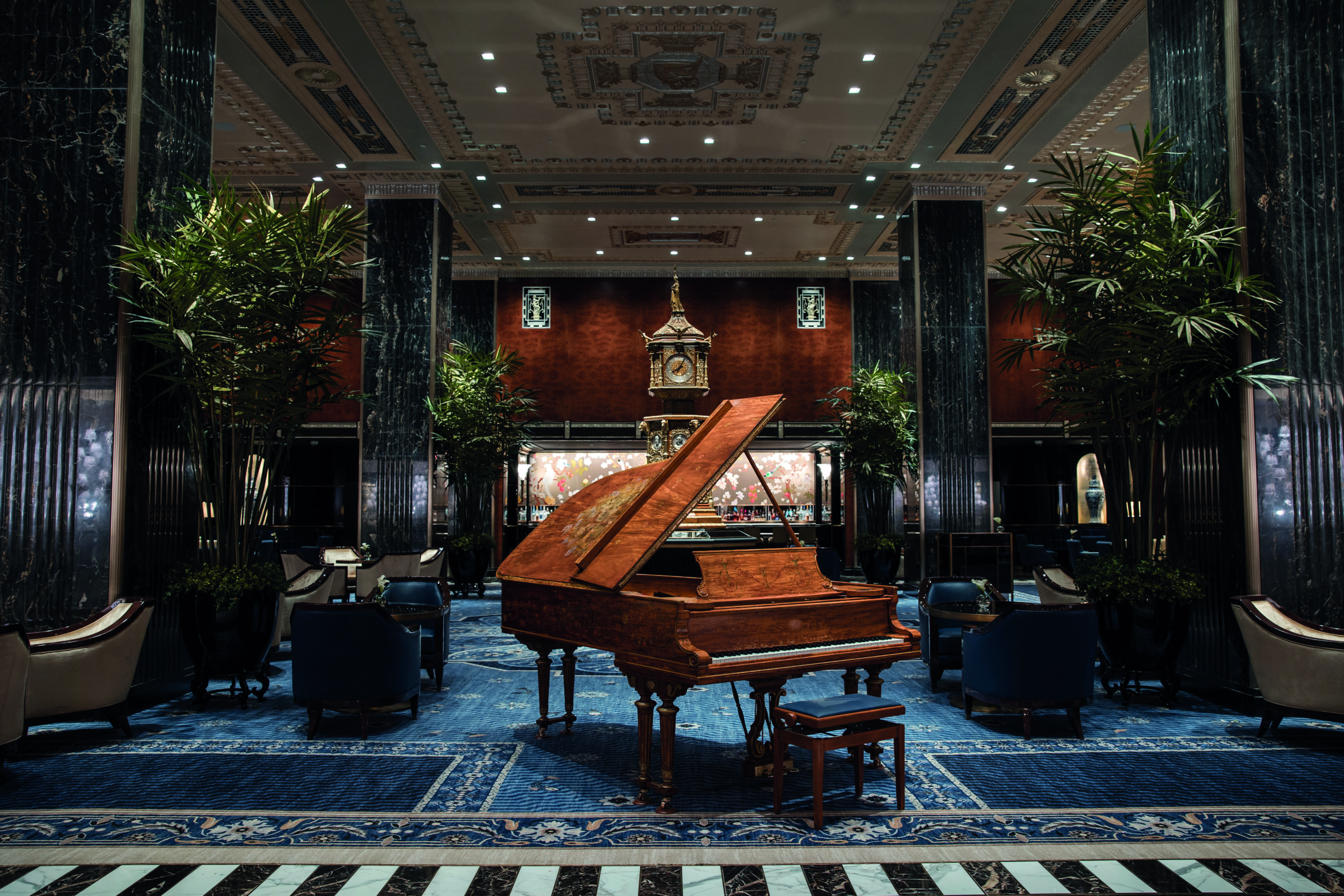
Blending meticulous preservation with visionary design, the revitalized Waldorf Astoria New York transforms 1.6 million square feet of history into a contemporary masterpiece of scale and craft
Few addresses in the world carry the gravitas of the Waldorf Astoria New York. Since its grand debut in 1931, this iconic landmark has been synonymous with architectural elegance, cultural significance, and unparalleled luxury. Rising 625 feet above Park Avenue and spanning a full city block, the building redefined American hospitality, setting a new standard for grandeur in the modern age. As it prepares for its highly anticipated reopening in 2025, the Waldorf Astoria is once again poised to redefine the art of hospitality – this time through a masterful dialogue between preservation and reinvention.
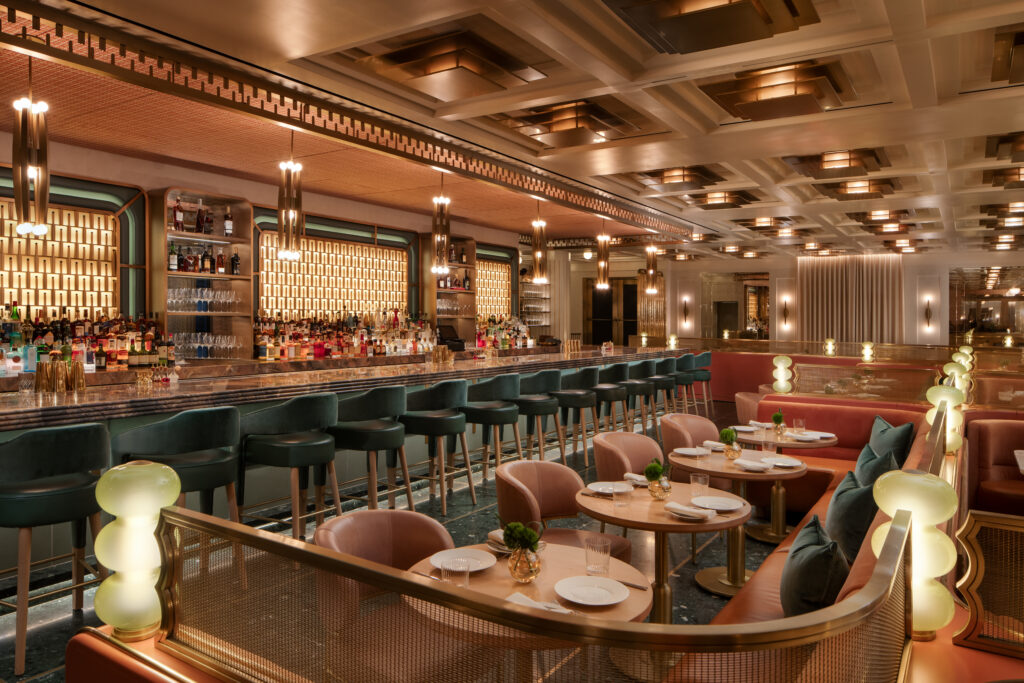
Under the architectural direction of Skidmore, Owings & Merrill (SOM) and the interior vision of Pierre-Yves Rochon (PYR), the Waldorf’s rebirth represents one of the most ambitious adaptive-reuse projects in New York’s history. The eight-year transformation has reimagined 1.6 million square feet of space, converting the original 1,400-room hotel into 372 private residences and a 375-key five-star hotel. Yet within that vast reconfiguration, 62,000 square feet of landmarked interiors – the Park Avenue Foyer, Peacock Alley, the Silver Corridor and the Grand Ballroom – remain preserved, each restored to its Art Deco brilliance. This intricate balance of scale and sensitivity has reclaimed the building’s identity as both cultural beacon and architectural treasure.
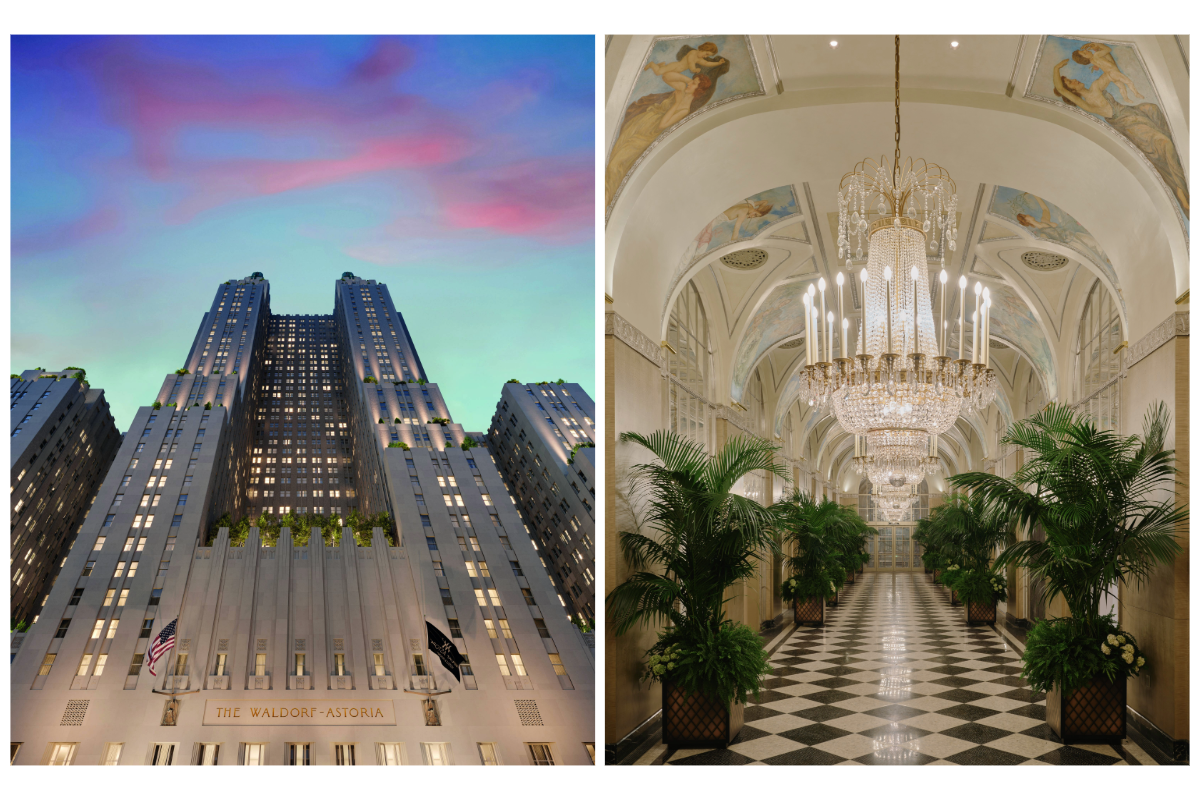
The restoration begins at street level, where limestone and terracotta façades gleam once more in the signature “Waldorf Grey” brick. Over 5,600 windows have been remade to their original proportions, each contributing to the building’s rhythmic precision and luminous presence. Terraces carve open the setbacks, the twin copper pinnacles have been restored as duplex penthouses, and the legendary Starlight Roof returns as the Starlight Pool – a tranquil, light-filled amenity beneath a new retractable skylight. This is restoration at an urban scale: an act of craftsmanship measured in square miles of masonry and decades of memory.
Inside, PYR’s design narrative unfolds as a modern counterpoint to SOM’s architectural precision. Known for a portfolio that defines contemporary luxury, Rochon’s approach is both intellectual and emotional – anchored in respect for heritage, yet bold in its reinterpretation. The relocation of the main entrance to East 49th Street exemplifies this duality: a grand gesture that re-orients the guest experience, creating a seamless transition from the energy of Midtown to the quiet elegance within.
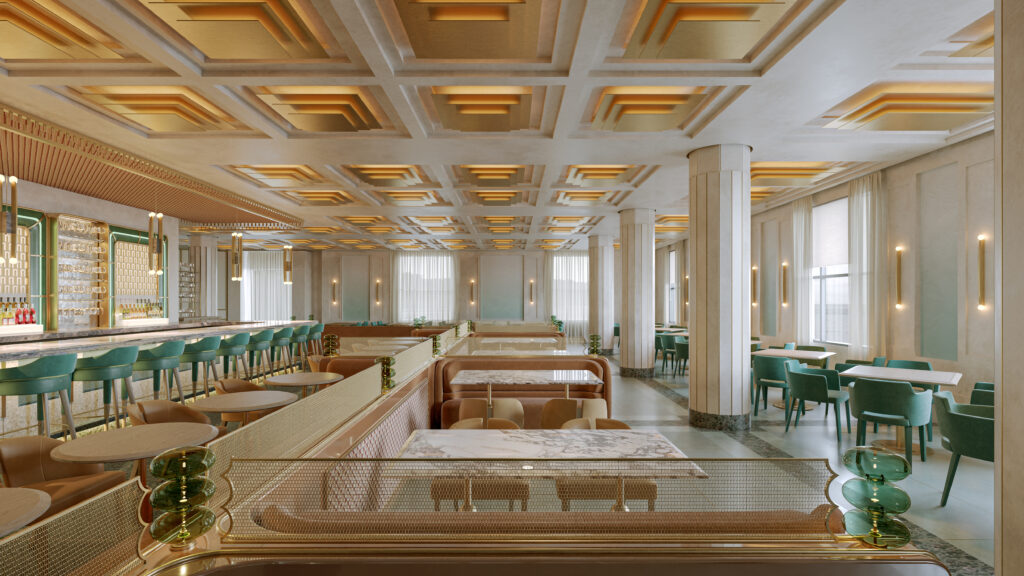
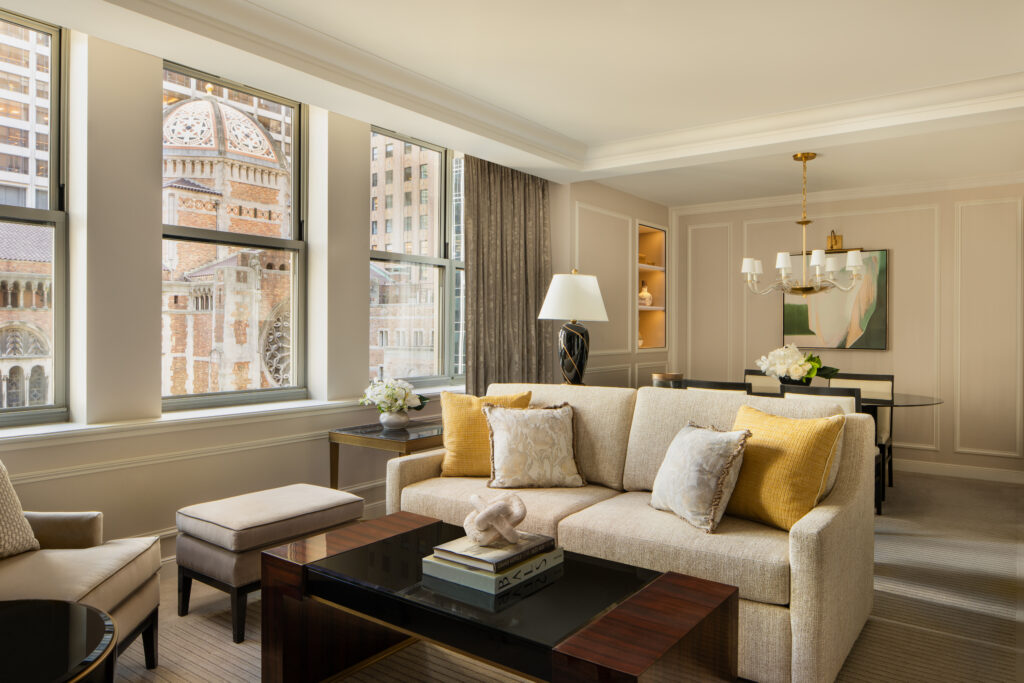
Throughout the 375 guestrooms and suites, PYR has crafted interiors that speak in the language of modern Art Deco. Expanded layouts, opulent bathrooms and integrated dressing rooms introduce a new sense of volume and ease. The Governor’s Suite channels the spirit of a New York apartment through bespoke rugs and contemporary detailing, while the Presidential Suite evokes refined Americana and the Royal Suite recalls European classicism. Each space is layered with custom furnishings and subtle material contrasts – lacquer and marble, walnut and brass – creating an atmosphere that is at once timeless and unmistakably new.
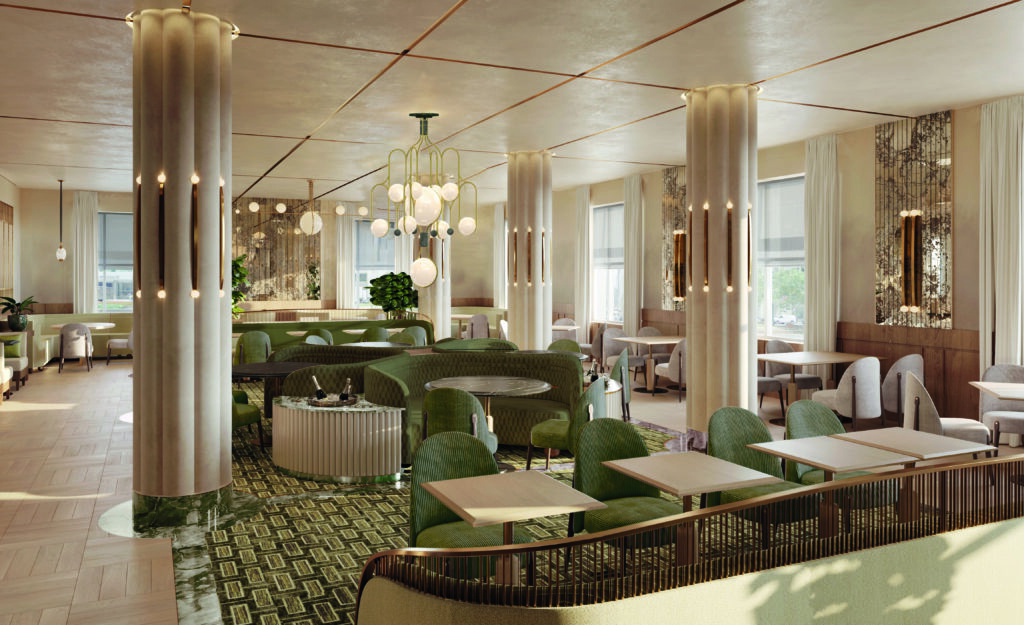
The hotel’s public spaces retain their historic choreography but are revitalised with light and movement. Peacock Alley, once a promenade for high society, again serves as the hotel’s social artery – connecting Park Avenue, the Clock Lounge and Reception with renewed fluidity. The Park Avenue Foyer glows once more with luminous marble panels, recreated from Schultze & Weaver’s 1930s specifications. The Silver Corridor, with its restored Edward Simmons murals and mirrored piers, radiates the theatricality that once defined the Waldorf’s soirées. And in the Basildon Room, centuries converge: its 18th-century English ceiling and murals restored to a polychromatic palette discovered beneath layers of paint, its new carpet echoing original motifs.
The Grand Ballroom, a three-storey volume that has hosted diplomats, musicians and presidents, has been transformed into a study in light and acoustics. SOM’s work finally realises Schultze & Weaver’s original intent – a luminous ceiling defined by radiant coves and a restored plaster medallion. Advanced isolation systems now allow for performances and events without compromising the serenity of the rooms above, ensuring the space remains both architectural and experiential theatre.
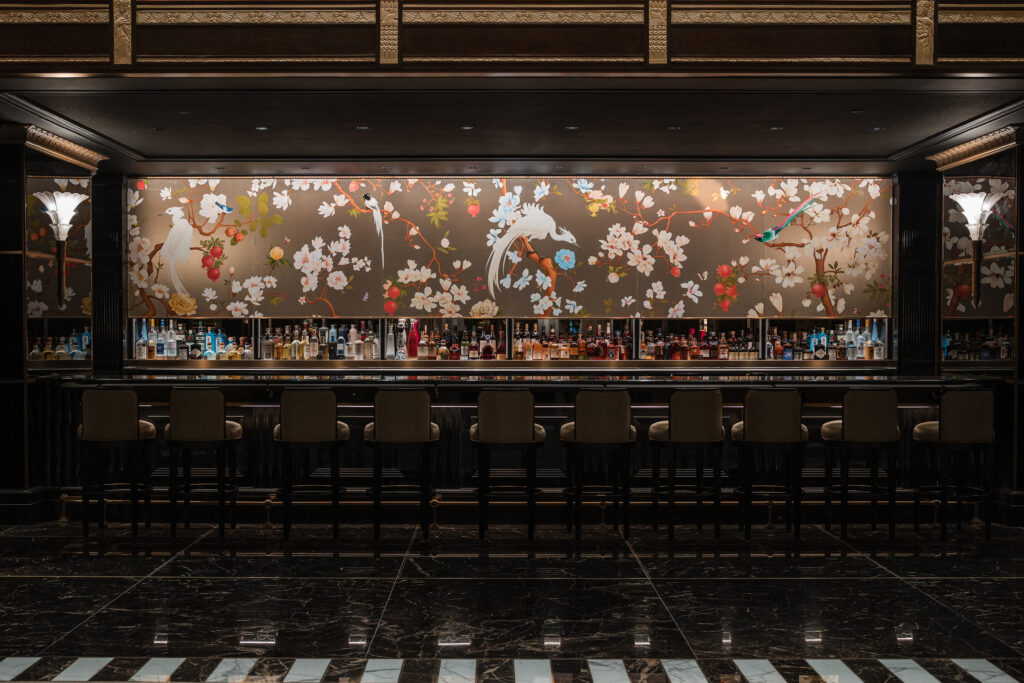
Elsewhere, design innovation intersects with historic geometry. The Park Avenue Colonnade introduces a new omakase retreat, blending Japanese restraint with Deco rhythm. The Library Lounge, framed by a black marble fireplace, balances intimacy and grandeur – its lighter palette offering a dialogue with the building’s darker historic tones. Even the service spaces have been reimagined: porte-cochères split and refined for hotel and residential arrivals, ensuring a choreography of privacy and prestige.
Above the public floors, SOM and PYR orchestrate a vertical city in miniature. From the 19th floor upward, 125 unique residential layouts occupy the tower’s complex massing, shaped by its century-old structure. These homes reinterpret the Waldorf’s legacy in domestic terms – private sanctuaries suspended above Manhattan, complete with dedicated service access, terraces and a suite of amenities that culminate at the Starlight Pool.
The result is more than a restoration; it is a rebirth at scale. Every marble inlay, every reconfigured corridor and every line of sight through the revived Peacock Alley contributes to a renewed sense of presence – a reminder that architecture, when treated with both intellect and affection, can transcend time.
As its doors prepare to reopen, the Waldorf Astoria once again stands as a living monument to New York’s evolving identity – an emblem of luxury hospitality, cultural continuity and architectural audacity. Bridging the opulence of the Jazz Age with the sensibilities of the 21st century, this is not a return to what was, but a vision of what enduring elegance can become.
Image credits: courtesy of Waldorf Astoria
Related Articles
Boronkay Studio channels Art Deco elegance at Hôtel Palais de la Méditerranée
Boronkay Studio has reimagined Hôtel Palais de la Méditerranée in Nice, creating a contemporary i...
Read more
Portugal, built to last: the country’s next wave of hotels
Beach holidays on the Algarve, weekend breaks in Lisbon and Porto – Portugal’s appeal has never ...
Read more
Visionaries: Aaron Clarke and Marta Tuneu, the duo behind ADC & Tuneu
Once at the helm of Soho House's design team, Aaron Clarke founded ADC & Tuneu together with his...
Read more
We'd love to hear from you! Click the button to open the SPACE Magazine Survey and have your say.

Make sure you don't miss a single issue of SPACE by subscribing to receive the magazine. Click the button above to signup.