Mexico’s hotel boom: New luxury resorts, design trends and emerging destinations
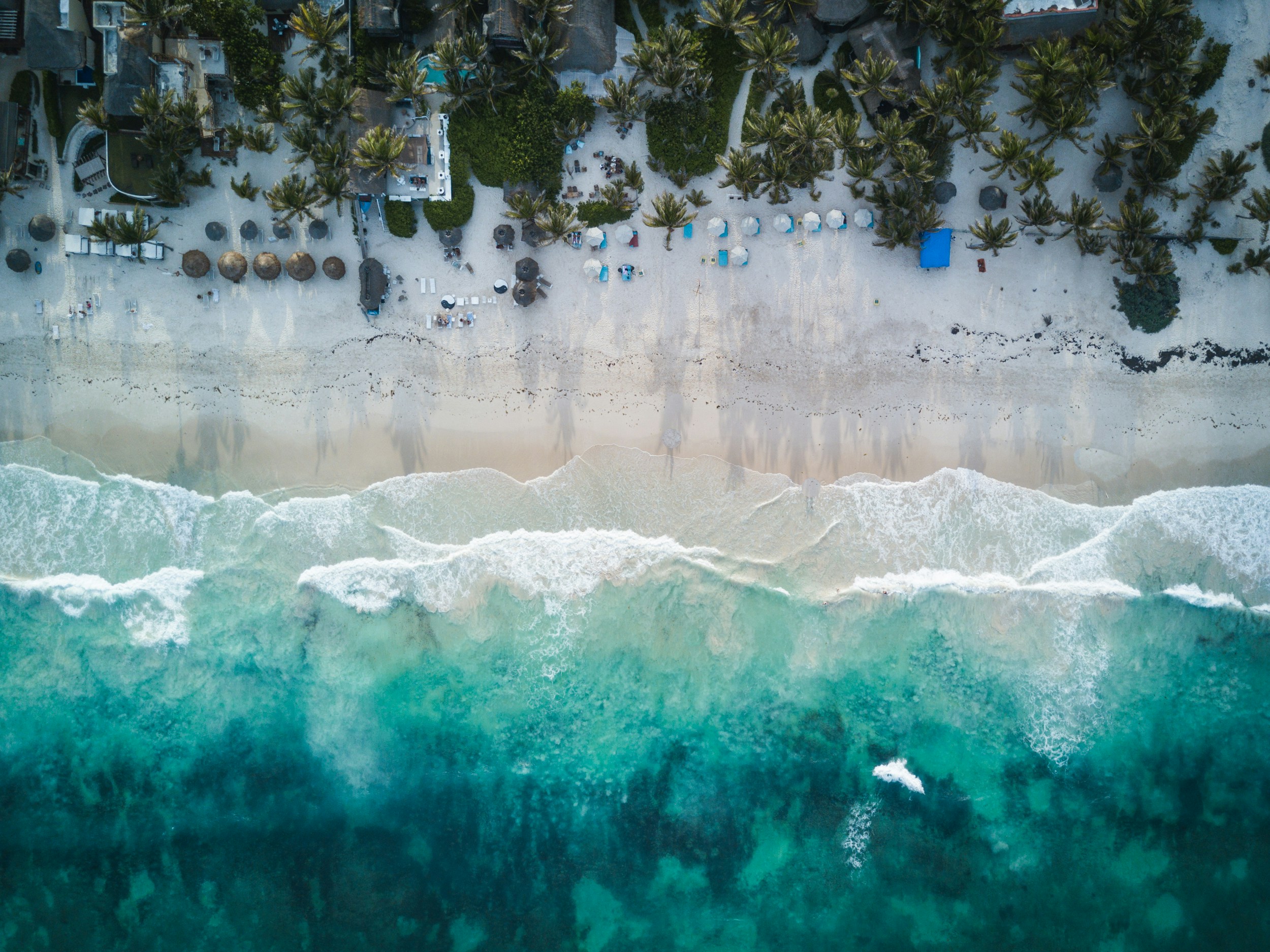
With millions of visitors and hundreds of new projects in development, Mexico’s hospitality sector is entering a new era defined by design, diversity and destination storytelling.
WORDS BY JESS MILES
Mexico has long dominated the Latin American travel market, with destinations like Tulum and Cancún leading the global charge. Defining the far-flung high-glamour beach getaway, their spectacular coastlines are characterised by ultra-luxury resorts, white sand, turquoise waters, and a heady buzz that draws a steady stream of international travellers and American party goers alike. As with any destination that rises quickly in the spotlight, that level of popularity can often lead to oversaturation, opening the door for regional rivals to steal the attention of travellers in search of something more under the radar. But even with Costa Rica’s tourism on the rise, Mexico seems to be the exception to the rule, its boom showing no real signs of slowing.
According to Josefina Rodríguez Zamora, Mexico's Minister of Tourism, the country welcomed 47.8 million international tourists in 2025, amounting to a 6% increase from the previous year. Total international visitors reached 98.2 million, up 13.6% year over year, while tourism revenue exceeded US$34.99 billion, an increase of 6.2%. On the global stage, Mexico now operates 6% above its pre-pandemic tourism levels from 2019, outperforming destinations such as the United States and Canada, and a recent report from Google and Álvarez & Marsal, estimates Mexico could receive 90 million international tourists by 2050, consolidating its place among the top 10 most visited destinations worldwide. The key to Mexico’s success? Versatility.
While the well-trodden paths of Tulum, Cancún and Cabo San Lucas continue to draw crowds, a broader shift is coming to the fore. A new wave of traveller is looking beyond the obvious, turning their attention to Mexico’s other beach towns and cultural cities – like Oaxaca, Riviera Nayarit, and San Miguel de Allende – that offer a richer sense of place intertwined with luxury. In these locations, hospitality is increasingly connected to cultural expression, with projects weaving together local craftsmanship, regional materials and a deeper tie to landscape and tradition.
The larger resorts are following suit and shifting their narratives to align. Across the country, reimaginations of established properties, as well as new developments are championing Mexican artists and designers, creating spaces that feel both contemporary and heritage proud. Sustainability is often embedded through indigenous architectural approaches, while wellness experiences draw on traditional rituals from temazcal ceremonies to sunrise cacao practices, offering something that feels authentic and considered.
With this renewed view of the destination, along with global attention set to intensify ahead of major events such as the FIFA World Cup, it’s no surprise that brands and developers are holding focus for Mexico. According to recent data from Lodging Econometrics, the country now leads Latin America’s hotel construction pipeline, with 257 projects totalling 38,669 rooms – a 4% increase year-on-year. With development spanning the country’s most desirable destinations, from Baja California Sur to the Caribbean coast, and from smaller buzzy cities to emerging beach enclaves, SPACE takes a look at the projects shaping Mexico’s evolving hotel landscape.
IN THE PIPELINE
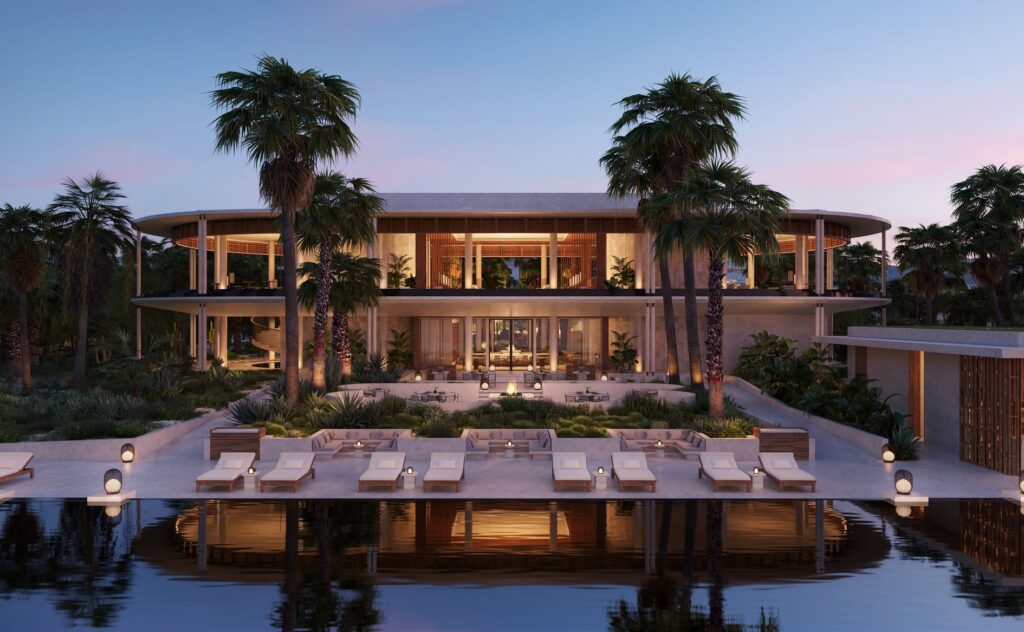
Starting strong with one of the country’s most anticipated openings, on Baja's East Cape, Amanvari will bring a lighter, more rustic take on the Aman brand’s design language, where Elastic Architects have created airy, sand-hued villas layered with natural stone, tropical woods and bespoke Mexican ceramics. Set to open spring this year, the intimate 18-key resort and its exclusive collection of branded residences will bring the brand to the destination for the first time.
Scheduled to open in late 2026, Soho House Los Cabos is one of the more boutique additions to Baja California’s Cabo del Sol. The House will centre around its signature mix of social and wellness spaces, including a Beach Club, Cecconi’s restaurant, and both Sunset and Cabaret Bars. A full Soho Health Club will anchor the offering, combining holistic treatments with more advanced wellness technology, alongside a gym and pool overlooking the ocean. The property will also include 15 bedrooms exclusively for members.
On the whole, the Baja California Peninsula continues to see steady growth, with larger-scale luxury projects such as St. Regis Los Cabos at Quivira to come, and the recently opened 300-key Grand Hyatt Los Cabos reinforcing its position as a polished, globally recognised resort destination – albeit one that is steadily becoming more design-conscious.
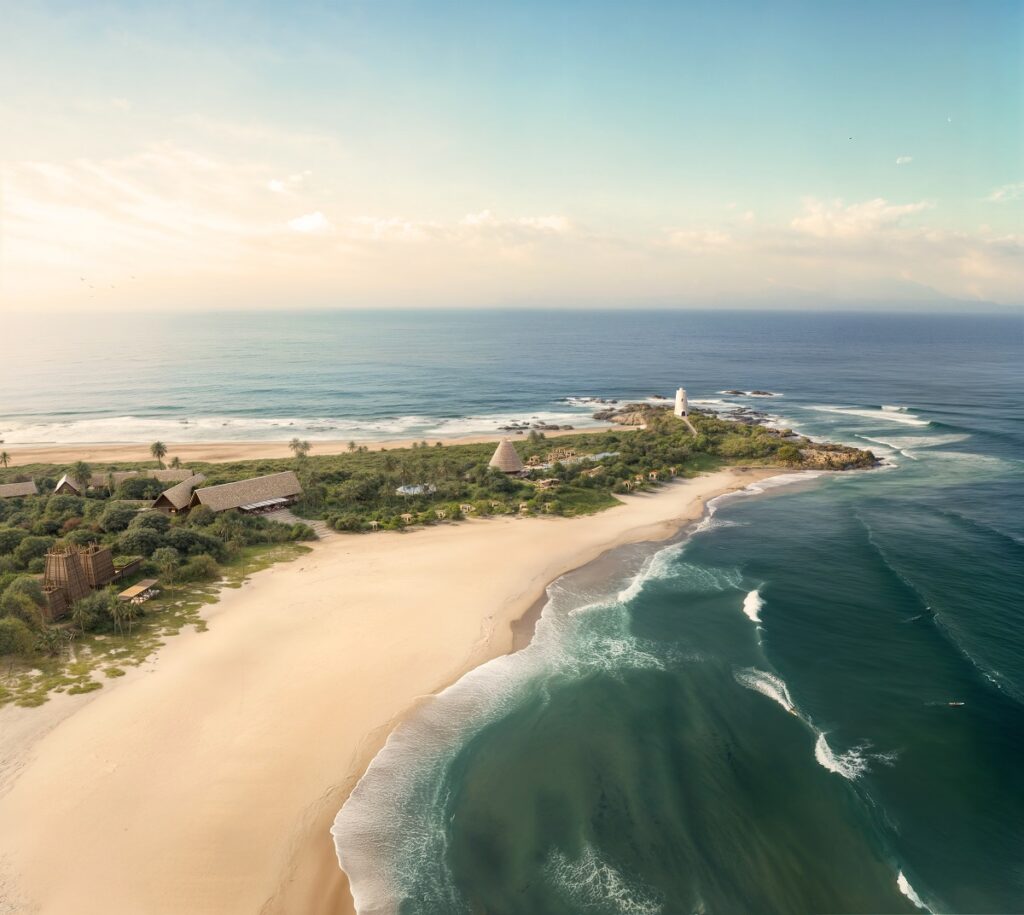
Along the Pacific coast, destinations such as Riviera Nayarit and the lesser-known Jalisco coastline are emerging as serious contenders. Developments like Rosewood Mandarina which opened September 2025, and Six Senses Xala that’s set for 2027, reflect a broader move towards regenerative tourism, where large-scale masterplans are balanced with environmental sensitivity and long-term stewardship of the land.
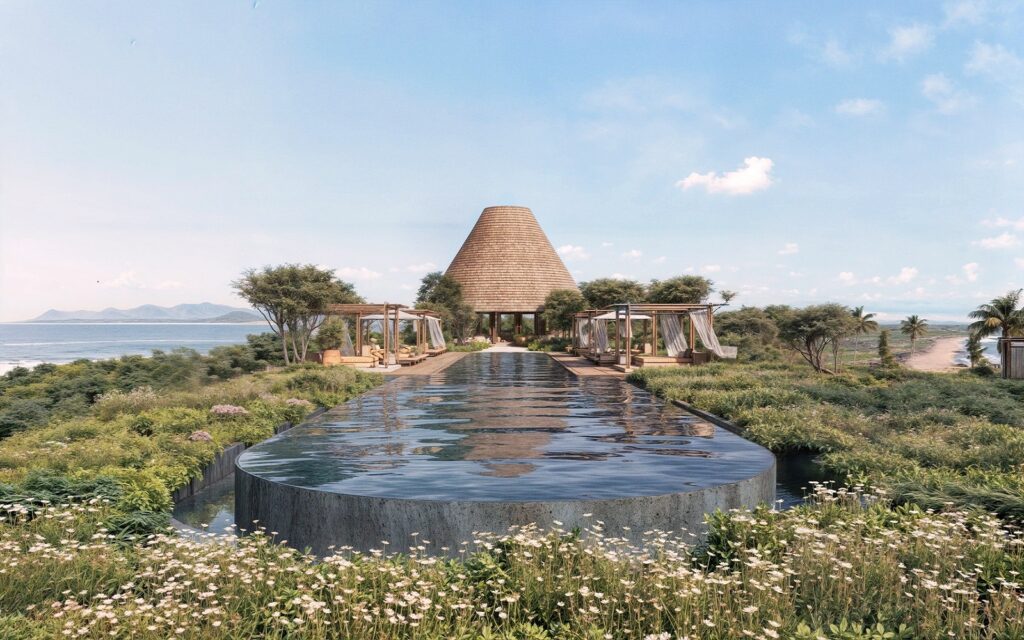
At Six Senses Xala, alongside creating a resort that offers 51 guest accommodations, the brand has collaborated with the Xala project team to reforest 590 acres of land, as well as construct a new coastal protection reef to both safeguard the marine habitat and create a consistently great wave to surf. Forming part of the wider vision to extend the impact beyond the guest experience, local families and farms will also benefit from upgraded infrastructure, from renewable energy to the water supply and wastewater management.
Another sustainable focused project, The Westin Playa Vallarta, An All-Inclusive Resort, set to open in May 2026, signals continued evolution in the all-inclusive space. Designed by Sordo Madaleno Arquitectos, the resort leans into biophilic principles, with a mix of dining concepts and room types, including private plunge pool suites and adults-only swim-up rooms.
In Mexico City, the pipeline takes on a different character. Here, growth is being driven by a mix of lifestyle-led brands and luxury operators looking to deepen their presence in one of Latin America’s most dynamic capitals. Given urban space premium, emphasis is on adaptive reuse, mixed-use developments and culturally attuned design.
Following the debut of La Valise Los Cabos, Namron Hospitality is preparing to open El Cortés, a 15-key boutique hotel set within a restored Art Nouveau mansion in Mexico City’s Roma Norte. Once a presidential residence, the property has been reimagined as an intimate hideaway, with curated art, private terraces in every room and considered touches such as Byredo amenities. On a larger scale, Park Hyatt have called upon Sordo Madaleno, one of the country’s most celebrated design firms, for the 155-room Park Hyatt Mexico City overlooking the Chapultepec Park in Polanco. It promises smart, well-appointed spaces that highlight curated collections of Mexican art and locally-crafted decor pieces.
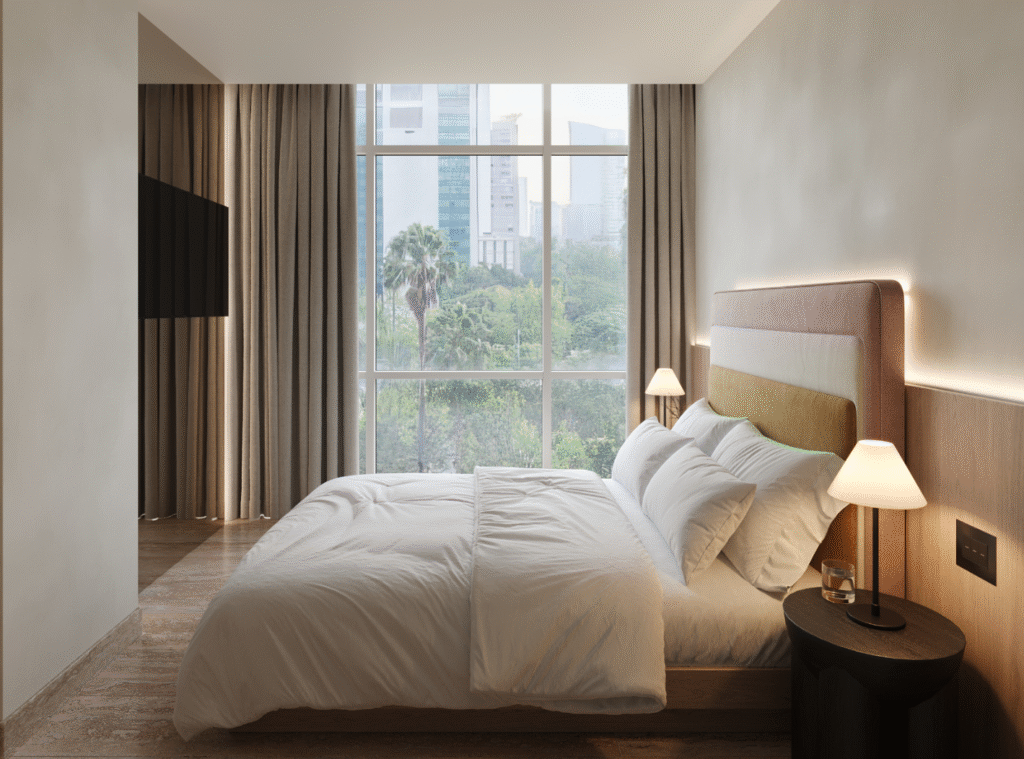
Lifestyle operator Ennismore is set to bring two of its key brands to Mexico City – Hyde and The Hoxton. Opening later this year on Paseo de la Reforma, Hyde Mexico City will introduce 215 bohemian-inspired rooms, alongside two restaurants and bars, a wellness space and dedicated areas for meetings and events, all rooted in the brand’s music-led, free-spirited identity. Just around the corner, The Hoxton Mexico City is slated for 2028. The 80-room hotel will reflect the character of its neighbourhood through a mix of art, design, retail and cultural programming, staying true to the brand’s community-driven approach.
As the pipeline continues to unfold, Mexico’s momentum shows no sign of slowing, but the real shift lies in how that growth is being realised. Though the country’s appeal has long been defined by its headline destinations, this next phase sees a more layered story emerging. One where growth continues, but with a sharper focus on design, experience and a stronger sense of place.
Related Articles
How a Franciscan cloister became Four Seasons Cartagena
A 16th-century Franciscan cloister, a 1920s social club and a clutch of old theatres have been knitt...
Read more
The SPACE Edit: our pick of bathroom products to know right now
Sculptural basins, jewel-like brassware and a transparent bath: here is our Editor’s selection of ...
Read more
Objects of desire: Lee McNichol’s little black book of obsessions
Lee McNichol, CEO and Creative Director of Studio Sixty7, shares his latest obsessions and inspirati...
Read more
We'd love to hear from you! Click the button to open the SPACE Magazine Survey and have your say.

Make sure you don't miss a single issue of SPACE by subscribing to receive the magazine. Click the button above to signup.