Changing Tides: The future of cruise ships and luxury travel at sea
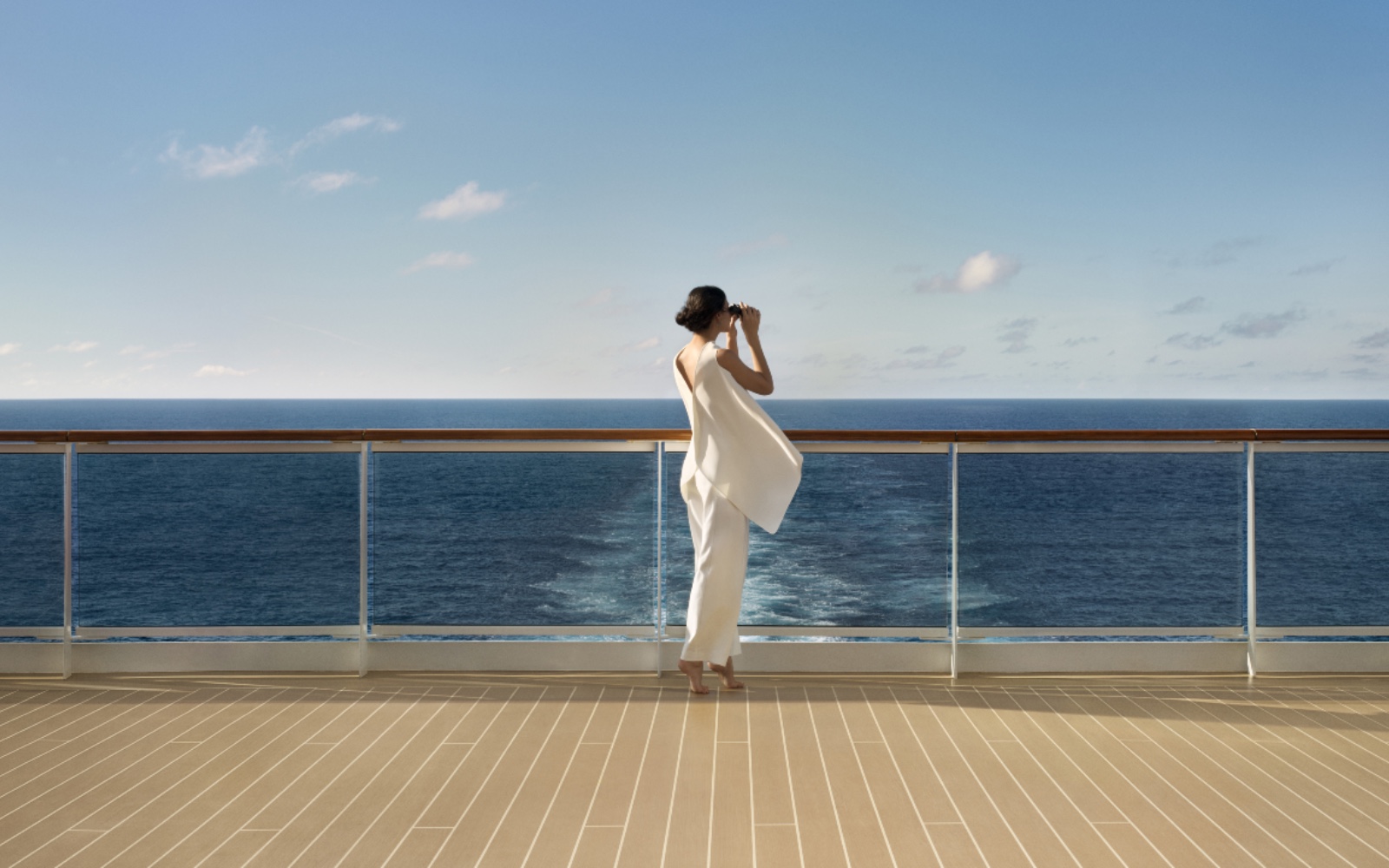
From boutique-style yachts to design-led mega ships, the cruise industry is evolving fast, blending hospitality, sustainability and experience to meet the expectations of a new generation of travellers.
WORDS BY JESS MILES
For much of the late 20th century, cruise occupied a curious corner of the travel industry. In the early 1900s, ocean liners were essential as the only viable means of transporting people and goods across continents. But with the rise of commercial air travel, shipping companies were forced to evolve or risk taking a dive. The solution was transformation: soon ocean liners were transformed into vacation vessels, and ‘the journey is the destination’ quickly became the industry’s defining mantra.
By the mid-century amid the Golden Age of Travel, cruising had cemented itself as a form of leisure, and one that would continue to scale up – becoming bigger, bolder and more extravagant with each passing decade. Fast forward to the 2010s, and the excessive image of cruising had begun to feel out of step. It was at once aspirational and oddly outdated – defined by size, spectacle and a predictable kind of ritualised leisure. For some, it was the height of glamour; for others, something closer to a cultural shorthand of buffets, ballrooms and a captive audience at sea. As boutique hotels and design-led hospitality redefined expectations on land, cruise struggled to keep pace. Environmental scrutiny intensified, and a more design-conscious, experience-driven traveller began to look elsewhere.
But this isn’t the sector’s first transformative rodeo, and it’s been slowly demonstrating that it’s as versatile as the changing tides it rides. What is emerging now is less a total reinvention of the industry, more an evolution that addresses the concerns of modern times. It seems, that the new narrative is one that borrows heavily from the language of contemporary hospitality.
Cunard’s Queen Anne has led the charge of change for the old guard of cruising. As the brand’s first new ship in over a decade, it carries both the weight of heritage and the expectation of change. For David Collins Studio – who were tasked with shaping much of the ship’s interior – whilst the commission represented the opportunity to rethink maritime hospitality design, heritage was undoubtedly the emotional starting point.
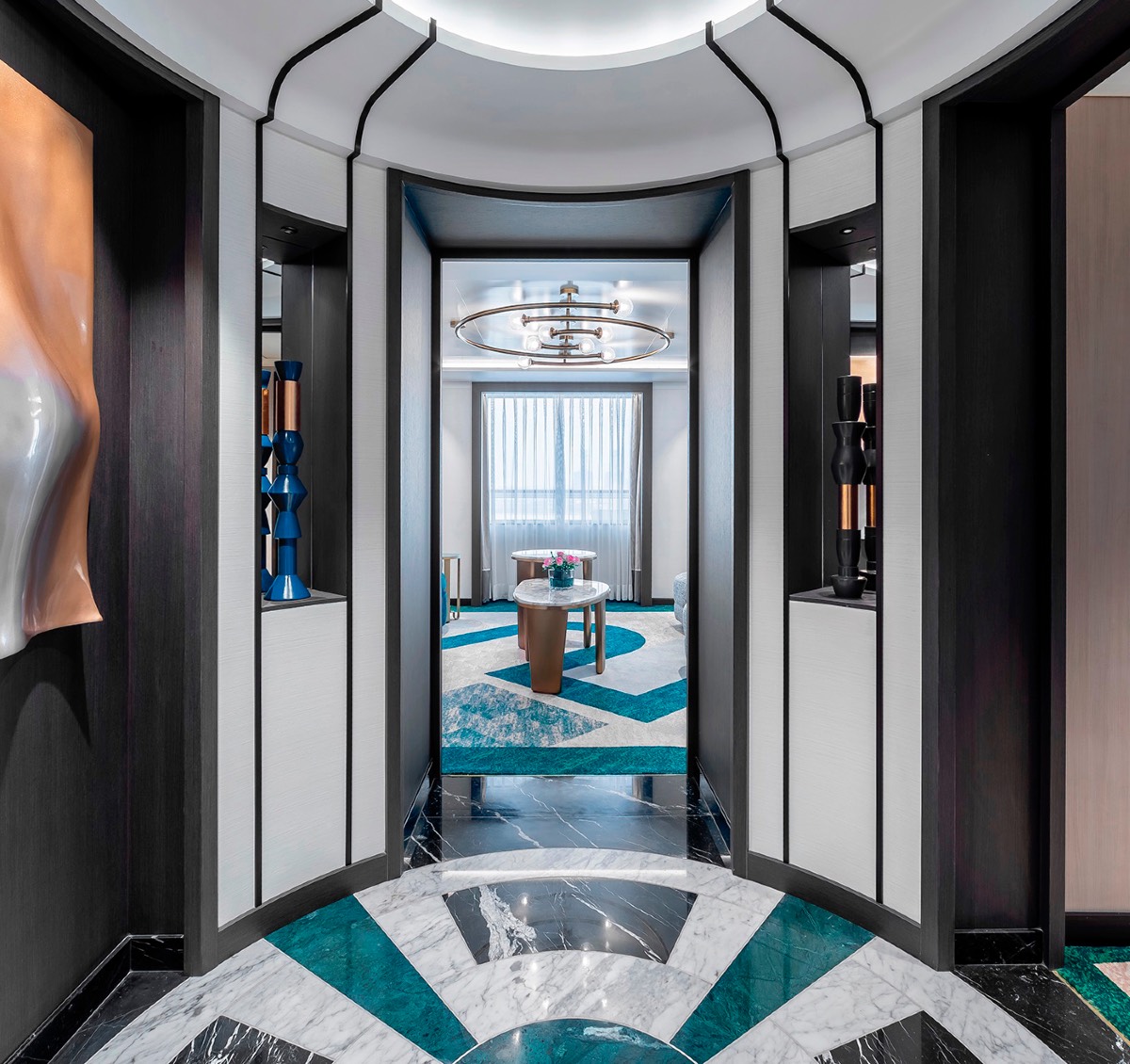
“Cunard occupies a unique place in British cultural history; the lineage of its great ocean liners carries an extraordinary sense of ceremony and glamour. To be invited to contribute to the next chapter of the brand’s narrative was both a privilege and a responsibility,” says the studio’s Design Director, Lewis Taylor.
While Queen Anne was the David Collins Studio’s first cruise ship, they were certainly a deliberate choice from Cunard, who with an appetite to evolve expectations for cruise interiors and experience, assembled an all-star team of leading design studios and consultants to also include Adam Tihany, Richmond International, and Sybille de Margerie.
“It represented a fresh challenge for the studio and an opportunity to apply our hospitality expertise within an entirely new context,” Taylor shared. “We approached the ship as we would a landmark hotel: starting with narrative, atmosphere, and guest experience.”
“The goal was not to reject maritime conventions, but to refine them and challenge perceptions of what a cruise interior can be,” he explains. Queen Anne “Represents a major evolution for Cunard, reimagining its celebrated heritage for a new generation of travellers who expect both tradition and modernity.
A key part of this vision was involving designers new to cruise interiors, ensuring fresh thinking unrestrained by convention. Alongside experts from Richmond International, who brought maritime expertise, we explored innovative spatial solutions, reinterpretations of luxury, and subtle, unexpected ideas that push the boundaries of modern ocean liner design.”
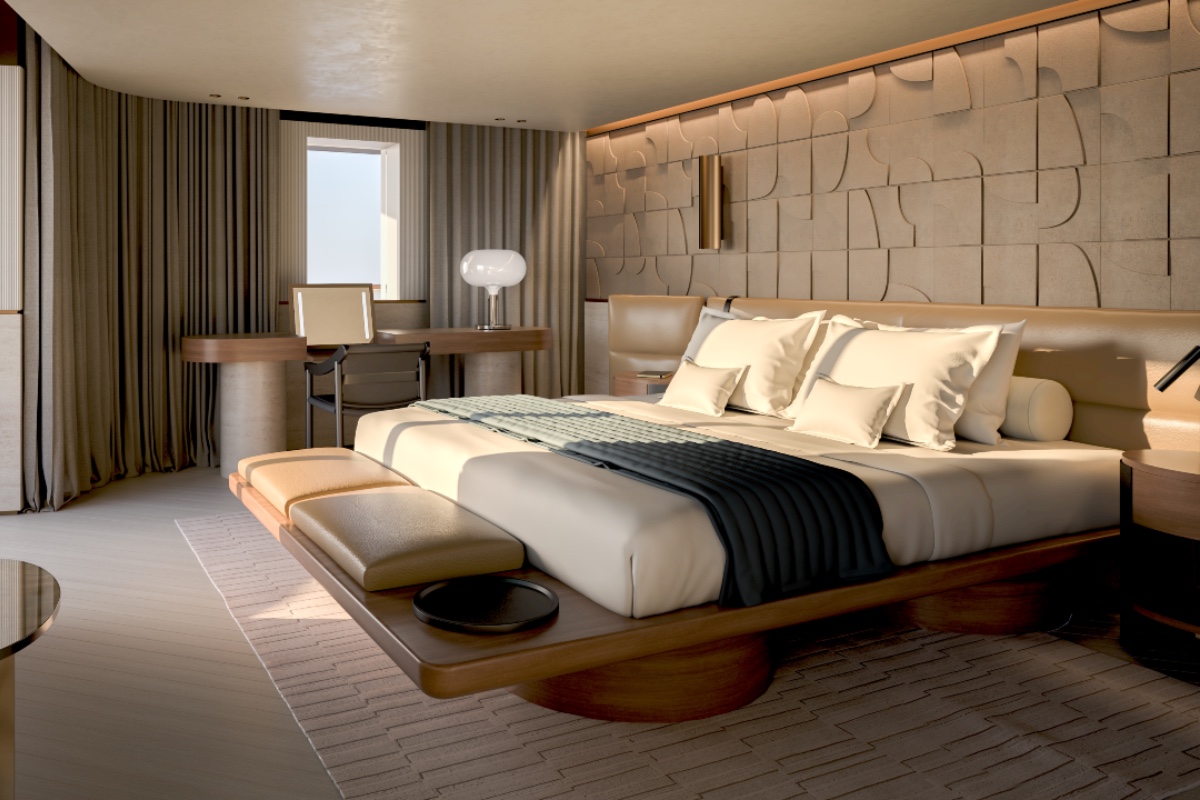
Cunard’s Queen Anne is not alone in this repositioning. Across the sector, a new generation of vessels is emerging with a markedly different design language. Explora Journeys, with its forthcoming Explora III, leans into a more architectural, almost residential aesthetic – a world away from the glitzy maximalist interiors historically associated with cruise. A sleek new brand campaign ‘Ocean State of Mind’ embodying wellness, serenity, and a calling to a cool, new, discerning demographic, as well as the involvement of designers such as Patricia Urquiola for Explora III, are enough to convince previously unlikely cruisers to convert.
But the shift we’re seeing isn’t just about keeping up with aesthetic trends, it’s strategic, signalling an intent to align with the cultural currency of contemporary hospitality. As Taylor notes, “Travellers no longer see cruise as a separate category of experience; they benchmark it against the best hotels, private members’ clubs and restaurants.”
“Hospitality-led studios bring a sensitivity to storytelling, spatial layering and emotional engagement that is deeply rooted in guest experience. Operators recognise that differentiation now lies not just in itinerary, but in atmosphere and identity. In that sense, bringing studios like ours into the maritime sphere reflects broader shifts in the hospitality industry and guest expectations.”
Perhaps the most visible manifestation of this shift is the arrival of the hotel brands themselves. From The Ritz-Carlton to Four Seasons, a number of established land-based operators have begun to extend their offering onto water. But it’s Aman’s Amangati, the new Aman at Sea luxury yacht launching in 2027, that most clearly articulates the intent behind this movement.
“There was a clear gap in the market between traditional cruising and private superyacht charter,” explains Aman’s Chairman and CEO, Vlad Doronin. “Many new products at sea are essentially cruises with a luxury layer, but the experience is still driven by scale. With Amangati, we saw an opportunity to bring the Aman philosophy of privacy, minimalist design, generosity of space and intuitive service, to the ocean.”
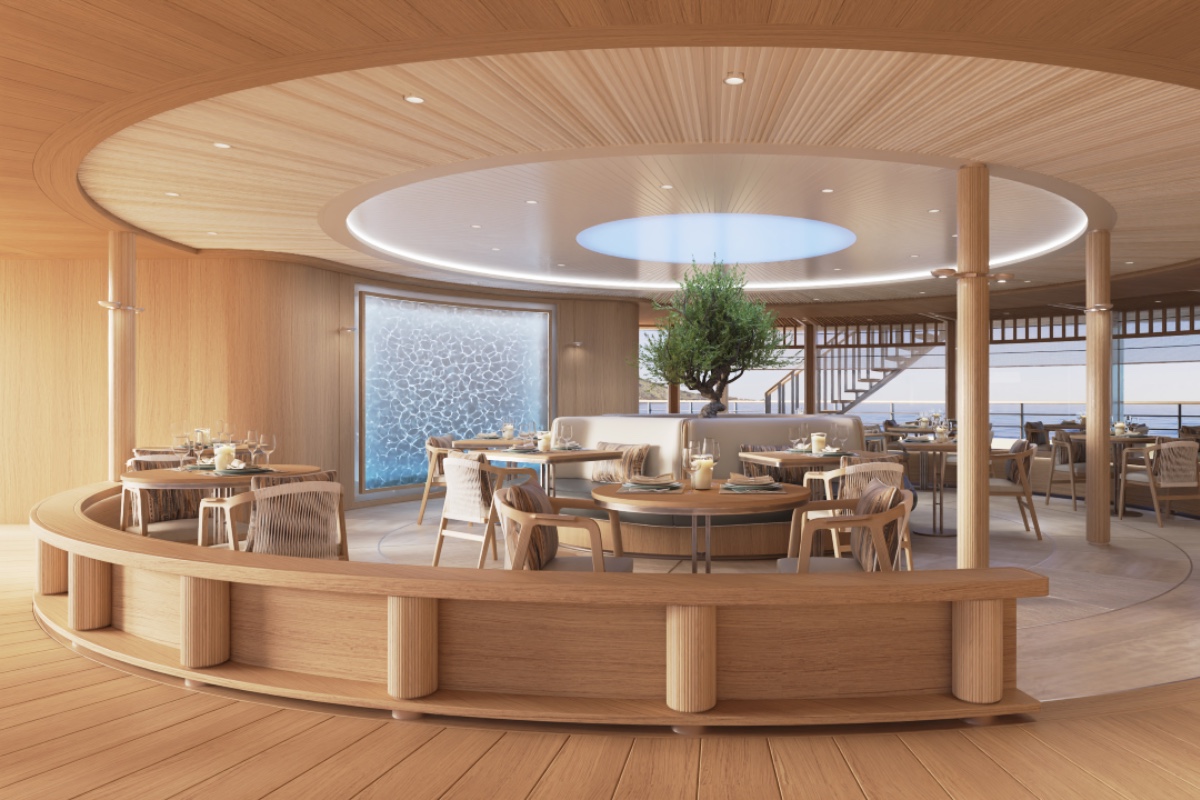
The 180-metre (600-foot), nine-deck Amangati will offer just 47 spacious suites, all with private terraces. The atmosphere aboard will mirror the calm, quiet elegance of an Aman hotel, translated to the ocean with a wellness led focus. Interiors draw inspiration from the graceful restraint of a Japanese ryokan, with full-height windows and private terraces throughout, ensuring light, openness and a constant connection to the sea.
How Doronin describes the new offering is not simply a new product, but a new category that sits between the extremes that have historically defined ocean travel. “Amangati is not a cruise ship, it is closer to a boutique hotel on the water, or a private superyacht,” he says. “Many new vessels feel like cruises made more luxurious. Amangati is different. Guests do not feel they are buying a ticket – they feel they are living in their own private yacht, with the space, peace and intuitive service that define Aman.”
Of course, any discussion of reshaping cruising today must address its notorious environmental legacy. For many, sustainability concerns were not just a footnote but a defining factor in the sector’s decline in cultural relevance, not just in impact on the oceans but on land with the sheer volume of people that descend upon ports of call. The new wave of vessels and operators stepping into the space are more than conscious of course correcting past mistakes.
Amangati, as well as only hosting a small amount of guests, incorporates a dual-fuel, hybrid electrical power system combining methanol-capable engines with integrated energy storage that reduces reliance on diesel engines, and enables quieter, lower-emission operation during manoeuvres, port calls and time at anchor.
More broadly, Doronin points to a design philosophy where each decision has been made to balance performance, safety and sustainability. “The vessel is being constructed with a strong emphasis on future-ready maritime technologies and responsible design, integrating advanced propulsion, energy management and materials choices aimed at reducing environmental impact over the life of the vessel,” he shares.
Nowhere is sustainability more paramount than the delicate environments that expedition ships search out – and traditionally built for the purpose of mapping and scientific discovery, they haven’t flaunted the most glamorous of environments. But with the demand of eco-tourism and education on the rise things are changing.
Selar, a new expedition company set out to challenge the norms of cruising by offering a new way to explore the most remote corners of the planet, will launch their first ship in 2027. The close-to-zero-emission sailing vessel, Captain Arctic, will use the sun and wind to navigate its expeditions, with 5 solid sails covered in 20,000 square feet of solar panels. To match the impressive sustainability credentials, the guest experience onboard is like that of a lifestyle hotel with interiors that ooze style.
Over in warmer climes, for andBeyond, whose portfolio has long centred on conservation-led lodges and safaris, as well as expedition cruising, a new move into river-based exploration feels both logical and still innovative. The andBeyond Amazon Explorer, launching in September this year, will be the first purpose-built luxury yacht to launch on the Peruvian Amazon, bringing the intimacy, privacy and scale of a superyacht to inland waters, blending safari expertise and conservation impact with Amazon exploration.
“It’s a natural extension of what we’ve always tried to do as a company,” says President Mark Wheeler. “Our lodges have always been about small-scale, high-quality experiences with exceptional guiding and conservation at the heart. The river yacht allows us to apply exactly the same thinking on water. Instead of building permanent infrastructure deep in fragile environments, a yacht becomes a mobile base that allows guests to explore responsibly.”
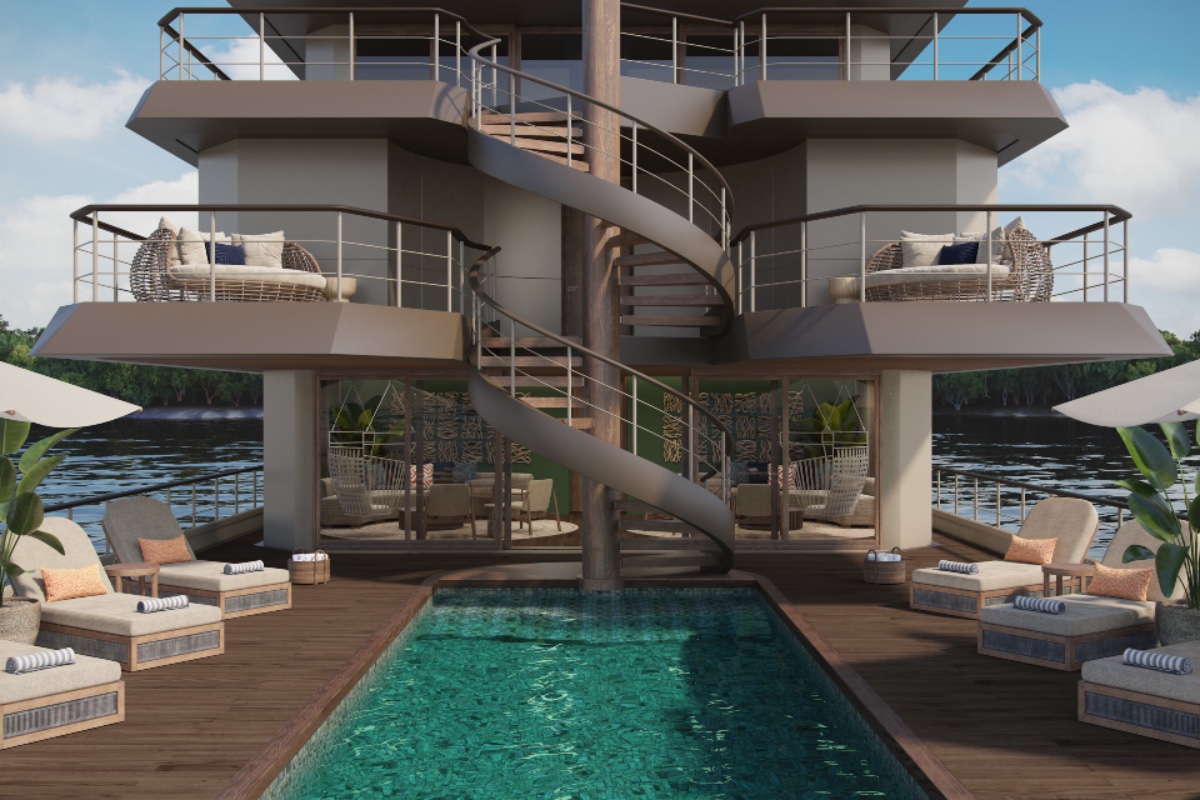
For andBeyond, design plays a supporting role but no less critical. “The starting point was to move away from the traditional barge-style riverboats that you often see in the Amazon,” Wheeler shares. “We wanted the vessel to feel like an expedition yacht but also sleek, elegant and contemporary. We worked with renowned private yacht designer Ken Freivokh and Adriana Hoyos Interior Design to develop a design that feels refined but still appropriate to the setting.”
The interiors will reflect an authentic sense of place inspired by local Shipibo-Conibo culture and featuring touchpoints of local Kené art. The materials and design will reference not just the local culture but also the history, fauna and flora of the yacht’s surroundings, allowing the destination to become the star.
“What we’re seeing now is that travellers want something more considered. They want smaller vessels, thoughtful design, excellent guiding and a genuine sense of connection to the place they’re visiting,” Wheeler concludes.
Whether high-volume liner, hotel branded yacht, or expedition vessel, these developments in the maritime space point to a broader convergence. As David Collins Studio’s Lewis Taylor observes, “We’re seeing the boundaries of luxury hospitality dissolve. Land and sea are no longer separate realms.”
This merging of markets is not just conceptual – it’s operational, architectural and experiential. Designers move between typologies; brands extend across landscapes; guests’ needs are centred around a broader sense of values. And with that, the era of cruising as we know it is coming to an end. It seems that across the sector, there is a growing willingness and expectation to challenge assumptions – to rethink scale, to prioritise design, to engage more meaningfully with environment.
In doing so, the cruise industry is moving away from its past associations – as mass-market or excessively exclusive, and environmentally careless – so much so, that brands are avoiding the word ‘cruise’ altogether in favour of the ‘floating hotel’. Now it emerges as a form of travel that is at once mobile and immersive. That offers access without permanence. That combines the comforts of high-end interiors with the unpredictability of the open sea.
In short, the floating hotel is no longer a novelty. It is becoming a serious proposition. And for an industry once thought to be running out of steam, it now feels like a new course worth charting.
Related Articles
Aethos makes its UK debut as a transformed London landmark
Tokyo meets the East End at Aethos London, where Astet Studio has transformed a former Shoreditch la...
Read more
Inside ISSUE 61, from the Editor
Read the latest issue of SPACE design magazine online now. DIGITAL EDITION | ISSUE 61...
Read more
Egypt’s hotel pipeline: inside Africa’s largest development boom
Twenty-three years late and at twice its original budget, the Grand Egyptian Museum has finally open...
Read more
We'd love to hear from you! Click the button to open the SPACE Magazine Survey and have your say.

Make sure you don't miss a single issue of SPACE by subscribing to receive the magazine. Click the button above to signup.